


 Francais
 Deutsch
 Italiano
Refine Your Search
Saigon Vietnam 1939 stock footage and images
- Showing 379 to 384 of 5026 results more
more Hide
Hide
Funeral rites for the sailors who perished in the undersea craft "Phenix", held in Le Havre, France.
Scenes of warship and people on the French Navy ship in Le Havre, France. French submarine "Archimède" is moored beside the ship. The Archimède is then seen underway and submerging in ocean waters. On shore, a funeral ceremony is held to honor French sailors who died in the Redoutable-class submarine "Phenix" lost off Indochina on 15 June, 1939. French Navy sailors and officers offer garlands and officers keeping their caps low and heads down in a ceremony in the Place Gambetta, at the site of the French memorial known as Monuments aux Morts. French political and military leaders stand by. Sailors with rifles on shoulders pass by marching in formation. Large crowd gathered to see the memorial ceremony.
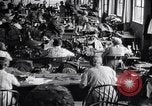
Military uniform production at Textile Mill in New York.
A textile mill in New York. Women are stitching and sewing the fabric cutouts into military uniforms. Men marking the stitched uniforms and attaching buttons. Man transporting the finished uniforms on a lorry. A military official tries on the uniform for fitting. 1939.
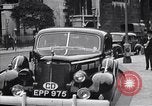
U.S. delegation arrives to attend a bilateral meeting in UK.
A U.S. delegation arrives to attend a bilateral meeting in UK. The officials are greeted and welcome. A large crowd gathered outside the building to welcome them. The British army security guard keeps a vigil. The 'National War Bonds' building at the back is visible. The U.S. War Observer covers the event. 1939.
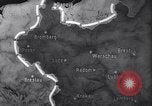
Destruction in Poland from German Luftwaffe bombing campaign in World War II
Animated map shows German Luftwaffe bombing locations all over Poland as it pursued a relentless air campaign during Poland invasion in World War 2, September, 1939. Gradually, the core of Polish military resistance is seen to shrink in size. In the aftermath, German ground troops inspect a huge bomb crater. Various scenes of destruction: destroyed buildings, torn rail lines, skeleton remains of gas tanks, destroyed and damaged rail cars, water-filled bomb craters. German soldiers walking in destroyed railroad yard. Wing of an airplane in a destroyed Polish air base. Skeletal remains of polish aircraft and hangars. Several Polish airplanes, damaged, but still recognizable. Sign on a hangar reads: "Aeroklub-Bydgoski" (Aero club of Bydgoszcz, or, in German: Bromberg). German soldiers occupying the hangar clean their rifles. They handle supplies and camp on the grounds. (One soldier shaves outdoors, next to stacked rifles.) A soldier at a field stove. German troops with shovels, fill in bomb craters and repair surface of airfield. Aerial view of the airfield with German planes parked. German soldiers march in formation in front of airplanes.
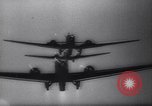
German Luftwaffe (Air Force) undertakes bombing campaign to overcome Polish resistance in Warsaw, during World War II
German aircraft drop leaflets all over the city of Warsaw, during World War 2 invasion of Poland. They contain the following message (translated from the German): "Soldiers and inhabitants of Warsaw! Poland is occupied. Only the Modlin fortress is resisting. Warsaw is surrounded by German troops.The suburbs are already in our hands. You will be committing a crime if you open this megacity to the fortress." Polish troops still holding out,reject a call to capitulate. Under white flags, foreign diplomats and such are seen leaving Warsaw, past a German barricade. The Warsaw Citadel and surrounding Polish military defenses (Fortress Warsaw) are seen in an aerial reconnaissance photograph. German officers walk in a group along a railway in Poland. Hermann Goering, head of the German Air Forces, consults with his Generals about a bombing campaign against the Polish defense positions during the invasion of Poland. Goering and Adolf Hitler seated in a railroad car with staff officers. Slate alludes to the Polish military commanders making Warsaw into a virtual fortress including an armed civilian population; and if it is not surrendered, the resistance must be broken. September 25, 1939, shows German fliers readying warplanes for air campaign against Poland. A German pilot in his cockpit. View from German airplane flying over Poland. Beautiful cloud formations in background.
Polish forces launch counterattacks against German invasion forces during World War II.
German motorcyclists,trucks,cavalry and infantry on the move as Polish refugees move to the rear near Warsaw, Poland, in World War 2 . Animated map shows tightening of German forces around Polish defenders, early in September, 1939, in World War 2. It shows Polish counterattacks at the Bzura River (German: Kutno) by combined Polish Armies, Poznan and Pomorze, toward Stryków (9-12 September) and toward Lowicz (13-15 September). The German forces then completely encircle by closing them off on the East.The map shows many arrows indicating strong effort by the Poles to breakout to the East,to Warsaw, without success. Scene shifts to many German He-111 bombers taking off. Aerial view shows the bombers taking off simultaneously across a broad dirt field, leaving dust trails behind them. A formation of 18 He-111s is seen in flight. Then a formation of Do-17s is seen followed by more He-111s. Closeups of He-111s.Views of ground from the nose greenhouse. Brief glimpses of targets burning on ground.Bombs dropping from He-111s. More burning targets on the ground.
CRITICALPAST.COM: About Us | Contact Us | FAQs - How to Order | License Agreement | My Account | My Lightboxes | Shopping Cart | Advanced Search | Featured Collections | Website Terms & Conditions | Privacy Policy ©2026 CriticalPast LLC.
License Agreement |
Terms & Conditions |
Privacy Policy
©2026 CriticalPast LLC.