


 Francais
 Deutsch
 Italiano
Refine Your Search
Saigon Vietnam 1939 stock footage and images
- Showing 3877 to 3882 of 5025 results more
more Hide
Hide
German propaganda film in World War II justifies German presence in Poland based on threat of Polish expansionism into Germany
German propaganda film during World War 2, before invasion of Poland, entitled 'Feuertaufe' meaning baptism by fire. A polish soldier on horseback sounds a bugle. What appears to be a newspaper, shows image of Polish Marshal Edward Smigly-Rydz; artillery; and warplanes; and comments about Polish military resistance. Narrator refers to Poland, and Britain at war with Germany. A parade of Polish cavalry units, airplanes, armored units and tanks before Polish military leader Edward Smigly-Rydz. A map illustrates Poland's presumed expansionist policies, including the conquest of Slovak Republic; the German protectorate of Bohemia and Moravia; and threatening Germany, itself. Referring to Danzig Narrator says: "But Danzig is German." Large crowd in Danzig listen to Nazi Gaulieter Albert Forster. German- Danzig troops patrol and construct razor wire obstacles. German flag and symbols on buildings in Danzig. German troops seen in Poland. Views of the German battleship Schleswig-Holstein, underway and entering the harbor at Danzig as crowd on docks cheers. A row of German JU-87 Stuka dive bombers parked on a field. Other German warplanes, including float planes, and twin engine bombers.
German Luftwaffe operations during invasion of Poland in World War II
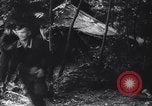
German ground support crews pull refueling apparatus from hiding in woods at edge of airfield in Poland, during World War 2. They set up to receive and service arriving German Heinkel HE-111 bombers. A squadron of bombers lands. Ground crews assist them in parking. As flight crews leave their aircraft, ground crews load the planes with bombs. A German Henschel Hs 126 observation plane arrives at the field and rear-seater delivers a reconnaissance camera to waiting ground crewman. View of a rustic field photo intelligence operation in the woods. Technicians wind developed photograph strips using a large cylinder of wooden slats. Photo interpreters study the pictures to glean information about enemy installations and movements. Group of German soldiers working at a large table, outdoors in the woods
German JU-87 Stuka dive bombers attack Westerplatte in Gdansk, Poland, during World War II
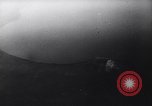
A formation of German JU-87 Stuka dive bomber aircraft en route to attack Polish forces at Westerplatte peninsula in Gdansk, Poland, during World War 2 invasion of Poland. Alternating scenes of the Stukas in flight and views of the ground as they approach Westerplatte. View from inside a Stuka as it commences dive over the target. Smoke rising from exploding bombs on the ground. Sequence shifts to several JU-87s landing at their home field. German soldiers stripped to the waist lift bombs and carry them to the aircraft. Several more Stukas landing. Then a Stuka is seen flying over the field, with no landing gear visible. (Some Stukas were fitted with explosive charges to jettison the gear in emergency.) The pilot makes a successful belly landing, although the aircraft sustains considerable damage. German fliers gather around the JU-87 and examine it and converse. (It appears that the aircraft may have suffered some battle damage, as well.) Fliers look over photographs of their next target, while armorers move a heavy bomb to an aircraft with the aid of a dolley lift. Groups of ground crew carry smaller bombs. Several men together lift a bomb under a wing. An aircraft is refueled, and hand cranked to start, and takes off. A Stuka in flight, and view from the rear seat, of the pilot and his cockpit bomb sight. Slow motion view from aircraft as it dives toward a rail marshaling yard and pulls out upon release of its bomb. It flies through smoke from exploding bombs. View as it begins to strafe a column of Polish military vehicles at low altitude.
Aftermath of German bombing and shelling during invasion of Poland in World War II
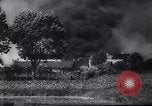
Fires burning uncontrolled from German bombing and shelling of towns in Poland during World War II. German tanks and troops moving slowly along smoke filled street. Warehouses on fire. Team of horses pulling refugees and wagon load of belongings. German soldiers restringing utility wires in midst of smoke. It appears that everything except stone and concrete is on fire. Numerous Polish refugees, including some former soldiers,leaving the burning towns with belongings in wagons pulled by horses and oxen. Vehicles in the bottoms of bomb craters. Abandoned wagons and vehicles clutter a country road. A dead horse. Polish artillery pieces scattered about in a creek. Polish civilians digging makeshift graves and burying shrouded dead. A woman stands alone, arms akimbo, silhouetted next to chimney, which is all that remains of her cottage, as refugees pass in horse-drawn wagons. Polish people trying to resume their lives during World War 2 in the midst of ruins. A church building still standing. German troops preparing to load a wounded soldier into a waiting airplane, for medical evacuation.
German Luftwaffe (Air Force) steps up bombing campaign over Warsaw and environs, in World War II
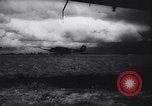
German aircrews walk from their aircraft after returning from bombing mission during invasion of Poland, during World War 2. They join other aircrews sitting around a fire. Fuel trucks are busy servicing the bombers. Numerous Junkers Ju-52 bombers are seen parked on the field, and they are seen taking off continually in the background. View from airborne German bomber flying with dramatic clouds in background. Beneath clouds smoke from burning targets is seen.
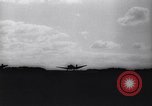
German Luftwaffe (Air Force) employs mix of aircraft during intensified bombing campaign over Poland in World War II
Numerous German Ju-87 Stuka dive bombers are seen taking off from an airfield, on bombing missions against targets in Warsaw, Poland, during invasion of Poland in World War 2. Ground crews load bombs aboard the aircraft. A Dornier D0-17 bomber is seen taking off. A Henkel He-111 is seen in flight. View of ground target from nose of the bomber. Smoke rising from burning targets on the ground. Narrator refers to Bzura River area (where Polish forces had launched a counterattack). The Confluence of the Rivers, Vistula and Narev, are seen and the Polish fortress of Modlin, as the bombers approach it. Fires and smoke are seen rising from the German bombing.