


 Francais
 Deutsch
 Italiano
Refine Your Search
Seoul Korea 1960 stock footage and images
- Showing 613 to 618 of 2020 results more
more Hide
Hide
B-26 Aircraft, of U.S. Far East Air Force, preflight aircraft, start, and taxi out on a bombing mission in Korea.
Far East Air Force operations in Korea during the Korean War. U.S. Air Force B-26 aircraft on Kunsan airbase (K-8) field. Crew members perform preflight inspections and climb aboard. The bombadier gets into the nose turret of the aircraft and pilot into the cockpit. A ground crewman stands fireguard with extinguisher for engine start. Aircraft taxis as a ground crewman signals. Aircraft loaded with bombs under its wings taxis along the field for take off. Aircraft taxis.

History of U.S. Army 3rd Infantry Division and its role in the Korean War.
Sergeant Stuart Queen of the U.S. Army introduces a film about the 3rd Infantry Division. He turns to Audie Murphy, the most combat decorated soldier of World War 2, seated beside him, who is now a film star, but still active as a Captain in the 36th Infantry Division of the Texas National Guard. Captain Murphy speaks about the U.S. 3rd Infantry Division. View of the Division parading for the Joint Chiefs of Staff, at Fort Benning Georgia, in Summer, 1949. Animated map shows Korea and surrounding countries of China and Japan, on June 25, 1950. View zooms in on the 38th parallel marking separation of North and South Korea. Views of North Korean troops moving against South Korea. Buildings being blown up. Armed troops of the People's Army of North Korea prodding civilians out of their homes. South Korean troops riding in an American-provided army truck, join others organizing to resist the invaders. South Korean troops in battle gear preparing to engage the North Koreans. Next, as part of United Nations response to the North Korean aggression, elements of the U.S. 3rd Infantry Division are seen arriving in November, 1950, and deploying along the East Coast of the Korean peninsula, to engage the North Korean army along its left flank. Battery of American M114 155 mm howitzers firing. American troops advancing along muddy road in snowy environment in December, 1950. Entry of Chinese forces into the conflict causes Americans to assume a defensive posture. Korean troops preparing to move elswhere.Smoke rising from battles in the background. Views of American defensive positions on the perimeter of the coastal city of Hungnam, to cover the withdrawal of units and equipment the U.S. 10th Corps, seen entering landing craft from the USS Montague (AKA-98) for evacuation from the beachhead
Air-to-air combat of F-86s and MiG-15 and ground crew personnel refuel F-86 in Korean War.
U.S. F-86 aircraft in dogfight action against a MIG-15 in Korea. F-86 Sabre jet fighter aircraft, with wing tanks taking off from airfield in Korea. Two F-86s taking off. Air-to-air combat with Mikoyan-Gurevich MiG-15, jet fighter aircraft. Fighter kill against MIG-15 showing hits on aircraft. Pilot's face is seenn. He is equipped with crash helmet and oxygen mask. The pilot operates controls and fires weapons during combat. Formation of four F-86s flying overhead, then they peel off. F-86s landing at airfield in Korea. Animated diagram of F-86 showing engines, guns and component parts of the aircraft. F-86s in row, fuel truck is parked near lead plane at airfield in Korea. Ground crew personnel at the airfield. Mechanic checks gun, another checks cockpit while plane is being refueled. Two F-86s take off. F-86 stationary at Wright Field, other aircraft in hangars in the background.
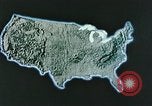
Birth of Connecticut Yankee Atomic Power Company and its nuclear reactor facility in the United States.
Map of United States showing location of a power plant of Connecticut. A woman in 1960's dress (Leslie Franzos) dances happily in her living room in front of a window air conditioner. Electric supply lines and power plants showing growth in the sector. Sunset and a graph with wavy lines depicting the limitation of non-renewable sources of power. Views of coal and oil production, pipeline, and transportation facilities including rail trains moving on tracks. Narrator describes fossil fuel supplies as abundant but finite. 1960's woman dances in front of graph depicting rising power demand through the decades ahead. Animation of names of various electricity producing companies. Model of the nuclear power plant of the Connecticut Yankee Atomic Power Company. 1960's fashion woman dances in front of model holding blueprints. Animation of map showing location of the plant. Aerial view of actual site of the plant. Sketch of the plant. Animated model of the functioning reactor and cooling system to be used by the plant. A submarine with reactor fitted. Pictures of nuclear power plants in use at Rowe Massachusetts and Shippingport Pennsylvania. Knobs and on-off of lights on a panel. View of interior control room at the Yankee Rowe nuclear power station. Group of executives in suits touring the Yankee Rowe nuclear plant grounds. Design architect at desk in an office reviews blueprints for nuclear plant.
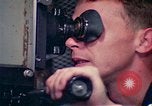
FBM (Fleet Ballistic Missile) submarine USS Ulysses S. Grant (SSBN-631) crewmen arrive home and greet their families.
The Captain of the crew of U.S. Navy FBM (Fleet Ballistic Missile) submarine USS Ulysses S. Grant (SSBN-631) looks into periscope. He passes it to another member of the crew. Submarine surfacing and good view of it as it emerges to surface of water. People on shore in Charleston, South Carolina, waiting to greet the returning submarine. Women have babies in strollers or trolleys near the docks. Sailors departing submarine in port at Charleston greet their wives, children, and other family members. Arriving Navy sailors hug and kiss wives and children and families. Views of women and children in typical late 1960s and early 1970s fashions. A sailor with last name Velotta holds a baby. U.S. flag fluttering in the wind in background. Variety of mostly late 1960s cars parked near docks. Family gets into their car. 1960s convertible sedan driving through suburban neighborhood. Homes along the streets of the neighborhood in the suburbs. The car pulls into the family driveway. Sailor, his wife, and their boy and girl children get out of the car to go into the house. Naval Submarine Crewman and his wife come out of a car at their home.
LSD tests conducted on unwitting victims including prostitutes and drug addicts by the CIA in the United States.
A documentary depicts research and administration of LSD (Lysergic acid diethylamide ) by the CIA (Central Intelligence Agency) in the late 1950s and into the 1960s (part of project MKUltra). A remote mountain area in Southern Mexico. A view of a hand holding a mushroom. View of a part time chemist for the CIA, Dr. James Moore, who narrator says duped amateur mycologist and mushroom science enthusiast R. Gordon Wasson into providing information that led to the development of LSD. Mr. R. Gordon Wasson is asked about a magic mushroom leading to the drug psilocybin. He talks about how they found the mushroom in Mexico and ingested it as administered by a local shaman or magical priestess, Maria Sabina, in a Mazatec mushroom ritual. Wasson describes his own experience of what it was like to be under the influence of psilocybin. He describes visions and his sensory experience. Narrator relates how Dr. Moore was instructed by the CIA to get close to Mr. Wasson and obtain the magic mushrooms on a trip to Mexico, and that internal memos revealed plans to derive a drug from the mushrooms that would remain an agency secret. Dr. Moore discusses his work in helping the CIA to produce a new drug. Anonymous speaker relates information from CIA operative of plans by the CIA to test the drug on unwitting American citizens. People drinking and sitting at a bar. Charles Siragusa, a former narcotics officer, tells about discussions with Mr. George White. Scenes with swirling colors and lights meant to simulate the experience of someone taking LSD drug. CIA operative says that George White helped the CIA locate unwitting persons on which to test the drugs, including prostitutes and illegal drug addicts. Traffic on city streets. Narrator states that Mr. White set up safe houses for CIA in Greenwich Village, New York. Night time views of neon signs for cocktail lounges and night clubs. Exterior neon sign of Plantation Inn Motel in San Francisco, another safe house. View of an apartment building atop Telegraph Hill in San Francisco, with a view of San Francisco Bay from the safe house apartment. Former CIA official relates how they used the safe houses to administer drugs to prostitutes and determine if the drug could be useful in getting people such as prostitution customers to reveal secrets. Cars and prostitutes on a street. Views of a college campus green. Narrator states that millions of dollars were spent on LSD research at universities throughout the United States. Narrator states that word spread on college campuses about the drug, and ushered in the counter-culture movement of the 1960s. Dr. Timothy Leary is interviewed and states that he gives the CIA credit for launching the consciousness movement and counter-culture events of the 1960s. Scenes of Dr. Leary in 1967, depicting him while using the drug. Dr. Leary states that the CIA funded and encouraged use of the drug by hundreds of psychologists to advance research and understanding of it, and that psychologists found it to be an intelligence enhancing and consciousness raising experience.