


 Francais
 Deutsch
 Italiano
Refine Your Search
Seoul Korea 1960 stock footage and images
- Showing 1093 to 1098 of 2020 results more
more Hide
Hide
Middlesex Regiment soldiers unload supplies and eat during the Korean War .
British soldiers during the Korean War in South Korea. Middlesex Regiment soldiers throw knapsacks onto ground from a truck. British soldiers unloading boxes. Two soldiers rest on the ground. Chow supplies. British soldiers in line to get chow. Soldiers eating.
A North Korean soldier is interrogated by Sergeant Taniguchi.
A North Korean prisoner of war being interrogated by Sergeant George Taniguchi near a river in South Korea during the Korean War. Prisoner points out enemy position on a map leaning against a tree. Sergeant along with another South Korean officer and the prisoner goes back to the table, where the prisoner draws lines on a paper.
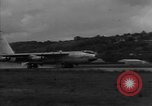
Combined operations of: U.S. Army, Air Force, and Navy, during Inchon Landing, in the Korean War
A B-52 strategic bomber aircraft takes off. A flight of B-52s in formation. Higgins boat landing craft motoring toward shore in the amphibious assault and landing at Inchon, during the Korean War (also spelled Incheon). A U.S. Landing Craft Tank (Rocket), LCT(R), firing rockets at shore during the assault. Wider view of the assault with rockets being fired and smoke obscuring much of scene. General of the Army Douglas MacArthur, Commander-in-Chief, Far East Command, is seen seated aboard the USS Mount McKinley (AGC-7) during the Inchon Korea landings, September 15,1950. Behind him is Rear Admiral James H. Doyle, U.S. Navy, Commander of Task Force 90 and Major General Edward M. Almond, U.S. Army, Commander, Tenth Corps (looking through binoculars). More scenes of the amphibious landing including view of Landing vehicle Tracked (LVT) in the surf. Infantrymen clambering ashore. An M4 Sherman tank in action. Smoke and fire. North Korean soldiers surrendering with white flags and taken captive as prisoners of war. American tanks passing through captured North Korean town.
The gun crew walks towards the sandbagged gun emplacement after receiving firing orders, Kimpo.
U.S. 90mm antiaircraft artillery in surface mission, Kimpo provisional regiment, Korea. Sandbagged gun emplacement showing 90mm antiaircraft artillery. The gun crew walks towards the gun. Face of the azimuth dial on the gun.
Singer and actor, Al Jolson arrives at Pusan Air Base to entertain United States troops during the Korean War.
A U.S. Air Force VC-47B (VIP transport plane, tail # 43-49212) arrives at Pusan Air Base in Korea on 17 October, 1950. Singer and actor, Al Jolson steps from the plane and is greeted by American officers. Al Jolson gets into a jeep. .Next he is seen with officers on a sidewalk. Scene shifts to Jolson seated at a piano on and outdoor stage, where he just finishes performing and turns to speak to the large audience of soldiers present. The audience is seen applauding. Jolson is seen from behind, and then from various angles, as he sings a song. Some soldiers respond to the tempo of Jolson's music. (Narrator comments that 6 days after this performance, Al Jolson died from a heart attack, on 23 October, 1950 in San Francisco.) In final scene, he is seen raising the United Nations flag. (Note: this film is silent except for narration.)
U.S. troops engage in rear-guard street fighting in Taejon as North Korean forces continue to advance during the Korean War.
The Battle of Taejon in Korea during the Korean War. U.S. vehicles and troops on the streets of Taejon. Damage and ruins in Taejon. U.S. troops engage in rear-guard street fighting in the ruins as North Korean forces continue to advance. U.S. tanks advance to take up positions on a hilly terrain. The troops fire guns. Smoke rises from explosions. Engineers lay rocks on a stream bed north of Taejon to facilitate crossing of light vehicles. Jeeps cross the stream.