


 Francais
 Deutsch
 Italiano
Refine Your Search
Seoul Korea 1960 stock footage and images
- Showing 223 to 228 of 2020 results more
more Hide
Hide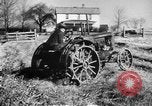
American economy strengthens after the Great Depression; also growth and prosperity and civil rights reform in 1950s and 1960s.
Chronicles recovery in America after the Great Depression in the United States, from roughly 1933-1967, but with emphasis on the earlier years of that period. Pre-war work programs such as the Works Progress Administration (WPA) help with employment. Farmers work in their fields with tractors. Officials in an office discuss and prepare graphs. Workers drill and work at a construction site. The 1933 Homeowners Loan Corporation sparks new home building. View of new homes being built and new suburban neighborhoods. Brief scene of bombing at Pearl Harbor. American warships launching from shipyards during World War II. Women war production workers work in factories in the United States. Post-war Marshall Plan aid being sent to European countries. Crates of supplies marked for European countries. Industrial output booming again, and scenes of industrial factories and plants with smoke pouring from chimneys and pollution from stacks. Large pool typists room filled with female typists and clerical workers busy at work in government agency. Close up views of hands of women operating typewriters. Reforms for housing projects, African American Civil Rights and measures taken to stabilize unemployment, with scenes of successive Presidents signing reform bills, including Truman, Eisenhower, and Kennedy. A ship departs from a harbor with goods. A convoy of vehicles on a road. Various Federal buildings in Washington DC. The White House building. An aerial view of an American town and of a factory with pollution smoke emitting from stacks. Letters being delivered to elderly women. People enter a medical clinic and wait in the clinic waiting room. Racially integrated classroom of older high school students or university students, with white and African American students, and both young men and women. A young white woman worker and a young African American working in a machine shop or possibly an academic shop class. A white and a African American man share a sandwich and views of white and black people together in integrated classrooms and factories as segregation begins to wane. Elementary school children in a classroom drawing pictures.
CIA and other U.S. sponsored experiments dealing with control of animals and people using various techniques during the 1960s and 70s.
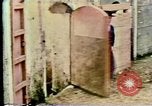
In 1964, Professor Jose M.R. Delgado, of Yale University's School of Medicine, invented a device he called a stimoceiver. It was a chip that could alter the brain’s electrical impulses via radio signal. In tests sponsored by the U.S. Office of Naval Research, he implanted the device in the brain of a bull. This film opens shows that experiment and its results. A man in Cordova, Spain, opens a bull ring door to allow a fighting bull to enter. It charges a man holding a cape. Another man fires a dart to sedate the bull. Several men plant electrodes for a stimoceiver in the bull's brain. Next, the bull charges a man holding a cape, but pulls up short before hurting him. The bull chases the cape but never attacks the man as the man uses remote control to influence the animal's behavior. The bull charges around in a circle. Scene shifts to Dolley Madison Parkway (Route 123 in Mclean, Virginia, where sign points toward the CIA headquarters at Langley, Virginia. Narrator lists various techniques examined in the 60s and 70s, including brain surgery; psychosurgery; creation of amnesia; parapsychology; and manipulation of genes. Glimpse of some facilities at CIA headquarters. Change of scene to hearing of the Senate Subcommittee on Health and Scientific Research on September 20, 1977. Chaired by Senator Edward M. Kennedy, the Committee sought information about these activities by the CIA. Narrator says witnesses had agreed to limit information they would provide the Subcommittee. Former narcotics officer Charles Siragusa is seen on camera admitting that the man he reported to at the CIA wanted him not to say anything. Former CIA chemist Robert V. Lashbrook is seen testifying that he has no knowledge about the CIA running safe houses. (Narrator states he ran one of them and that a "surprise LSD experiment" was conducted there.) Scene shifts to a California tennis court, where Dr. Sidney Gottlieb is playing doubles tennis, Narrator says he oversaw those activities at the CIA but destroyed all his records when he retired in 1973. View of a letter he wrote at that time, in which he states he and his colleagues had been able to maintain contact with the leading edge of chemical and biological developments in the field of biological and chemical control of human behavior. View of Dr. Gottlieb entering an ante room where he testified before the Senate Subcommittee on Health and Scientific Research without being filmed because of what his lawyer claimed were health and cardiac problems. View of him on the tennis courts as Narrator states he declined ABC News requests for an interview. Change of scene to George White who retired from the CIA and lives in Stinson Beach, California. View of Stinson Beach from high overlooking vantage point. People jogging on the beach. Narrator states that White wrote to Dr. Gottlieb summing up his career saying, "it was fun fun fun, and where else could a red-blooded American boy lie, kill, and cheat, steal, deceive, rape, and pillage, with the sanction and blessing of the All Highest." Narrator strolls on lawn near the U.S. Capitol building and says it appears doubtful that mind control has been achieved. But work, that we don't know very much about, is continuing in this field. He asks how deeply are the Russians and other dictatorships into this. He notes that the CIA is reluctant to give information about it (such as Project MKUltra) and he questions where such a program fits in a democracy. He notes that one person working on these projects told him there are capable, conscientious, and very capable scientists working for our country, and "their work speaks for itself."
A 1960 newsreel retrospective shows 1935 demonstration of a combination police revolver and movie camera.
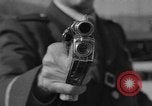
Combination revolver and miniature movie camera invented by O.W. Atkins of Los Angeles. 1935 film opens showing a policeman holding a revolver (unloaded) pointed directly at the camera. A small camera is attached under the gun barrel. A side view of the revolver shows a cutaway of the movie camera attached underneath. The camera's mechanism moves the film. Next, a police officer is seen standing and pointing the gun-camera. Then in an enactment, a round camera view, ostensibly from the gun-camera, shows a man running toward the officer and being shot down by him. Next, a man in civilian clothes examines a strip of motion picture film from the gun-camera.
Marriages and births from various royal families in 1960
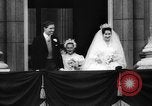
Princess Margaret of Britain waves towards a large crowd of people in England after her marriage to Antony Charles Robert Armstrong-Jones, a commoner photographer later styled as the 1st Earl of Snowdon. British crowd cheering for Princess Margaret. Scene change to King Baudouin of Belgium as he marries Doña Fabiola de Mora y Aragón of Spain during a traditional Catholic ceremony at the Cathedral of St. Michael and St. Gudula (Place Sainte-Gudule, 1000 Bruxelles, Belgium) in Brussels, Belgium. Queen of England Elizabeth and her husband Prince Phillip introduce little toddler Prince Andrew, sitting with his family on shore of a lake. Next scene shows Crown Prince Akihito of Japan playing with his newborn son Prince Naruhito at the Tokyo Imperial Palace (1-1 Chiyoda, Chiyoda City, Tokyo 100-8111, Japan). The next scene is Mohammad Reza Pahlavi, the Shah of Iran, with his wife, Farah Pahlavi, at a ceremony after the birth of their first son, Reza Pahlavi, the Crown Prince of Iran. Final scene is United States President John Kennedy and his wife Jacqueline in a hospital on the birth of their son John Fitzgerald Kennedy Jr.
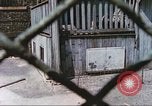
African American people on streets of Chicago in the late 1960s
A documentary about Project Breakthrough, by the office of Economic Opportunity Community Action Program to teach preschool children language skills in Cook County, Illinois. Views on city streets of Chicago where residents live in poverty. African American people gathered in small groups. African American children on sidewalks and in small groups. AFrican American men talking together in front of store fronts. Litter and garbage on the street. Poor people, mainly African Americans, on the streets. An African American girl crosses the street. A woman carrying a child walks along the sidewalk. Close-up view of legs and shoes of people walking atop litter on the street. Director of Cook County Department of Public Aid William H Robinson seated at a desk.
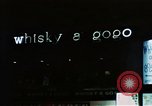
1960s street scenes show signs including "Whisky A Gogo" in Soho, London, England.
The night life in Soho, an entertainment district in London, England. Various neon signs of "Whisky A Gogo" on a road. A direction sign of 'Whisky A Gogo'.