


 Francais
 Deutsch
 Italiano
Refine Your Search
Seoul Korea 1960 stock footage and images
- Showing 313 to 318 of 2020 results more
more Hide
Hide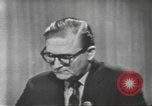
Vice President Nixon and Senator Kennedy debate in the U.S. over a summit conference between the U.S. and the Soviet Union.
The fourth presidential election debate held between Democratic nominee Senator John F. Kennedy and Republican nominee U.S. Vice President Richard Nixon in New York, United States on 21st October 1960. News correspondent John Edwards ask Vice President Nixon about the conditions to be met before meeting Soviet Premier Nikita Khrushchev at Vienna Summit of 1961. Nixon replies that an agenda should be prepared which should delineate those issues on which there is a possibility of some agreement or negotiation. He says that U.S. President should not go to the conference unless they have such an agenda, unless they have some reasonable assurance from Khrushchev that he intends seriously to negotiate on those points. News correspondent Quincy Howe asks Senator Kennedy to comment on the topic. Senator Kennedy says that the U.S. should not go to the summit until there is some reason to believe that a meeting of minds can be obtained on either Berlin, outer space or general disarmament including nuclear testing. He mentions the failure of the conference on May 15th 1960 in Paris, France. He further says it is important that they maintain their determination, that they indicate that they're building their strength, that they are determined to protect their position and that they are determined to protect their commitment.
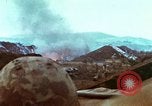
U.S. Air Force Military Airlift Operations in 1968 during the Vietnam War, and during 1976 border tensions in Korea
View from a U.S. Marine bunker as enemy shell explodes nearby, during the siege of Khe Sanh in 1968 during the Vietnam War. The United States Marines in the Battle of Khe Sanh firing mortars and a 105mm howitzer from their bunker. Enemy shells exploding on the tarmac, where American Air Force C-130 aircraft are parked. Marines rushing wounded comrades on stretchers, to C-130s for evacuation. Scene shifts to U.S. Marine Corps Lieutenant Colonel James P. Sheehan, standing at Camp Pendleton, California. (He was a company commander in the siege at Khe Sanh.) As he describes the C-130 aircraft support operations, a contingent of marines marches past, behind him. Scene shifts to a civilian narrator standing in the Military Airlift Command (MAC) Headquarters Command Center at Scott Air Force Base, Illinois. Among other things, he describes MAC support to the Tactical Air Command in Korea. Camera focuses on MAC air routes in the vicinity of the Philippines, Japan, and Korea. Next, is seen view of airfield at Mountain Home Air Force Base, Idaho, briefly at sunset, and then at night, as pilots of the 366th Tactical Fighter Wing and their F-111 aircraft prepare to depart for Korea, in response to border tensions, in August, 1976, after North Korean forces killed two American officers ("Korean Axe Murder Incident" and resulting "Operation Paul Bunyan"). Ground crewman directs a taxiing F-111 using lighted wands. The F-111s takes off. One of them is seen landing after the 7 thousand mile flight to Korea, as Major Paul Malandrino,Jr. (unseen) of the 366th Wing, speaks about MAC's airlift support. A C-141 MAC aircraft is seen landing. View of a C-141 with tail doors open and its cargo of military equipment on the ramp behind it. Glimpse of a marine with rifle and earphones, guarding equipment on the airfield ramp. Closeups of F-111 aircraft taking off.
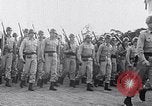
United Nations Security Council meeting to protect South Korea and preparation by US Marines and Army for Korean War.
United Nations meets to organize military action for protection of South Korea from Communist North Korea. United States troops in Tokyo, Japan prepare to advance to Korea. U.S. Army forces are seen passing in review before General MacArthur and General Omar Bradley in Tokyo, Japan. Back in the United States, a B-29 bomber, "moth balled" by being entirely encased in "cocoon" plastic since after World War 2, is rolled onto an airfield. Air force personnel remove the heavy plastic from the body and tires of the B-29, revealing its World War 2 nose art name "Lucky 13" (which had been among B-29 aircraft of the 25th Air Service Group in World War II). Navy Vought F4U Corsair aircraft with folding wings are unloaded from giant containers in aircraft hangars. A group of the F4U aircraft lined up at an airfield. Military equipment being loaded onto waiting ships, and carried by soldiers at a warehouse area. Units of the 1st U.S. Marines answer the call, are seen piloting amphibious vehicles in the ocean and onto the dock landing ship USS Gunston Hall (LSD-5) . Canadian sailors are seen boarding ships and Candian Navy destroyers leave British Columbia for Korea. Women and children wave form dock. Destroyers underway in sea. White, African American, and Hispanic young men in the United States are seen standing in lines at a United States Army enlistment office, answering the call to serve as new recruits in the Army. A group of new recruits raise their right hands and take an oath of service. U.S. President Harry S Truman speaks to a meeting of the Reserve Officers Association meeting, indicating that the only reason for this action is to hopefully arrive at the peace in the world that was hoped for when the United Nations was created. He leaves and shakes hands with officers. At Security Council meeting of the United Nations in Lake Success, New York, the President of Council, Arne Sunde, of Norway, invites Korean Ambassador to join table. Ambassador Chang comes and sits. The United Kingdom representative presents resolution which the body votes on (United Nations Security Council Resolution 84). It is passed by 7 to 0 in favor. The U.S. is asked to designate a military commander for the United Nations forces. The Korean ambassador, Chang Myon, expresses gratitude to the UN Security Council.
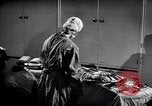
U.S Army Medical Service in Korea. Injured U.S. soldiers evacuated to the United States during the Korean War.
Scenes inside U.S. Army hospital in Japan. Surgeons scrub hand and arms at sinks before surgery. Surgeons prepare for operation on patient. Patients are moved about and treated. Nurse tending bedridden patient. Several soldiers seen leaving to return to duty in Korea. Others are transported to Haneda Air Base, near Tokyo, where the Military Air Transport Command operates long range aircraft in the so-called "Pacific Air Shuttle." A wounded soldier is taken from an ambulance and placed aboard a transport aircraft. Interior of aircraft is shown, with stretchers, medical workers and nurses. Aerial view of Honolulu, Hawaii from aircraft. The aircraft lands at Hawaii where wounded are cared for at Tripler Army Hospital until ready to continue journey to Travis Air Force Base in California. View from cockpit of aircraft landing at Travis Air Force Base. Wounded patients being moved through rear cargo doors of C-97 aircraft. Exterior view of fountains and main entrance at Walter Reed U.S. Army General Hospital in Washington, DC. Captain Zimmerman introduces Lt. Col. S.J. Newsome, who was a surgeon in Korea with the 7th Division. Dr. Newsome emphasizes "speed" as the most important factor in recovery of wounded soldiers. He also mentions the problem of disease affecting soldiers in foreign places like Korea, saying that, "Korea is a disease ridden country" with cases of pnemonia, smallpox, and "orgental diseases we had never seen before." Scenes of Army doctors performing medical examinations on soldier patients. Wounded being placed aboard jeep in Korean War. Soldier firing rifle. Soldiers slogging through mud and water. Soldiers firing artillery in the snow, and evacuating wounded on inflated litter in snow. Combat in jungle. View of civilian people wasing at side of river in India. Civilian dead in streets.
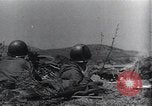
United States Army 187th Airborne Regimental Combat Team returns to Japan from Korea and is welcomed by City of Beppu, Oita
Clip opens with rapid changing scenes: American troops in trench in Korea during the Korean War. American tank on street in Germany. American Ski troops in Alaska. Amphibian assault training in Puerto Rico. Rotating Globe shows: U.S. Army on alert to defend against aggression. Sergeant Stuart introduces episdoe and states that U.S. Army has come to Japan to know their culture and make friends after war and occupation. U.S. Army troops of the 187th Airborne Regimental Combat Team, are seen arriving by railroad train at a train stateion near their base near Beppu,Oita on the island of Kyushu, Japan. U.S. Army soldiers, including white and African American soldiers, exit train cars. They receive a warm welcome from Japanese population. Banner reads:" Welcome Pala Troop comin back from Korea, City of Beppu."[sic] Women holding flowers and families with small children waving American and Japanese flags, welcome them on the train station. A sign over the train station platform reads: "Welcome 187 Para Troop Coming Back From Korea, City of Beppu." The troops stand in formation on the platform while the unit's officers receive the flowers from the women. Japanese men in fraternal uniforms and the general population all join in the welcoming ceremonies. The troops march off the train station under another sign reading: Welcome Home 187 RCT." and march down the main street of Beppu under a swirl of paper confetti. Next scenes are from autumn of 1945, as U.S. soldiers march through streets of Japan during occupation following the end of World War 2. U.S. troops seen marching behind Japanese police to occupy Japan, in 1945, amidst the aftermath of suffering and destruction of the war. The local population standing at road sides and watching with worry and concern. Scenes of postwar destruction in Japan. Rubble of bombed buildings. Scene of simple wooden dwelling shacks and wreckage nearby. A Japanese boy with his baby brother on his back. The baby is crying. Next scene moves again to circa 1950 in streets of a Japanese city, possibly Tokyo, rebuilt and with busy scenes of traffic on streets and commerce. Large outdoor rally with a Communist speaker addressing large crowd of Japanese people who sit and listen. Scenes from a what the narrator describes as a Communist rally in Japan, against America, which turns violent. Protestors running in streets during demonstration, with signboards and police and fire fighters extinguish flames at scene of an overturned, burning car. Flashback again to 1945 or 1946 as U.S. Army soldiers use tractors and heavy equipment to clear and level an area of war rubble and debris during rebuilding efforts after World War 2. Japanese citizens look on, watching the machines at work.
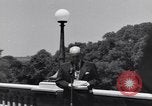
Secretary of Defense Louis Johnson gives a speech on the potential war in Korea in Washington D.C., United States.
Secretary of Defense Louis Johnson gives a speech in Washington D.C., United States. Johnson stands at microphone. Trees in the background. Johnson speaks on the Korean War situation very early in the war. He talks about the development of a force in South Korea to ensure the security of the country in the face of attack from North Korea and from possible other countries assisting North Korea.