


 Francais
 Deutsch
 Italiano
Refine Your Search
Soc Trang Vietnam 1963 stock footage and images
- Showing 2203 to 2208 of 4649 results more
more Hide
Hide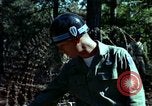
Training of soldiers at Fort Riley, Kansas, before deployment to Vietnam.
U.S. Vietnam veteran Army Sergeants instruct troops prepaing for deployment to Vietnam. Live fire training at a firing range. "Quick Kill" weapon pointing technique is taught, using "BB" air powered gun and aluminum disks. M-16 training. Two-week refresher course, at Fort Riley, Kansas, for Non-commissioned officers, preparing to return to war in Vietnam. (Vietnam War period).
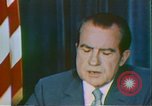
U.S. President Richard Nixon works for peaceful end of Vietnam War, improves domestic conditions and controls drug traffic.
U.S. President Richard Nixon speaks about aftermath of immediate withdrawal from the Vietnam War. U.S. military prisoners of war held by North Vietnam stand before press reporters in Vietnam. President confers with U.S. Secretary of State Dr. Henry Kissinger at his office. Vietnam War draftees being selected by traditional lottery system. Men stand in front of machines that churn out numbered balls for new draft lottery system. Nixon transforms budget expenditure on human needs. Criminals caught by police walk, some covering their faces from the media, as they are led away by police and investigators. Illegal drugs seized by efforts of Nixon administration. View of seized heroin manufacturing equipment. Nixon speaks about the opium farming in Turkey during one of his speeches and mentions agreement with the Turkish government in Ankara to cease all opium poppy production. Customs officers check illegal drug traffic on the border of Mexico and America. Drug enforcement officials search cargo hold of a ship for illegal drugs. Views of drug control officers finding illegal stashed hidden drugs in hiding places in cars and vehicles. Nixon speaks about increased budget to control illegal drug traffic and rehabilitation of drug abusers and drug addicts. He creates the office of Drug Abuse Enforcement and he speaks saying "We must wage what I have called Total War against public enemy number one in the United States: The problem of dangerous drugs." From a pro-Nixon "documentary" called "The Nixon Years: Change Without Chaos" covering President Richard Nixon's first four years in office. Released during his 1972 reelection campaign.
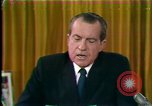
U.S. President Richard Nixon addresses nation about Vietnam War, from White House, Washington DC.
Stand of U.S. President Richard Nixon on Vietnam War. President Nixon addresses the nation about the Vietnam War from White House. He explains what has been described as "The Nixon Doctrine" regarding U.S. involvement in war, foreign policy support, and defense of freedom. He discusses the concept of helping other nations fight wars, rather than fighting wars for them. He illustrates this approach in describing U.S. efforts in Vietnam. He promises that 20% of U.S. combat forces will return by mid December. He notes he will not reveal withdrawal decisions that will compromise efforts at the Paris talks. He indicates he will pursue a path seeking a just peace through a negotiated settlement or through continued vietnamization.
Quaker-sponsored American pacifists sail from Japan in yacht "Phoenix of Hiroshima" to bring medical supplies to North Vietnam
Quaker-sponsored American pacifists sail from Misaki, Japan to bring medical supplies to North Vietnam, during the Vietnam War. Yacht "Phoenix of Hiroshima" at a dock in a Japanese harbor, before starting the first of its three trips bringing aid to both North and South Vietnam. Seven American pacifists from "A Quaker Action Group" (AQAG) set sail in the "Phoenix of Hiroshima" bound for the North Vietnamese port of Haiphong, on the group's first of three voyages. A flag flies from the yacht. Views of some of the participants on the boat including Phil Drath, Betty Boardman, Dr. and Mrs. Earle Reynolds, and Bob Eaton. People on the dock wave as the yacht leaves the harbor heading to Vietnam.
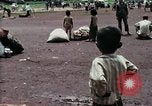
Cambodian refugees board a C-7A at Boung Long and leave the aircraft at Pleiku AB in South East Asia during the Vietnam War.
United States Air Force ( USAF ) support for the evacuation of Cambodian refugees from Boung Long, Cambodia to Pleiku AB in Vietnam during the Vietnam War. At Boung Long, Cambodia: Cambodian refugees wait to board an aircraft. They board a C-7A. A pilot at the controls and the control panel. At Pleiku Air Base, Vietnam: The C-7A taxis in. The engine of the aircraft stops. Army of the Republic of Vietnam (ARVN) troops and refugees unload the aircraft. The refugees leave the aircraft.
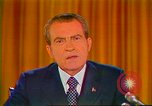
President Richard Nixon address the nation from the White House in Washington DC, United States at the end of the Vietnam War.
Television broadcast of U.S. President Richard Nixon's speech from the White House in Washington DC, United States on withdrawal of the remaining U.S. troops from Vietnam on 29th March 1973 during the Vietnam War. President Nixon speaks about the end of the Vietnam War. He speaks about differences about war which divides a nation. He talks about bringing peace and reducing the burden of armaments. He refers to nations in past which fell at the height of their wealth and strength and assures that it would not happen to the United States. He shares his experience of speaking to an American prisoner who survived in a communist prison during the Vietnam War.