


 Francais
 Deutsch
 Italiano
Refine Your Search
Souilly France 1916 stock footage and images
- Showing 3547 to 3552 of 5649 results more
more Hide
Hide
British troops take up positions in forward trenches during the Battle of Ancre in World War I.
Battle of the Ancre in World War 1. British troops moving to the front by way of "communication trenches." Once in place, soldiers are seen using their rifles to launch grenades at the German lines. Smoke from shell bursts drifts across the no man's land outside the trenches.
British soldiers fire antiaircraft guns towards German observation planes during the Battle of the Ancre in World War I.
British truck-mounted antiaircraft guns harass German observation planes (not seen) during Battle of the Ancre in World War 1. British soldier watching the sky through binoculars.
Mail call for Scottish troops following the Battle of the Ancre, in World War I.
Mail call for Scottish troops after the Battle of the Ancre, during World War 1. A soldier distributes mail to the troops who eagerly gather around him on a hill overlooking fields below.
Royal Naval Division assembles after the capture of Beaucourt and goes back to rest after the Battle of Ancre in World War I
Battle of the Ancre in World War 1. The British 63rd Division (Royal Naval Division) assembling after the attack and capture of Beaucourt-sur-l'Ancre. Troops of the Division smiling as they pose for the camera. Two are seen wearing captured German helmets. Four of the troops pose wearing captured German helmets. The troops march in formation to the rear for rest.
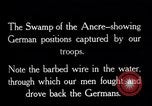
German positions captured by British forces during the Battle of Ancre in World War I.
Battle of the Ancre in World War 1. Views of German positions that British Forces captured, on the higher bank of the river. Marshes of the Ancre River, showing barbed wire in the water through which the British troops had to struggle during the battle.
British Soldiers rest and return to their encampments after the Battle of the Ancre in World War I
World War 1. after the Battle of the Ancre. Scottish Rifles Cameronians Regiment marching back from the front lines, led by their Regimental pipe band. Soldiers from Ireland (Irish 16th Division) take advantage of the temporary calm to sleep and rest in their trenches. Soldiers using the respite to wash and shave in their redoubt. Trops of the Scottish Rifles Cameronians Regiment gather together for evening of relaxation and song, accompanied by musicians from their Regimental band. Soldier in right foreground wears the insignia of the Cameronians on his service cap.
CRITICALPAST.COM: About Us | Contact Us | FAQs - How to Order | License Agreement | My Account | My Lightboxes | Shopping Cart | Advanced Search | Featured Collections | Website Terms & Conditions | Privacy Policy ©2026 CriticalPast LLC.
License Agreement |
Terms & Conditions |
Privacy Policy
©2026 CriticalPast LLC.