


 Francais
 Deutsch
 Italiano
Refine Your Search
Souilly France 1916 stock footage and images
- Showing 3817 to 3822 of 5649 results more
more Hide
Hide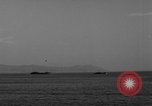
American destroyers Escorts(DE),Destroyers(DD)and YMS at Naples Harbor in France (WW2)
View of American destroyers (DD) in Naples Harbor during World War II. A United States Navy officer on bridge. Landing Craft Infantry (LCI) in Naples Harbor. A Destroyer Escort (DE) lays smoke screen on water. View of landing crafts (LC). Formations of planes. DE, DD & YMS in Naples Harbor. LST tow barrage balloons. YMS leaves Naples Harbor.
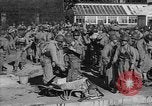
American soldiers being given personal gear as they prepare for invasion of France
U.S. troops in England during World War II. Troops remove their combat gear.They stack arms and equipment outside recreation facility operated by NAAFI (Navy,Army,Air Force Institute, a British Government service organization for enlisted military personnel) Combat gear lying on ground. Soldiers being issued personal flotation gear. Soldiers lined up to receive the gear. Supplies being loaded onto a truck. Wooden crates being transferred onto a boat with the help of a wooden plank. The boat flies a pennant with 48 white stars on a solid field. It contains no stripes. Sign on dispensing machine at wharf reads "Nestle's Chocolate." The boat is manned by U.S. Coast Guardsmen. Military jeeps lined up on the wharf. Soldiers around the jeeps. A soldier loaded in a truck being helped by another soldier to strap his gear onto his shoulder.
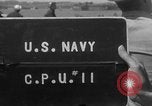
Armored vehicle backs 90 MM AA gun into LST (Landing Ship, Vehicle) prior to landing in France.
Group of LCVP (Landing Craft, Vehicle, Personnel) milling about in small harbor. LST in harbor, decks of the ship in the foreground. LCT (Landing Craft, Tank) back down. Other ships in the foreground. Armored vehicle back 90MM AA gun into LST. Vehicle and gun as they go up ramp into LST. Interior of LST shows 90 MM gun and armored vehicle.
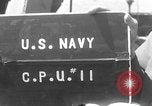
6x6 truck backed up onto LCT (Landing Craft, Tank) aboard LST (Landing Ship, Tank) prior to landings in France.
Elevator aboard LST comes up to deck with 6x6 truck. Truck backs away from elevator. Truck is backed up onto LCT. Men walk alongside truck. Man with spool of wire follows truck. Men load equipment aboard LCT.

Franco-German discussions to resolve the Saar issue. Konrad Adenauer, of Germany and Guy Mollet, of France meet in Luxembourg
Views of Luxembourg. Automobile carrying French negotiators, Christian Pineau, Francois-Poncet, and Rene Mayer, arrives at meeting place in Luxembourg. Small group of onlookers on sidewalk, and some looking out apartment windows. Photographers take photographs. Car arrives carrying German President Konrad Adenauer, who enters the building. Inside meeting hall, French delegation, headed by Prime Minister, Guy Mollet, is seated at the table. Konrad Adenauer at the table, consulting with member of his German delegation. Members of the French delegation converse together.
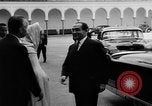
Prime Minister Pierre Mendes of France visits Tunisia and meets with Habib Bourguiba
French Prime Minister Pierre Mendes shaking hands with officials after arriving for a meeting in Tunisia. He is seen visiting with Habib Bourguiba. Prime Minister Mendes greeting other dignitaries and seated in a waiting car.
CRITICALPAST.COM: About Us | Contact Us | FAQs - How to Order | License Agreement | My Account | My Lightboxes | Shopping Cart | Advanced Search | Featured Collections | Website Terms & Conditions | Privacy Policy ©2026 CriticalPast LLC.
License Agreement |
Terms & Conditions |
Privacy Policy
©2026 CriticalPast LLC.