


 Francais
 Deutsch
 Italiano
Refine Your Search
Souilly France 1916 stock footage and images
- Showing 4183 to 4188 of 5648 results more
more Hide
Hide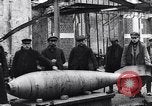
Men disassemble a torpedo in Belgium in World War 1
Mix of civilian and military men (one wearing a Belgian side cap with tassel) hold torpedo that is laying on pedestal. Men move torpedo. They unscrew its tail to open it and they place the tail on the ground. They unscrew a cover over the bomb inside. Men stand with torpedo and its tail.
Public procession during the funeral of Emperor Franz Joseph I of Austria
Public procession on occasion of the funeral of Emperor Franz Joseph of Austria. Included are many clergy, officials, and military. Soldiers stand in formation. Horse carriage, soldiers, officers, and royal family walk on road. Crowd stands on the roadside. Dignitaries walk on the road. New Emperor Karl I with Empress Zita of Bourbon-Parma and Crown Prince Otto visible at 0:40
Kaiser Karl I of Austria with his emperor's hunters in Tyrol, Austria.
Kaiser Karl I of Austria, with his Emperor's hunters in Tyrol, Austria. Kaiser Karl shakes hands with an officer. Man watches through binoculars. Alps mountains covered with snow in the background.
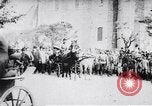
Emperor (Kaiser) Karl I and Empress Zita, of Austria, ride in a carriage and greet people in Gyongyos (Heves County), Hungary
Emperor Karl I (Charles I) of Austria-Hungary and wife Empress Zita ride in a carriage and greet people in Gyongyos (Heves County) in Hungary. Emperor Karl I waves from carriage. Horse-drawn carriage proceeds slowly as numerous soldiers and citizens surround it on three sides and accompany it.
Kaiser Karl I of Austria, reviews troops of the Royal Hungarian Honved Division in Galicia during World War I
Kaiser Karl I reviews troops of the Royal Hungarian Honved Division in Galicia, Austria-Hungary, during World War 1.. Troops stand in formation. The Kaiser talks to a soldier. Soldier also replies. The Kaiser turns back to another soldier and salutes. (WWI; WW1)
Her Majesty, Empress Zita, of Austria, visiting Krakau (Krakow) Poland, during World War I
Crowd surrounds carriage, as Empress Zita of Austria steps into it to depart during her visit to Krakau (Krakow) Poland, where a Regiment of the Austro-Hungarian army was headquartered during World War 1. Flags fly in the area. The Empress's carriage is drawn by a pair of matched white horses. (WWI; WW1)
CRITICALPAST.COM: About Us | Contact Us | FAQs - How to Order | License Agreement | My Account | My Lightboxes | Shopping Cart | Advanced Search | Featured Collections | Website Terms & Conditions | Privacy Policy ©2026 CriticalPast LLC.
License Agreement |
Terms & Conditions |
Privacy Policy
©2026 CriticalPast LLC.