


 Francais
 Deutsch
 Italiano
Refine Your Search
Souilly France 1916 stock footage and images
- Showing 4729 to 4734 of 5648 results more
more Hide
Hide
Dead bodies at Dachau concentration camp in Weimar, Germany.
Aerial view of Dachau concentration camp with buildings and people, soon after its liberation near end of World War 2 in Europe. Gates of the camp with a Nazi swastika on its top. Starved inmates from Czechoslovakia, France and Holland at the camp. Bodies of dead prisoners in a railroad train car boxcar. Men pile up bodies onto a truck.
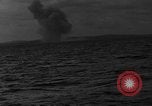
United States Navy heavy cruiser USS Quincy, CA-71 and battleship USS Nevada, BB-36, in World War II
Night action at sea during World War 2. A massive explosion occurs as a mine detonates. Flashes in the dark as tracers are fired at night and flares fall on the surface. United States Navy heavy cruiser USS Quincy, CA-71, painted in Camouflage Measure 31-32-33 series Design 18D. Next is the battleship USS Nevada, BB-36, painted in Camouflage Measure 22. ( Note: This was likely filmed between May 1944 and September 1944 when these two ships supported both the Normandy and Southern France Invasions.)
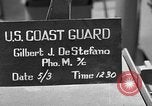
Four U.S. Coast Guardsmen share cigarettes and showoff their weird haircuts, three days before D-Day in World War II
United States forces preparing for the invasion of Normandy, France, during World War 2. Four United States Coast Guardsmen sit cross-legged and smoke cigarettes, on board a landing craft docked in England, three days before D-Day. A life raft in the background. They simultaneously take off their hats and lower their heads to reveal radical haircuts that collectively spell "HELL."
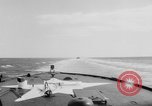
U.S. PT boats running in British waters. DC-3 aircraft towing Horsa Gliders.
United States Navy Patrol torpedo boats underway in British waters before the invasion of France during World War II. Bow of a United States PT boat as it patrols along with others. Men on the deck of the boat. A 50 caliber machine gunner. U.S. Army Air Forces C-47 aircraft towing Horsa gliders at medium altitudes overhead, while C-47s without gliders fly in the opposite direction at very low altitudes over the water.
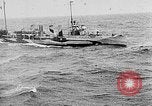
A gun drill aboard the United States ship Whipple in the Atlantic Ocean.
United States Ships en route to France during World War I. United States destroyer Whipple underway in Atlantic with a gun on board.Sailors at the guns and torpedo launcher during a gun drill aboard the USS Whipple.
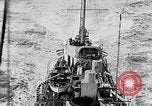
Depth bomb drill aboard the United States destroyer Little in the Atlantic Ocean.
United States ships en route to France during World War I. United States destroyer Little underway in Atlantic Ocean. Men on board the ship. Artillery on board the vessel as waves wash over the gun. Explosion occurs at sea. Two officers look through binoculars. Sailors on the bow of the destroyer.
CRITICALPAST.COM: About Us | Contact Us | FAQs - How to Order | License Agreement | My Account | My Lightboxes | Shopping Cart | Advanced Search | Featured Collections | Website Terms & Conditions | Privacy Policy ©2026 CriticalPast LLC.
License Agreement |
Terms & Conditions |
Privacy Policy
©2026 CriticalPast LLC.