


 Francais
 Deutsch
 Italiano
Refine Your Search
South Vietnam 1969 stock footage and images
- Showing 1669 to 1674 of 6014 results more
more Hide
Hide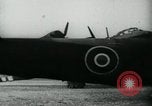
1st Allied Airborne Army troops land in Germany during Operation Varsity in World War II.
The successful airborne crossing of the Rhine river by the 1st Allied Airborne troops during World War II. Aircraft lined up at an airfield in England, United Kingdom. British 6th Airborne Division gliders, British Halifax bomber aircraft and British Sterling bomber aircraft, together with U.S. Army Air Forces C-47 and C-46 aircraft take off from an airfield in the UK. British aircraft taking off and British soldiers waving as they pass by on the airfield. British 6th Airborne Division troops in the field. Airborne troops who will be parachuting to targets are briefed by officers as they stand in a group. Soldiers synchronize their watches. Soldiers put on equipment as they prepare to take off. Airborne troops fully loaded with gear ascend stairs to board propeller aircraft. Narrator points out visible tape placed over sharp corners and protrusions on the aircraft to ensure that no parachutes or equipment are caught and damaged. Soldiers entering through doorways of C-46 aircraft. Personnel at the control tower order aircraft to take off. Aircraft and gliders take off. An aircraft taxis for take off but partially loses control, hits some wheeled carts to the side of the runway, and finally comes to a rest off the runway without severe crash damage. Aerial views of aircraft in flight. Narrator notes that the forces flying from the British airfields are merging south of Brussels with similar Allied forces taking off from bases in France. Troops aboard an airborne aircraft. Allied paratrooper soldiers jump from both doors of C-36 aircraft and their parachutes are seen descending. View of pilot in a towing aircraft as he pulls back lever to cut his towed glider loose. A glider coming to rest in a field on landing. An allied aircraft falling to the ground in flames after being hit by German antiaircraft flak fire. Another allied aircraft is seen exploding upon crashing (with farm barn buildings in foreground partially blocking the view.) Troops in prone position beside gliders after landing, as they secure areas and regroup. Allied British and American Army soldiers enter a village and take German prisoners. Lines of Allied soldiers and equipment advancing near the Rhine.

Displaced civilians and refugees in makeshift camps during Korean War
Korean war tragedy. Despite peace talks in Korean War, the plight of homeless, sick and starving continues. Estimate of three million civilians casualties. Refugees including many children in makeshift homes and camps. Civilian refugees include both North Koreans and South Koreans.
Military Assistance Advisory Group office activities in Baghdad, Iraq; also aerial views of Baghdad.
United States MAAG (Military Assistance Advisory Group) and military mission in Baghdad, Iraq Administrative activities at MAAG office building of Baghdad. Major D.L. Price checks papers brought by his subordinate. Aerial view of Baghdad city and the Tigris River. Aerial view of the ruins of Ctesiphon in Salman Pak (30 Km south of Baghdad).
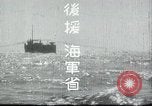
Japanese Naval personnel undergo training.
Japanese submarine underway. Japanese Navy personnel marching on drill ground. Instructor teaches naval students in a class room. Portrait of Admiral Tojo. Japanese Navy students listen and watch during training. Models of various types of Japanese submarines. Portrait of Japanese naval officer. Park shows Japanese submarine, used as training model. Japanese sailors work on controls in engine room of the submarine. World map displayed on wall. Small Japanese submarine underway. Freighter burns after being torpedoed. Some newspaper clippings in Japanese showing images of Germany's Adolf Hitler. Map shows South West Pacific Area stretching all the way to United States and a picture of the submarine on the map.

Correspondent Harry Ellis interviews Tennessee Senator Jim Sasser and Arnold L Raphel, Deputy Assistant Secretary of State.
Interview hosted by Harry Ellis, with reporter from Oslo joining via telephone. Guests are U.S. Senator Jim Sasser from Tennessee and Arnold L Raphel, Deputy Assistant Secretary of State for the Bureau of Near Eastern and South Asian Affairs. The men discuss the situation in Afghanistan stating the condition and morale of Afghan Refugees. Measures taken by United States and Pakistan to render help to Afghan Refugees. They further discuss Soviet resistance getting stronger in Afghanistan.

Senator Jim Sasser and Arnold L Raphel 's interview broadcast regarding Afghanistan situation.
Interview hosted by Harry Ellis, with reporter from Oslo joining via telephone. Guests are U.S. Senator Jim Sasser from Tennessee and Arnold L Raphel, Deputy Assistant Secretary of State for the Bureau of Near Eastern and South Asian Affairs. They discuss the Soviet resistance getting stronger in Afghanistan. U.S. Senator Jim Sasser states that Soviet troops are reluctant to leave and they should withdraw from Afghanistan.
CRITICALPAST.COM: About Us | Contact Us | FAQs - How to Order | License Agreement | My Account | My Lightboxes | Shopping Cart | Advanced Search | Featured Collections | Website Terms & Conditions | Privacy Policy ©2026 CriticalPast LLC.
License Agreement |
Terms & Conditions |
Privacy Policy
©2026 CriticalPast LLC.