


 Francais
 Deutsch
 Italiano
Refine Your Search
Spittal Austria 1945 stock footage and images
- Showing 3589 to 3594 of 6929 results more
more Hide
Hide
Liberated concentration camp victims receive medical aid; evidence of gross mistreatment and atrocities in concentration camps.
Citizens in Gardelegen Germany carry 1100 crosses for graves of Concentration camp victims at a camp near Gardelegen. Scenes from various concentration camps in Germany. A crowd around a liberated concentration camp building. Soldiers and officials enter through gates at numerous camps marked with "Arbeit Macht Frei" on gates. Liberated victims who are able smile and cheer. Liberated prisonsers grab food from a container. U.S. soldiers bring out bodies of gravely ill and emaciated men from barracks and torture areas Gaunt victims carried away in stretchers. A man carries an emaciated victim to a waiting vehicle. An injured man lying on the ground. Physicians examine physical torture evidence and provide medical aid to vicitims of Auschwitz Concentration Camp. Doctors examine a man, a woman, and several starving children and infant victims. (World War II period).
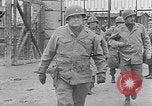
Officials tour Ohrdruf Concentration Camp in Germany after its liberation. Evidence of torture, abuse, genocide is seen.
U.S. General Dwight Eisenhower, Archbishop of Canterbury, and Allied Investigation Committee members tour Ohrdruf concentration camp in Germany after its liberation near the end of World War 2 in Europe. U.S. military officials enter the gates of the Ohrdruf concentration camp. The officials walk on a path inside the camp. U.S. General Dwight Eisenhower with other officials inside the camp. Inmates demonstrate a torture device. General Eisenhower and officials look on. Dead victims of concentration camp. Bodies piled. Archbishop of Canterbury and other church dignitaries visit the camp and review the horror. The civilians of the Allied Investigation Commission inspect the camp. The officers walk in front of the camp. Bunk area with sign "5 men with operations in each box" is seen. Crematories, furnaces, and dead bodies piled up. A group of officials look on. The officials inside the dungeons with piles of dead bodies of human beings. The remains of burned bodies.
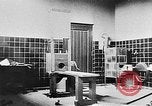
U.S. officials inspect the various torture implements and the possessions of the prisoners at the Ohrdruf camp in Germany.
The different implements and torture devices at the Ohrdruf concentration camp in Germany during World War II. The gas chambers at the concentration camp in Germany. The shower in the bathroom through which the poison gas, Zyklon, used to be inducted when the prisoners shower. The blast furnaces used for cremation of dead bodies of prisoners. The garments of the prisoners being inspected by the officials. Women's clothes, infant shoes, toys and dolls in a room. The storage room in the mills with sacks of prisoners' hair packed. Prisoners' jewelery, watches and wedding rings in the room. The instruments used to pull out the teeth of prisoners. An official holds a prisoner's teeth.
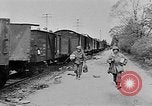
Concentration camp atrocities - bodies in rail cars and burned barns; captured camp officials from Mauthausen and Belsen camps.
Dead bodies at the liberated Ohrdruf concentration camp in Germany during World War II. Two soldiers on the side of a rail car. Piles of dead bodies of prisoners in the rail cars who were suffocated to death. U.S. soldiers hauling a dead body from water. People watch. Dead bodies of Nazi atrocity victims piled up Majdanek and Ohrdruf where German captors had attempted to kill all remaining prisoners before liberation by the Allies. A face of a dead prisoner with one eye pierced. A barn in Gardelegen Germany where prisoners were herded in and then burned alive in what became known as the Gardelegen Massacre. Remains of bodies of prisoners in the barn. A horse carriage enters the gates of prison camp. Officials seen with a captured German guard or official of the Mauthausen camp. U.S. soldiers hold him at gunpoint. View of Josef Kramer, the captured Commandant of the Bergen-Belsen concentration camp. Nazi German women guards and men guards and officials come out of various camp buildings and are marched away by Allied guards.
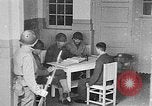
U.S. officials interrogate officals of Hadamar Mental facility in Germany, and views of carnage at Landsberg and Belsen camps
A few U.S. officials during World War II are seen interrogating officials of the Hadamar Mental facility, which also served as a Nazi German human experiment facility and extermination facility. The Camp Commander and a medical officer are brought in by the soldiers. The bodies of the victims of the mass murder. The body of a woman. Soldiers carry bodies and place them on the ground. The bodies of prisoners who were starved to death. The corpses of those tortured to death. Bodies piled up near a building. The bodies of prisoners in Landsberg. The dead bodies of prisoners at various concentration camps who were killed by burning, shooting, starvation or poison gas. The dead body of an infant. The dead bodies of prisoners who were shot or starved to death at the Bergen-Belsen concentration camp. Piles of dead prisoners who were burnt to death by high voltage wires. A few women who survived the sufferings at the camp.
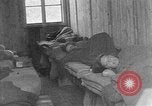
Views of emaciated survivors and victims from a variety of German concentration camps immediately after their liberation
During World War II, scene of a few women with terrible wounds at a German concentration camp near Ramsdorf after being liberated. Physicians attend to the atrocity victims. View of children who managed to survive at Auschwitz camp even after losing their families. The children show their tattoos on their hands that are marks for their identification. Two men who were survivors, one man whose eyes were gouged out by his captors. Men behind barbed wires. Inmate victims who could not walk or crawl being helped by soldiers. Nude men who were starved stand in a group at Ebensee Concentration Camp. Man helps a starved, emaciated man to walk. A man crawls. Bodies of prisoners who died without getting medical aid. Officials beside the bodies. Scenes are from a variety of camps including Ramsdorf, Auschwitz, Aschaffenburg, Bergen-Belsen, and some others that are not clear from the narration.
CRITICALPAST.COM: About Us | Contact Us | FAQs - How to Order | License Agreement | My Account | My Lightboxes | Shopping Cart | Advanced Search | Featured Collections | Website Terms & Conditions | Privacy Policy ©2026 CriticalPast LLC.
License Agreement |
Terms & Conditions |
Privacy Policy
©2026 CriticalPast LLC.