


 Francais
 Deutsch
 Italiano

Refine Your Search
Stalingrad Russia Soviet Union 1943 stock footage and images
- Showing 733 to 738 of 4682 results more
 Hide
Color Sound

Soviet army in military maneuvers with infantry, lancers, field artillery, and tanks.
Red Army troops training with camouglaged 76K/02 field guns. View of gunner using gun sight behind the shield of a 122 mm howitzer M1910/30, as another gun crew member inserts a round into it. The gun is fired. View of the breech area including the gun sight. Russian lancers on horseback, canter in formation past the camera. Soviet MS-1 (T-18) light tanks and some infantry move past the camera. A twin-turreted armored gun railroad car is in the background. Brief glimpse of a British-manufactured Russian Mark 4 Female tank, number 9085. Scene shifts to the 76K/02 field artillery battery firing again. Next, infantry are seen practicing along with the previously seen Mk 4 tank (No. 9085) and another similar tank.
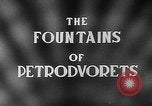
Opening of fountains at Peterhof (Petrodvorets) on August 25, 1946, after their restoration from destruction in World War II
Film opens showing devastated snow-covered remains of Peterhof Palace and its fountains, in Leningrad, after the Russians ended the siege of that city in January, 1944 of World War II. The next scenes show crowds gathered on 25 August, 1946, to celebrate the newly restored fountains, which are seen spraying water again. (Narrator notes that Russians now call the place Petrodvorets, meaning Peter's Palace.) An official speaks, at the ceremony, about the architecture of Petrodvorets and its cultural masterpieces still to be restored. Glimpse of statuary and array of fountains. Closeup of several young women holding flowers. Another shot of the fountains spraying along both sides of a central pond, with spectators crowded along the extreme sides near lines of trees.

Contingents of Soviet Navy participate in parade, Red Square, Moscow, USSR. General Secretary Leonid Brezhnev reviews
Aerial view of Moscow and Red Square during military parade.Contingents of Soviet Navy on parade, carrying Naval Ensign. General Secrtetary of the Communist Party, Leonid Brezhnev, reviews the parade.
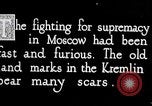
Damage in Moscow as result of conflict during 1917 Russian Revolution
Damage in Moscow from revolution conflict including: Severely damaged Kremlin gates; damage to the Spasskaya Tower and clock on Red Square; and damage to several other grand buildings., including a cathedral. (World War I; World War 1; WWI; WW1)

Russian Bolshevik leader Vladimir Lenin at home with his cat and Nadezhda Krupskaya
Vladimir Lenin seated in a chair at home, holding his cat. His wife, Nadezhda Krupskaya enters and sits. she pets the cat. Lenin begins speaking to an unseen person (possibly an interviewer). Brief glimpse of Joseph Stalin.
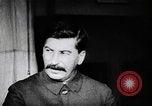
Joseph Stalin in an interview with UPI correspondent Eugene Lyons (unseen) in Moscow
Joseph Stalin, General Secretary of the Central Committee of the Soviet Communist Party, being interviewed by Eugene Lyons (unseen). Lyons was United Press International (UPI) correspondent in Moscow, and the first Western correspondent to be granted an interview with Stalin.
CRITICALPAST.COM: About Us | Contact Us | FAQs - How to Order | License Agreement | My Account | My Lightboxes | Shopping Cart | Advanced Search | Featured Collections | Website Terms & Conditions | Privacy Policy ©2026 CriticalPast LLC.
License Agreement |
Terms & Conditions |
Privacy Policy
©2026 CriticalPast LLC.