


 Francais
 Deutsch
 Italiano
Refine Your Search
Stalingrad Russia Soviet Union 1943 stock footage and images
- Showing 925 to 930 of 5654 results more
more Hide
Hide
Beet processed into sugar in Kiev, Cotton picked and unloaded, rice threshed and stacked in Turkestan
View of a beet Kolkhoz (a collective agriculture farm) near Kiev, Ukraine, Soviet Union. Farmers at work. Beet is processed into Sugar. Russian women in a farm. Cotton is picked and unloaded at Commune of Paris cotton Kolkhoz, located in Armenia. Rice is threshed and stacked in North Star Kolkhoz in Turkestan.
New harvest in Turkmenistan.
Farmers in Soviet Union working in wheat fields. New harvest of wheat by farmers in Turkmenistan. Workers can be seen cutting, hauling and threshing grains.1949.
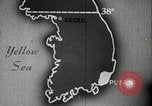
UN landings at Inchon and reoccupation of the capital, Seoul, by UN forces during the first year of the Korean war.
Animated map shows South Korea, from 38th parallel, South, and highlights Pusan, and the advances being made by UN forces after being reinforced. Next, the UN amphibious landings at Inchon (or Incheon) are shown on the map. Flashes of naval gunfire are seen in the blackness of night. Next, a Landing Craft Tank (Rocket), LCT(R), is seen firing barrages of rockets toward shore, at Inchon. On September 15, 1950, U.S. troops are seen landing at Incheon, from boats of the attack transport ship, USS Noble (APA-218). Return to the animated map shows advance of UN forces from Inchon joining with those advancing from Pusan, until they occupy most of the area south of the 38th parallel. UN infantry are seen engaged in urban combat in the city of Seoul, accompanied by M26 Pershing tanks and M46 Patton tanks. Building burning in the city. UN soldiers firing rifles inside damaged building. American soldiers, under fire, carrying wounded on litter. Medical corpsmen tending to casualties, including wounded Korean civilians. Republic of Korea (ROK) infantry following four of their soldiers carrying their flag, stretched out horizonally, between them. (Narrator states they are carrying it back to the liberated capital of Seoul.) ROK troops escorting large number of prisoners of war, marching with hands on heads. UN forces distributing rice and clothing to the Korean inhabitants of Seoul. Soldiers helping little Korean children don clothing. Bodies of men, women, and children who were slain by retreating enemy troops, are laid out on the ground, attended by Grieving relatives. Large quantities of captured North Korean weapons are piled up, including those made in the Soviet Union.
President Franklin D. Roosevelt addresses the American Youth Congress at the White House in Washington DC.
Youth Congress in Washington DC soon after Russian invasion of Finland. Young people march in street, carrying large American flag held horizontally. Men hold a banner which reads 'Civil Liberties'. A woman on horseback holds a poster which reads 'No Arms'. U.S. President Roosevelt addresses the Youth Congress at the White House. He condemns the Soviet Union as a dictatorship and decries its invasion Finland, as an assault on a very small neighboring country that only wishes to live in peace as a democracy. Roosevelt extols the political nature of Finland.
Scenes of the Russo-Finnish Winter War, in Finland, 1940
The Winter War in Finland against the Red Army of the Soviet Union. Damage from Russian air raids on a Finnish town. Structures covered in thick ice and snow. Soldiers push a car stuck in ice. Finnish ski troops in heavy white parkas, moving in the snow. A horse pulls a sled carrying a wounded Finnish soldier. Medics lift him on a stretcher and take him for treatment. A soldier, with cleats on his boots, climbs up a pole. Bullets in a Russian helmet. Snow-covered tanks and equipment. A captured T-28 tank and a BA-27 armored car (likely reused later by the Finns). Dead Russian soldiers lying in the snow.
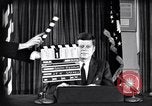
John F. Kennedy announces resumption of U.S. nuclear weapons testing during a speech in Washington DC.
United States President John Fitzgerald Kennedy delivers a speech in Washington DC.on the subject of Nuclear Deterrence. President Kennedy seated on a podium and delivers his speech. He speaks into the microphone. A flag of United States on the stage. He talks about the nuclear weapons. Kennedy emphasizes on maintaining the quality and quantity of nuclear weapons so that America can survive nuclear attacks and have a credible deterrent.. He notes that there had been an agreed upon moratorium on Nuclear weapons testing. But, that the Soviet Union, abandoned that moratorium on September 1st, last year, when it commenced a series of nuclear weapons tests, many in the atmosphere. Accordingly, the President announced that he had first ordered the resumption of U.S. nuclear testing, limited to underground tests. Today, however, he was authorizing the Atomic Energy Commission and Department of Defense to resume U.S. nuclear weapons testing as they deemed necessary under present circumstances, with due regard to issues of radioactive fallout and impacts on other nations..
CRITICALPAST.COM: About Us | Contact Us | FAQs - How to Order | License Agreement | My Account | My Lightboxes | Shopping Cart | Advanced Search | Featured Collections | Website Terms & Conditions | Privacy Policy ©2026 CriticalPast LLC.
License Agreement |
Terms & Conditions |
Privacy Policy
©2026 CriticalPast LLC.