


 Francais
 Deutsch
 Italiano

Refine Your Search
Stalingrad Russia Soviet Union 1943 stock footage and images
- Showing 1813 to 1818 of 4682 results more
 Hide
Color Sound
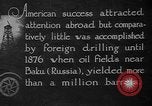
Oil production in the United States is compared with that in the other countries.
The world struggle for oil is depicted. Relative production in 1876 by different countries is shown. A political map of the United States. A map shows Russia, Germany, Italy and other countries. A + sign in Italy shows the oil production being less than 1 % of the world's production. A dot in Galicia and Roumania depicts oil production being 1 % of the world's production. A box on the map shows Japan with a + sign.
Oil production of the U.S. and other countries is compared and evolution of internal combustion engine is depicted.
The world struggle for oil is depicted. Oil production of the United States is compared with that of other countries. Relative production in 1900 is shown. A political map of the United States. A dot in some states represents 1 % of the world's production whereas a cross in other states represents less than 1 % of the world production. A map shows Russia, Germany, Italy, Galicia, Roumania and other neighboring countries. A box on the map shows Japan with a cross. Another map shows India, Tibet, Afghanistan and their neighboring countries. Still another map shows countries of South America. Evolution of internal combustion engines, whereby gasoline is used, is shown using diagrams.
Maps of different countries show their relative oil production as compared to that of the United States.
Relative oil production of the United States and other countries for the year 1914 is depicted. A political map of the United States shows some states with dots and some with crosses and some states with dots and crosses both. A box on the top left corner of the map shows the state of Alaska. A map of the continent of South America with oil production of some of its countries. A box on the top right side of the map shows oil production in Trinidad. A map of Russia shows its neighboring countries such as Germany, Galicia, Roumania and others. Relative oil production in these countries is depicted using crosses and dots. Boxes on the top right corner of the map show relative oil production in Japan and Formosa. Another map shows India, Tibet and neighboring countries. Relative oil production in these countries is depicted. A box in the lower middle of the map shows relative oil production in Dutch East Indies.

Sketches depict the assassination of Archduke Franz Ferdinand of Austria by Serbia that led to World War I
From a documentary film entitled "World War I". Events leading to World War I. Soldiers at a parade. In August 1914 the leading nations of Europe prepare to go for a war. Soldiers on the battle field. The scenes after the war show damage to life and material. Smoke all around. A tank on the battle field. Sketches of the U.S. President Thomas Woodrow Wilson explain people to be neutral in the war. A sketch of a soldier carrying an artillery. Sketches depict World War I, the industries in the United States. Workers work inside the factory. A sketch of Thomas Woodrow Wilson. People hold strike posters. The President addresses a gathering. A cartoon depicts the concern of the President in the domestic reforms. Sketch of the President sitting in a chair and other officials stand near him. Animation of a map shows Serbia. Sketches of assassination of Archduke Franz Ferdinand of Austria by Gavrilo Princip, a Bosnian Serb citizen of Austria-Hungary. Serbia raises a war against Austria and Russia assists. Soldiers on horses prepare for war. Soldiers carry weapons as they run. Germany assists Austria in the war. Soldiers on horses carry weapons. President Thomas Woodrow Wilson seeks to help the world. Sketches of soldiers on horses during a fight and of an injured soldier during the war.
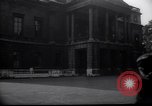
Meeting of European Advisory Commission in Lancaster House London.
European Advisory Commission meeting to sign the protocol between the Allies on the occupation zones in Germany at Lancaster House London. Chairman Feodor Tarasovich Gousev of Russia, Ambassador extraordinary and plenipotentiary to the government of Great Britain; John Gilbart Winant, American ambassador to Great Britain and Sir William Strang, UK representative on European Advisory Commission enter and have a discussion. View of Advisory Commission with Mons. Gousev at head of table and other military advisors with Sir Strang at top left. Diplomats can be seen talking to each other. 12 September 1944. (World War II period).

The San Francisco Conference in San Francisco, California.
The San Francisco Conference. U.S. Secretary of States Edward Stettinius addresses the other representatives of nations gathered for the United Nations Conference on International Organization. Foreign Commissioner Molotov of Russia addresses the gathering followed by T.V. Soong, Foreign Minister of China. Crowds on roads.
CRITICALPAST.COM: About Us | Contact Us | FAQs - How to Order | License Agreement | My Account | My Lightboxes | Shopping Cart | Advanced Search | Featured Collections | Website Terms & Conditions | Privacy Policy ©2026 CriticalPast LLC.
License Agreement |
Terms & Conditions |
Privacy Policy
©2026 CriticalPast LLC.