


 Francais
 Deutsch
 Italiano
Refine Your Search
Stalingrad Russia Soviet Union 1943 stock footage and images
- Showing 1909 to 1914 of 5654 results more
more Hide
Hide
U.S. recruits being classified for assignments and being informed about the progress of World War II and why they fight.
New U.S. army recruits seated at benches in the classification center, taking notes, as an instructor at a blackboard tells them how to fill out their classification questionnaires, during World War 2. View of machines processing the questionnaires. Hollerith 88 column punch cards being sorted by machine. Newspaper article about the Air Force efforts to improve classification and assignments of new airmen. A recruit being counseled. An Airmen in barracks, filling out a post card form to complain about his assignment. Servicemen working with sewing machines and at long cobbler's benches repairing shoes. U.S. soldiers in pith helmets, laying communications cable from a truck. A soldier recording information about a shipment of supplies. Soldiers filling 5-gallon "jerry cans" with fuel from a hose. Others serving at a communications center in woods. A soldier fastening a cable to a tank. Soldier standing on a truck. Large group of soldiers gathered to listen to a lecture about explosives. Army draftsmen at their work tables. Soldiers using information and training materials.(Narrator states these materials are often ignored.) An army newsmap for Monday, August 31, 1942 posted on an Army office wall. A sergeant points to July, 1943, on a current calendar next to it, illustrating that the newsmap is long out-of-date. View of another news map and narrator notes they are produced weekly. An officer speaking to an auditorium of soldiers. A soldier arranging his personal gear. Infantry on field maneuvers, firing rifles as they advance across a field. Soldiers firing a Browning water-cooled machine gun; a mortar; and a 105mm M101A1 howitzer. The sergeant using a newsmap to brief his staff about the progress of the war. Opening frames of a War Department Film Bulletin, and soldiers in a theater, watching the film. Opening frames of the film,"Why We Fight," that goes on to show animated map of the German advance across Europe in World War 2. Scenes of German forces on the move, towing artillery, riding on tanks, and entering towns as they invade countries of Europe. Women and children running in streets under bombardment, and civilians fleeing from their homes during aerial bombing. A Bombed out city and civilian corpses lying on the ground. Women in Poland, identifying their dead and grieving over them. German Heinkel He 111 aircraft dropping bombs. Norwegians evacuating the city in trucks, and other vehicles and on foot, during the German invasion. A squadron of German Messerschmitt Bf-109 aircraft in flight. German Ju-87, Stuka dive bombers diving on targets. Civilians rushing to a bomb shelter, and other refugees boarding a truck to evacuate. More He-111 bombers dropping bombs. A Ju-52 trimotor transport (type used to transport German paratroopers). Buildings ablaze in a town. Large formations of German aircraft of various types flying overhead. Building destroyed and burning from bombing. Ju-87s flying close past the camera.
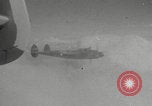
United States Army Air Force Lockheed P-38 Lightning aircraft of the 339th Fighter Squadron in flight formation during WW2
A fleet of Fighter-Bomber aircraft (Lockheed P-38 Lightning) of the United States Army Air Force in flight over the South Pacific Ocean during World War II. The 339th Fighter Squadron of the United States Army Air Force intercepted and shot down Imperial Japanese Admiral Isoroku Yamamoto in 1943. Three Lockheed P-38 Lightning fly together. One by one, the three aircraft tilt to the right downward. A fleet of Lockheed P-38 Lightning flying in formation near the clouds as seen from an aircraft’s side window. Three Lockheed P-38 Lightning aircraft went up to a higher altitude vertically in unison.
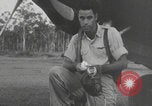
United States Army Air Force 339th Fighter Squadron Pilots in the South Pacific preparing for take-off during WW2.
The United States Army Air Force pilots of the 339th Fighter Squadron, who intercepted and shot down Imperial Japanese Admiral Isoroku Yamamoto in 1943 during World War II. Captain Tom Lanphier, is seated under an aircraft, cleaning his goggles. View of Captain Lanphier, smiling. Another United States Army Air Force Pilot, Lieutenant Rex T. Barber, wearing helmet and goggles, adjusts his straps. Another pilot, Lieutenant Besby Holmes, leaning his back on an aircraft, adjusts his helmet and laughs. Lieutenant Douglas S. Canning puts on a life vest and smiles. Lieutenant Delton Goerke chews and smiles as he looks at the camera. Lieutenant Julius Jacobson adjusts his helmet and smiles. Pilot in cockpit gives an “OK” hand gesture facing the camera before closing the cockpit canopy. Another pilot salutes facing the camera before closing his cockpit canopy.
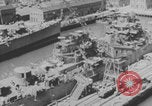
Naval guns and torpedoes manufactured, USS Wisconsin launched (WW2)
Steel used for ship building and war materiel manufacture in the United States during World War 2. Shipbuilding at a dock. Sign says “U.S. Naval Advance Base Depot”. A steam locomotive pulls a 16 inch naval gun from a war production factory. Men move newly made Navy torpedo via overhead conveyor. Men building torpedoes in a factory. A huge engine is being lifted by an overhead crane. War production workers on factory floor building items for U.S. Navy. A United States Naval officer speaks with a factory executive. Narrator mentions importance of scrap metal for use in ship building. The launching of the Iowa-class battleship, USS Wisconsin (BB-64), in the Philadelphia Navy Yard on December 7, 1943. Assisted by Rear Admiral Melo F. Draemel, Mrs. Margaret Roche-Goodland, wife of Wisconsin Governor Walter S. Goodland, successfully breaks a bottle of champagne over the ship's bow. The USS Wisconsin starts down the dry dock during launch.
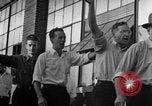
Union-sponsored film about the 1939 Tool and Die Makers Union strike against General Motors in Detroit, Saginaw, and Cleveland.
Union members march beside a building singing about "solidarity." Slate reads "Fleetwood" superimposed on "Detroit." Closeup of flag reading: "Fleetwood Local 15, U.A.W. Detroit." Marcher carries American flag. One carries sign calling for: "Time and a half for overtime, and double time for Sunday and Holidays." Among other signs, one reads: "Equal Pay for Equal Work." Bronze plaque on building reads: "Frederick Coleman and Sons, Inc." Yard filled with striking workers. Trucks sent by General Motors Company (GM), to remove tool and die shops, from a factory, are prevented from moving by the mass of strikers from the unionized Frederick Coleman plant, who refuse to become "Scabs" (strike breakers). Meeting inside their own factory building, Coleman workers promise George F. Addes, Secretary Treasurer of the U.A.W. (Union of Auto Workers) that not a GM tool or die will leave their shop. They pose near auto parts waving their hats. A new slate appears reading: "Fisher" overlaying "Cleveland." A picket line is seen in a Fisher Body Factory yard, guarded by uniformed policemen, including some on horseback. One striker walks to a building identified by a sign as Strike Headquarters. Narrator says he can get a meal there. Inside, a strikers women's auxilliary has set up a Strike Kitchen, where he receives a cup of coffee and converses with a woman of the auxilliary. Next, he is seen reading a Cleveland newspaper with headline: "Police and Pickets clash at Fisher Plant." He is then seen at his home, having supper as his wife reads the newspaper. (Narrator notes that strike has lasted 19 days.) The man and his wife argue about the wisdom of striking. Their little girl runs to her father. The three of them hug and the man then goes to join the picketing. Scene reverts to earlier conversation with the womens' auxilliary person. She sympathizes with the man's concerns. Next, three union auxilliary women visit the man's wife. They try to assuage her fears about the labor strife. (In background, voice of a union auxilliary woman speaks about the Wagner Labor Act.) More views of the Fisher Plant factory yard, with police and strikers struggling. Still photograph of men running as shots ring out. Closeup of hand holding a tear gas shell. Still photograph of police using tear gas to disburse strikers. The women visiting the wife convince her of the soundness of the strike and she joins them as a union auxilliary worker in their Strike Kitchen. View of the film's protagonist man and his wife conversing amicably in their kitchen. Final scene shows the wife with her husband on a picket line holding a sign reading: " Women's Auxilliary Stands Behind Local No. 45 in this Fight." Camera focuses on one striker riding a horse bearing two signs. One points to the front of his horse and reads: "This is the C.I.O end." The other points to the horse's rear and reads: "This is the Company end."
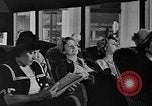
World War II film intended to encourage American civilians (especially women) to participate in the home front war efforts.
Mix of actual World War 2 footage scenes outside the United States, and dramatized war scenes inside the U.S. Narrator speaks as a U.S. soldier writes a letter to his mother at home, in which he contrasts the hardships of war torn countries and peoples with the relative safety and lack of suffering of the U.S. population during World War 2. Opening scene shows typical American women riding in a bus. One woman, ostensibly the soldier's mother, climbs aboard a bus as another woman steps out of it. A woman visits a friend who says she had to give up her Red Cross work because it didn't leave her time to get her hair done each week. A group of women at a garden party bridge club. Narrator says one of them could not work at a USO canteen because it conflicted with her bridge party. A woman lounging in a garden chair, is claimed to avoid a war job because they are all boring and dirty. A maid serves some hard to obtain foods to two woman at lunch. The hostess accused of obtaining them on the black market. The scene shifts to the letter writing son serving with the army in Europe. He relates taking a village recently, and the film shows residents cheering as the American soldiers occupy it. Fire fighters direct streams of water on burning wrecked buildings. Refugees fleeing their homes. Several nuns helping some as they evacuate. shells striking as refugees travel. Populations fleeing and refugee citizens leaving as invading forces come, in Russia, Czechoslovakia, Poland, France and France. View of people running for shelter in China. At this point, the film shows the chaos in those countries superimposed on America, where fires are being fought, and ambulances respond to help injured. A woman picks up her child as she and others run, looking skyward with dread. Air raid sirens sound in the background. A British soldier looks over a scene where Asian people are evacuating from war torn homes. A group of despairing European people. The film creates an imaginary image of and ordinary American woman digging through the rubble of her destroyed home. American women lined up, in front of bomb damaged buildings, to receive one egg a month. Other American civilians lined up to receive a ration of potatoes. Women in England are seen shoveling rubble from the remains of their homes after a blitz bombing by the German Luftwaffe. In Russia many women are seen digging and performing manual labor which the narrator says is labor forced by invading forces (possible slave labor forced by Nazi German forces). Women in Greece clearing rubble. Again, film creates imaginary view of Americans clearing rubble from their destroyed houses and evacuating en masse. Two American women comforting another in front of her burning home. More views of Americans in mass evacuation, carrying their belonging with them. Narrator states children are evacuated first and them film shows scenes of English children being sent to safety on buses. View of Russians evacuating in horse-drawn carts. Imaginary transition to Americans evacuating known local places. Chinese evacuating across a bridge, assisted by British soldiers. More imaginary scenes of Americans evacuating. A soldier writing a letter and then packing up his gear to move on with members of his army unit. They line up in formation and then march. Imaginary view of American women marching side by side with them. Glimpse of large formation of uniformed nurses marching. Last scene is of American flag superimposed on marchers.