


 Francais
 Deutsch
 Italiano
Refine Your Search
Stalingrad Russia Soviet Union 1943 stock footage and images
- Showing 2023 to 2028 of 5654 results more
more Hide
Hide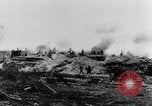
German troops fight against the Russians in Leningrad in World War II.
German troops battle Russian at Leningrad during World War II. Germans entrenched behind a ridge. Soldiers enter a ridge. Germans operate a heavy gun. They fire from a camouflaged position. Germans fire across a river at Russian positions. Tanks piled up on top of one another. Several bombs burst along the bank. Wrecked Soviet equipment and dead Soviet soldiers lay around a field at river bank.
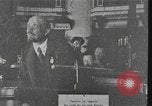
Vladimir Ilyich Lenin speaking at 2nd Congress of the Communist International and at the funeral of Y. M. Sverdlov
Vladimir Lenin addressing delegates at meeting of the Second Congress of the Communist International ("Comintern"), held in the Tauride (Tavrichesky) Palace, in Moscow, on July 19, 1920. Some illuminated candles on tables behind the speaker. (The sign on the speaker's stand, in Russian and French, simply asks attendees to refrain from smoking.) Next, Lenin is seen outdoors on a cold day, on March 18, 1919, in Red Square, Moscow. He is speaking at the funeral of Yakov Mikhailovich Sverdlov, his close associate, and Chairman of the Central Executive Committee of the Congress of Soviets of the Russian Soviet Federative Socialist Republic (SFSR). (Sverdlov died on March 16th at age 33.)
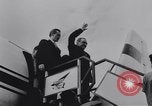
Fidel Castro during Cuban Crisis, Havana, Cuba.
Soviet Deputy Premier Anastas Mikoyan visits Havana, Cuba. Mikoyan waves from Cubana airstair. A sign outside the Russian trade fair or Soviet Exposition in Havana, Cuba. Cuban leader Fidel Castro with other officials, walks into a hall during the Soviet Exposition. Fidel Castro inspects a Soviet microscope. A party goes on, Castro drinks. Photographers taking photos. Anastas Mikoyan wearing a straw hat with “CUBA” written in front. Che Guevara and Anastas Mikoyan signing Cuban-Soviet trade agreements. A Russian ship in sea. Cubans receive Russian guns. Cuban men inspecting Soviet guns and artillery. Soviet T-55 tanks move on the road in Havana. A huge gathering around the road is seen. Fidel Castro observes the parade.
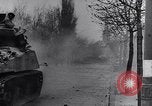
End of World War 2 in Germany, the Four-power occupation of Germany after World War II, and the Berlin Airlift
Allied tank and tank destroyer firing and Allied infantry in Germany during World War 2. British, American, and Soviet troops escorting German Prisoners of war at the end of the War. Animated map shows line where U.S. and Russian troops met and zones of occupation in Germany and Berlin. It depicts routs of access into the Soviet zone of Berlin View from a vehicle driving through utterly destroyed part of Germany in 1945 with rubble and ruin of many buildings seen. Desperate German citizens facing shortages of food and necessities after the war, cooking on outdoor fire in a city street, and trying to clear some debris of destroyed buildings by hand and using buckets in a "bucket brigade." Bus service being restored and German citizens boarding. Vehicle traffic moving with a German police officer directing. Doctors perform physical examination of a German boy as a group of German boys wait in queue for examination. Soviet Leader, Joseph Stalin, with U.S. President, Harry Truman, British Prime Minister, Winston Churchill, at the Potsdam Conference. Children receiving soup at a school in Berlin. Animated map shows routes through the Soviet occupation zone, used by Western Allies, to supply essential food and supplies through the Soviet zone of occupation to sustain West Berlin residents. It then depicts Soviet action blockading the road and rail routes to isolate West Berlin. Views of empty roads, rails, and canals. A DC-3 (US Air Force C-47) transport aircraft taking off. Men loading supplies on aircraft for delivery to West Berlin. A C-54 transport airplane taking off. A British Short S.25 Sunderland flying boat carrying cargo in the Berlin Airlift. Troops carrying supplies for airlift. A British Avro York transport aircraft taking off. A warehouse filled with barrels for Berlin. View from overflying airplane. Trucks resuming travel to Berlin after the Soviets finally lift the 9-month blockade. Normal supplies of food seen again, in West Berlin shops. Vehicle stopped at a checkpoint. Sign warning that: "You are leaving the American Sector." and similar ones at the French and British sector borders. Old road sign pointing to Potsdam, beside another sign warning of entering the Russian zone. Traffic moving between East and West Berlin.
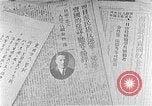
Depicts Korean suffering under Japanese occupation from 1910 through end of World War II
Korean propaganda film depicting suffering of the Korean people under Japanese occupation prior to and through World War 2. Korean citizens answering questions of Japanese civilian officials during period of Japanese occupation before World War 2. Japanese warship carrying Nakajima E4N bi-wing scout plane. Steel truss bridge being bombed. Koreans being forcibly recruited to fight for Japan. Koreans being tortured and imprisoned at hands of Japanese. Aircraft dropping bombs on ground targets. Slate announces August 9, 1945, marking the Soviet invasion of Japanese occupied areas, including North Korea, in World War II. Destroyers dropping depth charges. Battleships firing heavy guns. Soviet infantry rushing from a ship to engage Japanese forces. Soviet soldier offloading an M1910 Maxim Sokolov Machine gun onto a pier. Amphibious assault by Soviet forces. Artillery barrages. Explosions and smoke. Soviet infantry attacking industrial facilities and planting the Red flag on a hilltop in a rural area. Japanese troops surrendering to Soviet soldiers. Fallen Japanese gunner in gun position with shell in his hands. Numerous other fallen Japanese soldiers. Captured Japanese weapons and war materiel, including many swords. Japanese prisoners of war seated in an open area. Various destroyed Korean buildings and temples. Denuded trees in war zone. August 15th, 1945, shows Japanese citizens listening to a loudspeaker broadcast by Emperor Hirohito, announcing the surrender of Japan, and end of World War II. Shackles are removed from Korean prisoners. Koreans celebrate in the streets. The Korean flag flies from houses in a village. Korean people march, sing, and cheer everywhere in the country. A seated band of musicians plays. Scene shifts to the deck of the battleship USS Missouri, where Japanese Foreign Minister Mamoru Shigemitsu in formal attire sits to sign documents of surrender. General Douglas MacArthur, and other senior allied officers, stand nearby as Soviet Lieutenant General Kuzma Nikolaevish Derevyanko sits to sign for the USSR. Japanese civilians living in Korea, during the Japanese occupation, are seen moving with their belongings, to be relocated back in Japan.
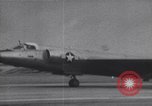
The Cuban Missile Crisis. The Limited Nuclear Test Ban Treaty.
October, 1962, U.S. Air Force U-2 reconnaissance aircraft, tail number 56-6707, of the Strategic Air Command (SAC) 4080th Strategic Reconnaissance Wing, lands at Laughlin Air Force Base, Texas. View of Photographic evidence, brought back by the U-2, showing Soviet missiles being set up in Cuba. President John F. kennedy broadcasts to the nation about the crisis on October 22, 1962, announcing measures being taken by the USA to address the situation. A B-58 Hustler bomber landing. Airmen removing camera from nose of a reconnaissance aircraft. Air Force Sergeant, photo interpreter, reading wet film in a base laboratory. U.S. Naval officers and sailors in Command Center viewing large wall map of the world. U.S. Air Force SAC B-52 bombers taking off. View of United Nations Headquarters building in New York City. On October 25, 1962, U.S. Ambassador to the UN, Adlai Stevenson, confronts Soviet Ambassador Valerian Alexandrovich Zorin about missiles in Cuba.He looks at Zorin, and says,"Don't wait for the translation, yes, or no." Zorin smiles as the room fills with laughter. He then responds. View of a Soviet ship bound for Cuba being monitored by a U.S. aircraft overhead. Pilot in cockpit of the aircraft. View from U.S. aircraft flying low past a Soviet ship. Crew in cockpit of the aircraft. Soviet ships turning away. Helicopter flying over sandy beach area of Hyannis Port, Massachusetts. The helicopter parked and Undersecretary of State, Averell Harriman, steps from the helicopter and is later seen with President Kennedy, and Secretary of State, Dean Rusk, at the President's Weekend White House. Harriman reports on the successful negotiation of a limited nuclear test ban treaty. Glimpse of Moscow. U.S. Secretary of State, Dean Rusk, Soviet Foreign Minister,Andrei Gromyko, and British Foreign secretary, Alexander Douglas-Home, are seen signing the document for their respective nations, August 5, 1963.
CRITICALPAST.COM: About Us | Contact Us | FAQs - How to Order | License Agreement | My Account | My Lightboxes | Shopping Cart | Advanced Search | Featured Collections | Website Terms & Conditions | Privacy Policy ©2026 CriticalPast LLC.
License Agreement |
Terms & Conditions |
Privacy Policy
©2026 CriticalPast LLC.