


 Francais
 Deutsch
 Italiano
Refine Your Search
Stalingrad Russia Soviet Union 1943 stock footage and images
- Showing 2305 to 2310 of 5654 results more
more Hide
Hide
European Persons and Events leading to World War I.
The funeral of Archduke Franz Ferdinand of Austria. Emperor Franz Joseph I of Austria arrives in a horse drawn carriage. Kaiser Wilhelm II of Germany with entourage. The German Emperor reviews German troops on parade. A newspaper headline "Kaiser defies Czar. Hands off or War!'. Nicholas II of Russia walks down steps followed by his wife and two daughters. People stand on steps and salute. The Czar and family are seated in an open carriage. Russian Soldiers parade. Another headline, 'France enters War'. French Cavalry and troops parade in open fields. A newspaper headline 'England prepares for War, German armies sweep France'. British King George V , in military uniform, and Queen Mary, standing at a window. British troops march and a soldier drives a motorbike.
Motorcyclists of the Belgian Expeditionary Armored Squadron, ACM-corps (Autos Canons Mitrailleuses) assemble for parade
Armed members of the Belgian Expeditionary Armored Squadron, ACM-corps (Autos Canons Mitrailleuses) are seen assembling with their motorcycles in preparation for their unit's parade in Longchamps, Paris, France, on April 17, 1915, before their departure to Russia, during World War I.
Key events involving German rocket pioneer Reinhold Tilling
Opening slate states (in German) that as early as August 1933, Reinhold Tilling's rockets were test fired from aircraft. However, while Germany paid little attention, Russia and England showed in this work. View of airplane with two Tilling rockets under its wings. Closeup of the one under the right wing. Pilot climbs into cockpit of the plane. Slate reads: Shooting from the aircraft in 1933-34, the rockets achieved distances of 500 meters at altitudes of 7000-8000 meters. Still pictures taken from the ground of the rockets leaving trails as they are launched from the aircraft. The airplane is also seen in at least one photograph. One picture shows a rocket exploding in the air. Scene shifts to view of fire burning at one of Reinhold Tillings workshops, at Osnabruck, Germany, where he and his two assistants, Angela Buddenbohmer and Friedrich Kuhr, were killed when gunpowder charges they were compressing for rocket motors exploded, on October 10, 1933. Photos of Tilling and his assistants are shown. Final scene shows a public memorial to the deceased trio, which includes flowers from several groups, including the Nazi party. Nazi swastika flags are displayed in the background. One floral tribute also contains an airplane propeller. A large greenery Christian cross is seen as well as three small brass menorahs, one at each of the three mounds of flowers.
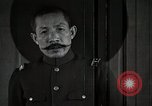
Japanese General Baron Sadao Araki speaks, and animated maps show danger of attacks on Japan and its occupied territories.
Film opens with closeup of Japanese general, Baron Sadao Araki, speaking. Behind him is a huge Japanese flag so that his head is silhouetted against its huge red ball. His image fades out and a map of Japan and Asia appears. Sadao Araki continues to narrate. The map shows animated arrows directed from Russia southward toward Japanese held Manchuria (Manchukuo) and from India northward. The arrows converge and are joined by arrows from the sea. All are directed against Japan. The message clearly speaks to need for Japan to be ready to protect against attacks by others. Back to closeup of Baron Sadao Araki speaking. Then flags of world nations are shown with Japan's rising taller and larger than all the rest. Next a map of Japan and its occupied territories in Manchukuo, and Korea, with arrows from foes threatening them. Japan seems to shudder on the animated map.
Japanese forces engaged against Chinese forces in the January 28 Incident (Shanghai Incident) of 1932
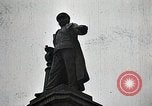
Film opens showing a Japanese monument commemorating officers in the Russo-Japanese War between Russia and Japan. Commander of a small contingent of Japanese troops offers saki to his soldiers, before they march off into combat. They rush into trenches and begin firing at Chinese forces. Next, Japanese infantry are seen moving across vast barren lands, as some take up defensive positions behind those advancing, who also begin digging holes and setting up defenses after their advance. Chinese artillery shells explode close ahead of them. Soldiers in the Japanese front lines throw smoke canisters and dense white smoke is carried by the wind to the left and side of their positions. As the smoke dissipates, shells burst again, right in front of the Japanese lines. Immediately, after, the Japanese troops leave their defensive positions and charge forward. View of a small battlefield cemetery with posts marking the graves of Japanese soldiers.
Contrast between Chinese and Japanese national aspirations before Second Sino-Japanese War and WW2
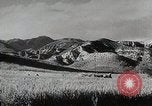
Film reviews China's four thousand years of history. Scenes showing mountains, woods, and a farmer plowing with oxen in rural China. A mass of Chinese people tightly packed together as they walk along a narrow alleyway in a town. Fleeting glimpses of two Chinese soldiers; a child; a woman; a woman and child; and numerous other Chinese people in a montage splayed across a background of moving crowds. An open book of Chinese characters. Mariners compass superimposed on an moving image of an ocean liner. Views of several large-scale astrolabes and world globes. A Chinese worker placing porcelainware in an oven for glazing. A man spooning gunpowder into a dish, followed by glimpse of a Chinese firework igniting. Chinese paper Dragon and street celebrations. A book entitled: "Analects of Confucius," in which, on page 105, is found the admonition: "What you do not want done to yourself, do not do to others." Ancient statues of two men and of two riderless horses behind them. Tall Chinese pagodas. Chinese artillery field pieces firing. Chinese troops advancing in several situations during conflict with Japan. Map of China and illustration of Japanese samurai warrior emblazoned across it. A book entitled: "The Tanaka Memorial, (Japan's Dream of World Empire)." A still photograph of Japanese Foreign Minister Baron Tanaka Giichi in military uniform, with other Japanese officers. Excerpts shown, ostensibly from this book. Emperor Hirohito is seen with Baron Tanaka, and other officers, all in military uniforms, in front of a tent, circa 1928. Automated map ostensibly illustrates the elements of a Japanese plan of conquest, starting with Manchuria for raw materials; the absorption of China for manpower; followed by a sweep South for riches of the Indies and Australia; and lastly a sweep eastward to crush the United States. More views of crowds of Chinese people are followed by an. animated map illustrating early World War II events, including Nazi Operation Barbarossa against Russia, approved by German leader Adolf Hitler in 1940, and the Nazi German occupation of Denmark, Norway, and other European countries. (Note: Actual existence of the so-called "Tanaka Memorial Imperialist Conquest Plan" is a subject of debate among historians.)
CRITICALPAST.COM: About Us | Contact Us | FAQs - How to Order | License Agreement | My Account | My Lightboxes | Shopping Cart | Advanced Search | Featured Collections | Website Terms & Conditions | Privacy Policy ©2026 CriticalPast LLC.
License Agreement |
Terms & Conditions |
Privacy Policy
©2026 CriticalPast LLC.