


 Francais
 Deutsch
 Italiano
Refine Your Search
Stalingrad Russia Soviet Union 1943 stock footage and images
- Showing 2479 to 2484 of 5654 results more
more Hide
Hide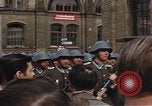
Civilians in communist May Day parade in East Berlin, East Germany.
East German soldiers and sailors marching in May Day parade. Bands marching. East German civilian spectators watch. Civilians march as they carry Soviet and East German flags.
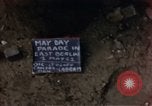
Huge crowd marching during May Day Parade on streets of East Berlin.
Musicians playing with drums and saxophones during Communist May Day Parade in East Berlin, East Germany. People carry pictures of East German SED (Socialist Unity Party of Germany) leaders. People carry picture of Karl Marx. A Elektro-Apparate-Werke (EAW) Relaisfabrik float in the parade. Men, women, and children marching in the parade. Soviet soldiers among the marchers.
Tehran Conference and successive preparations for D-Day attack on Nazi regions in France by Allied forces (WW2)
World War II Documentary entitled "D-Day Convoy." Leaders and military Generals of the Allied nations at the Tehran Conference. U.S. President Roosevelt, British Prime Minister Churchill, Soviet General Stalin, General George Marshall of U.S. Army, General Eisenhower. Map showing the targets of raid in France under German occupation. Immense military ammunition, artillery, tanks, weapons and infantry troops amassed in England and readied for military raids. American infantry troops being trained to raid the Peninsula of Normandy. Troops advance between bomb blasts and gun fire during training. Allied air force bombers bombing their targets in France. Formation of Martin B-26 bomber aircraft flying overhead. Point of view shot from inside aircraft, seen through rain spotted plexiglass gun canopy, flying very low over a French village, on the way to bombing target. Aerial view of U.S. Army Air Force B-17 Flying Fortress bomber dropping bombs over enemy target in Europe. View of bombs falling away from aircraft toward targets during a day time bombing raid. Explosions and smoke on the ground as targets are hit. Aerial fights between German and Allied air forces. Gun camera footage scenes as seen from Allied aircraft as they shoot at German airplanes. Several scenes of German aircraft exploding in flight. Airplane blasts in sky. U.S. army troops with ammunition moving toward camps in southern England. At the marshaling area soldiers receiving and trying on gas masks. They also receive inflatable life belts, food rations, cigarettes, candy including Hershey's chocolate, and French money as invasion currency. Briefing of the troops by the commanders.
Film juxtaposing German defeat in World War 1, with its defeat in World War II, and comparative postwar impacts.
Film begins stressing the historic aggressive military traditions of Germany. A brief view of thousands of Adolf Hitler's Nazi troopers assembled in dramatic formation at the Nazi party rally grounds in Nuremberg, Germany. Explosion of the Nazi eagle, with swastika symbol, atop the Zeppelintribüne grandstand at Zeppelinfeld in Nuremberg, being blown up by U.S. Army soldiers at the end of World War 2 in Europe. Germans celebrating the armistice ending World War One. German soldiers captured, in unconditional surrender, ending World War Two. Huge open field filled with defeated German soldiers in the second world war. German armies parading through Berlin at the end of World War One. American troops occupying the entire country of Germany after the second world war. A Nazi eagle being destroyed on a German government building at end of the second world war. Old photograph of the German general staff, led by Helmuth von Moltke the Younger, that was still intact, after World War I. In contrast, after World War 2, the entire Nazi military was held and subject to trials at Nuremberg. Großadmiral Erich Raeder seen being taken in custody. Closeup of Field Marshal Wilhelm Keitel. German industry unimpaired by World War I, contrasted with utter destruction in the second world war. American officer coordinating resumed operation of of a postwar plant. View of German diplomats remaining in office after WWI. Proclamation barring Nazi party members from all offices after WWII. German Kaiser Wilhelm II in peaceful exile in Holland after the first world war. A Nazi officer war criminal, is taken in custody by American Military Policemen, and executed by a firing squad. World War 1 did not affect German schools and curriculums. After World War 2 all Nazi doctrines were destroyed. New text books and curriculums were prepared by the Allies for German use. Map shows small area of post World War 1 occupation, in contrast the the entire Germany after WWII. Weimar Republic government, post WWI is contrasted with post World War 2 government by the Allied military powers. British Marshal Bernard Montgomery, American General Dwight D. Eisenhower, Soviet Marshal Zhukov, and French General Charles de Gaulle, are shown. Views of American soldiers interacting with German citizens during their occupation of Germany. Images of Germans: Frederick the Great, Otto von Bismarck, and Kaiser Wilhelm. Views of German farmer sowing seed, postman delivering mail, policemen escorting children. Normal activities resumed in Germany, in areas of culture such as orchestral concerts, etc.
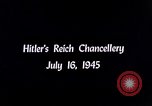
Destroyed Reich Chancellery in Berlin, during visit of United States President Harry Truman, post World War II.
President Harry S. Truman of the United States visits Berlin a month after the end of World War II in Europe. Hitler's Reich Chancellery damaged by bombing. The burned and wrecked Chancellery building, and shattered windows of the building. A U.S. soldier poses in front of the building. Walls of Chancellery covered with marks and holes from battle. A Soviet tank kept as a monument on a Berlin road. Destroyed portions of the Chancellery, struck by bombs. Debris of building material.
Allied military troops after victory in the Battle of Bulge and advancing towards Normandy, World War II during the year 1945.
A review of the events that occurred in the year 1945. The Battle of Bulge between Germans and Allied military. Allied military tanks and soldiers after victory in the battle. Soldiers smoke cigarettes. Destroyed and burnt U.S. Army tank and jeeps. British Army troops advance in trucks, towards Normandy. Infantrymen walk across farms towards the enemy. Fleet of bombers airplanes of the Allies fly on a mission. The tank units advance across farmlands. Soviet forces greet American officers.
CRITICALPAST.COM: About Us | Contact Us | FAQs - How to Order | License Agreement | My Account | My Lightboxes | Shopping Cart | Advanced Search | Featured Collections | Website Terms & Conditions | Privacy Policy ©2026 CriticalPast LLC.
License Agreement |
Terms & Conditions |
Privacy Policy
©2026 CriticalPast LLC.