


 Francais
 Deutsch
 Italiano
Refine Your Search
Stalingrad Russia Soviet Union 1943 stock footage and images
- Showing 3049 to 3054 of 5658 results more
more Hide
Hide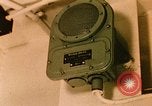
General quarters sounded as USS Yorktown pilots gather in flight ready room and take off to attack Marcus Island.
View of general quarters alarm as the USS Yorktown (CV-10) in the Pacific Theater during World War II prepares for attack of Japanese forces on Marcus Island. Men run up and down stairs and close hatches and watertight doors while pilots gather in the flight ready room. The U.S. Navy fliers wear their flying suits and get ready for the attack. A sailor responds to an intercom call to flight ready room three and orders pilots to man their planes. The pilots board the planes. The fighter planes. A radio plotting room to keep track of all the planes. The planes fly low and suddenly climb up. View of Marcus Island. The planes bomb Marcus island. Smoke due to bombardment. The bombing of the enemy boats and supply ships. A ship is destroyed. Smoke on the island. The planes in flight return back after the victory. A sailor nicknamed Smoky tracks the flyers to check that none of them is missing.
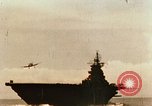
U.S. Navy pilots return after bombing Marcus Island and report to the combat intelligence officer aboard USS Yorktown.
USS Yorktown (CV-10) in the Pacific Theater during World War 2. U.S. Navy fighters, bombers and escorts return after bombing Marcus Island. including the SBD Dauntless, TBF Avenger, F6F Hellcat, A-25 Shrike, SB2C and SBF Helldiver land on the carrier. An officer supervises the deck activities. Crewmen signal and guide the planes. An aircraft lands with a ruptured tire. Landing officer warns the crew to keep away on the stern. The pilots go below to report to the combat intelligence officer. The officer and a crewman seated at a table with documents and photographs. The pilots provide statistics regarding bombs dropped, ammunition fired, and targets. They report on shore installations, radio stations, gas dumps, hangars and ammunition dumps set on fire due to their bombardment. Smokey, the radio plotting room in charge, tracks the remaining aircraft over the radio. Crewmen signal on the flight deck as a plane crash lands. Officers and pilots in a meeting.
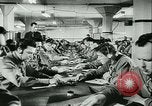
U.S. Army Signal Corps officers train at Fort Monmouth and production of signal communication items in the United States.
The role and contribution of the U.S. Army Signal Corps in combat and war. U.S. Army Signal Corps officers train at the Signal Corps Officer Candidate School (OCS) Fort Monmouth, New Jersey. Officers train at telegraph machines under the supervision of an instructor. Officers seated at desks in a classroom. Instructors take classes with the help of charts, diagrams and black boards. Officers seated atop electric poles for training. Two officers train in hand-to-hand combat at the OCS. Officers learn to use Radio Relay. Students listen to an instructor as he demonstrates the process. A U.S. soldier lays field wire across a hilly terrain to establish wire communications in the European Theater during World War II. Soldiers on the hill. Soldiers set up a sending station at the point where the wire can't go forward. A receiver is set up at the point from where the wire can go forward again. A soldier receives a photograph of a map through facsimile. Items of signal communication including radio relays, receivers, walkie-talkies, radio boxes and fuses to be produced and distributed by the USA Signal Corps to all other ground forces, navy and the Allies. New, modern, improved efficient signal communication equipment. A soldier displays two old type fuses and their counterparts.
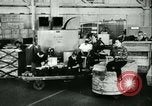
U.S. Army Signal Corps communication material and equipment is produced and distributed in World War II.
The role and contribution of the U.S. Army Signal Corps in combat and war, especially during World War 2. Workers organize and prepare signal communication material and equipment for transportation. Men transfer the items including wooden cartons, cables, signaling units in trolleys. Workers load the material into trucks. Shuttle ships in docks. Signal communication supplies for U.S. and Allied troops in the European Theater loaded onto the ships. The shuttle ships make their way under security in heavy seas. A Nazi U-boat wolf pack in the water during the early stages of World War II. torpedoes launched and U.S. ships are attacked bu the German submarines, smoke due to the explosions. U.S. sailors on board and jumping from burning ships into water.German wolfpack submarine fleet in a harbor. German Kriegsmarine sailors lower German Neger torpedo-carrying craft (sometimes called Human Torpedo) into the water. A U.S. B-25 bomber aircraft in flight locates a German submarine. The radio operator gives the exact location and the submarine is attacked. View from within cockpit as bomb sight is fixed on German submarine target. View of bomb doors open and bombs away from B-25 aircraft. Explosion in water is seen and the submarine is hit. Dramatized scene from inside of submarine as it is rocked by explosion and fills with water.
U.S. Signal Corps officers and soldiers use mine detectors, modern radars, and meteorological equipment during World War II.
The role and contribution of the U.S. Army Signal Corps in combat and war. U.S. shuttle ships loaded with signal communication supplies for U.S. and Allied troops in the European Theater make their way in the Atlantic ocean. The Squier Laboratory at Camp Alfred Vail in Fort Monmouth, New Jersey. A technician works on signal communication equipment in the laboratory. U.S. soldiers use mine detectors in the European Theater during World War II. The mine detectors detect metallic, non-metallic mines, wooden box mines, and mines in glass containers. Artillery soldiers bury large microphones into the ground in advance zones. The microphones relay back information on enemy artillery. Soldiers receive the information on radio sets. U.S. aircraft on a training flight simulating real combat situation: The aircraft lost in heavy rain and rough weather, looking for the location of Boston. The pilot switches on a modern advanced radar. The radar waves pierce thick clouds, are reflected by Earth's surface and display an image on the scope. The image shows the clear location of Boston harbor directly under the aircraft. U.S. bombers attack over the Channel coast on D-Day (6 June, 1944). U.S. soldiers employ meteorological equipment for long range weather forecast in the European Theater during World War II. Soldiers release a hydrogen balloon into the sky. Another soldier uses an apparatus to take readings of atmospheric conditions behind enemy lines. An aircraft drops an automatic weather station called SCM-18-TI by parachute into enemy territory. The timed mechanism sends out weather data in codes. The interior of the automatic weather station lying open in a field.
The U.S. Army Signal Corps Signal Intelligence work during World War II.
The role and contribution of the U.S. Army Signal Corps in combat during World War 2. Soldiers on guard duty in a field. A soldiers talks over a radio receiver at the door of a cabin. An antenna on the cabin roof. Signal Officers intercept enemy transmission by the mean of radio and other electric equipment. Electrical equipment, radios, deciphering equipment, laboratory equipment and parts seen at work in Signal Corps facilities where intercepted enemy communications are analyzed and codes and ciphers are deciphered. Officers skilled in encryption and decryption work to decode enemy codes and messages. They use a microscope to read and write messages in microscopic writing on grains of rice. Signal Intelligence work in North Africa during World War 2. U.S. soldiers on tanks advance over rough terrain. A formation of U.S. B-17 bomber aircraft in flight. Tanks advance with the ground forces. The radio intercept picked up messages from a certain German Division headquarters. A soldier sets radio direction finders on the particular location. Officers receive the information and locate the headquarters on a map. The Allied troops attack the enemy. They hit them with tracers. Artillery and guns are fired. Smoke from fire due to explosions. Soldiers advance in prone positions. They lie low during the night assaults. German soldiers load and fire a mortar. Explosions in a field due to mortar attack. Dead U.S. soldiers and injured U.S. soldiers in foxholes and on the battlefield following mortar attacks. U.S. soldiers help a fellow wounded soldier in a jungle setting.
CRITICALPAST.COM: About Us | Contact Us | FAQs - How to Order | License Agreement | My Account | My Lightboxes | Shopping Cart | Advanced Search | Featured Collections | Website Terms & Conditions | Privacy Policy ©2026 CriticalPast LLC.
License Agreement |
Terms & Conditions |
Privacy Policy
©2026 CriticalPast LLC.