


 Francais
 Deutsch
 Italiano
Refine Your Search
Stalingrad Russia Soviet Union 1943 stock footage and images
- Showing 529 to 534 of 5654 results more
more Hide
Hide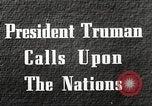
U.S. President Truman talks about the dangers of war posed by Soviet Union during his address to the nation in Washington DC.
United States President Harry S. Truman addresses the nation from White House in Washington D.C., United States. U.S. President Truman at a desk in the White house as he addresses the nation over the national radio. A radio tower. The President speaks of the danger posed by Soviet Union as it is pushing cold war into a general war. The representatives of different nations at the United Nations Security Council. Soviet Premier Joseph Stalin reviews a military parade at Red Square in Moscow. President Truman says that Soviet Union has aggravated the Korean War.
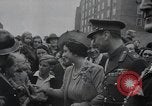
British PM Churchill assess bomb damage in London,and war industries in US,and damage in Soviet Union and China during WWII.
A film about the industrial activities in various countries during World War II. London: Prime Minister of the United Kingdom Sir Winston Leonard Spencer-Churchill with other officers inspects bomb damage in London. The bombed out buildings in London. Soviet Union: Destruction in Soviet Union. The Soviet people walk to new areas to rebuild industries. China: The Chinese men walk past a factory. A man rows a boat in a river. United States: Aerial view of the industries in United States. Aerial view of the smoke coming out of smoke stacks. The interiors of a factory being converted to war production. Old machines replaced by war machines. War production workers using machines to make tanks for war effort. A man observes through a eye microscope as he makes precision flight instruments. Women learn to operate new machines. Men operate lathes and other machines inside the factory.
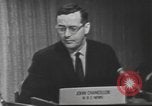
Vice President Nixon and Senator Kennedy debate in the United States over nuclear tests resumed by the Soviet Union.
The fourth presidential election debate held between Democratic nominee Senator John F. Kennedy and Republican nominee U.S. Vice President Richard Nixon in in New York, United States on 21st October 1960. NBC News correspondent John Chancellor asks a question to Senator Kennedy in relation with U.S. relations with the Soviet Union. Correspondent Chancellor asks if Russians have resumed testing of nuclear devices as per news from Atomic Energy Commission of Washington and if the U.S. would resume its own nuclear weapon testing in 1961. Senator Kennedy replies to the question and says that the next President of the United States should make one last effort to secure an agreement on the cessation of nuclear bomb tests. He mentions the Conference for the Reduction and Limitation of Armaments from 1932-1934 held in Geneva, Switzerland. Kennedy says that he believes the effort should be made once more by who so ever is elected the President of the United States. Senator Kennedy says that if they fail in making the effort, the responsibility will be clearly on the Russians and then they'll have to meet their responsibilities for the security of the United States, and they may have to test underground. He says that there may be testing in outer space. Senator Kennedy says that he is most concerned about the whole problem of the spread of atomic weapons. ABC News correspondent Quincy Howe asks the Vice President to comment. Vice President Nixon says that the Soviet Union is filibustering. He says further that the elected president should immediately make a time table to break Soviet filibustering.
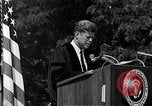
U.S. President Kennedy's American University Commencement Address in Washington DC about America and Soviet Union relationships.
U.S. President John F Kennedy delivers American University Commencement Address in Washington DC speaking about America and Soviet Union relationships. He raises questions about Nuclear war its consequences. Communist drive to impose their political and economic system on others is the primary cause of world tension. He points out that despite differences there are some common links between America and Soviet Union and they should conduct affairs in such a way that is acceptable to both. He emphasizes reexamining the American attitude towards the cold war. Also raises issues of strengthening the United Nations as an instrument of global security, direct line between Moscow and Washington DC, Geneva talks, outlawing of nuclear tests. He confirms that high level discussions will shortly begin in Moscow for Comprehensive Test ban treaty. 10 June 1963.
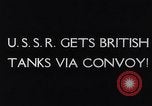
Britain ships military tanks to the Soviet Union during World War II
British tanks being loaded at a UK port, bound for the Soviet Union, during World War 2. A Cruiser V Covenanter tank in the foreground and several Valentine tanks lined up behind it. A trainload of tanks moving on a British railway. Convoy of Allied ships headed toward the Soviet Union. Map shows route from the UK to Murmansk. View from aboard a ship in the convoy as gunners man antiaircraft gun to defend against German bombers attacking from Norway. Black flak clouds in the air. View of the convoy proceeding through waters containing drifting pieces of ice.

The Embassy of the Union of Soviet Socialist Republics in Washington, DC
The Embassy of the Union of Soviet Socialist Republics in Washington, DC. Views from front of the building on 16th Street. A sign at curb of the building reads: 'No Parking, Embassy Union of Soviet Socialist Republics'. The entrance of the building. An American military officer, in uniform, walks past and glances at the Embassy.
CRITICALPAST.COM: About Us | Contact Us | FAQs - How to Order | License Agreement | My Account | My Lightboxes | Shopping Cart | Advanced Search | Featured Collections | Website Terms & Conditions | Privacy Policy ©2026 CriticalPast LLC.
License Agreement |
Terms & Conditions |
Privacy Policy
©2026 CriticalPast LLC.