


 Francais
 Deutsch
 Italiano
Refine Your Search
Tangermunde Germany 1945 stock footage and images
- Showing 9343 to 9348 of 10471 results more
more Hide
Hide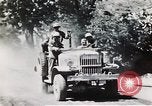
Wounded soldiers are evacuated and transferred to a medical ships by ambulances on a Pacific island.
Wounded American troops are treated on a Pacific island during World War II. Soldiers drive a jeep. A tank moves over a rough land. Wounded soldiers are evacuated from a hospital. Ambulances carrying the injured soldiers are driven in a line. The ambulances halt over a pontoon bridge. Soldiers are taken out of the ambulances and are loaded in landing crafts. A medical ship in the background. Soldiers are treated on the medical ship. A injured on a stretcher is lifted on the medical ship. People move on the ship.
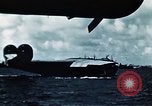
Injured soldiers are transported in army aircraft, seaplane and are treated on a medical ship on a Pacific island.
Wounded American troops are treated on a Pacific island during World War II. Soldiers on a speed boat in water. A seaplane taxis on water. Men carry injured on stretchers and load crates in an aircraft. Injured men are loaded in an army aircraft. Injured men on beds in a line aboard a medical ship. A doctor and a nurse treat the patients. An injured carried to an operation theater. A doctor washes hands. Doctors treat the injured soldiers. An injured soldier in a wheel chair is carried on a deck. The injured soldiers on the deck of the ship smoke. The injured on a landing craft. Soldiers who fought in the war. Men lying on stretchers in pain.
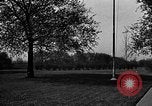
Officers with Henry Ford II review trainees and a flag raising ceremony at Navy Service School in the United States.
Decommissioning of Navy Service School in the United States. Barracks and a flag pole on a parade ground. Sailors lined up for a review. A flag raising and lowering ceremony. A flag at half mast. Sailors fold the flag. Officers, one holding the folded flag, and the president of the Ford Motor Company Henry Ford II review trainees. The trainees and the officers march off the field. A navy officer presents a flag to Henry Ford II. The trainees board buses.

Memorial service in Lidice, Czechoslovakia; Edvard Benes and officers put wreaths on graves honoring massacred civilians
A memorial service for Czech people killed in Lidice, Czechoslovakia, by Nazi German forces as reprisal for the assassination of Reinhard Heydrich. People walk for the ceremony. People observe silence for the people killed by the Nazi Germans after the assassination of SS-Obergruppenfuhrer Reinhard Tristan Eugen Heydrich. President of Czechoslovakia Edvard Benes puts wreaths on graves at the site where the burned down village of Lidice had been. Officers salute. Wreaths placed on the graves. Children gathered at the ceremony. Soldiers stand at attention. (World War II period).
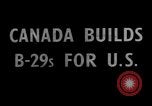
U.S. Army Air Forces B-29 Superfortress aircraft shown at Boeing factory, Sea Island, Canada (WW2)
World War II film shows workers surrounding a completed B-29 bomber parked on ramp of what appears to be the Boeing plant on Sea Island, Canada. Film clip reads: "Canada Builds B-29s for U.S." (Note: Boeing of Canada, headquartered at Vancouver, B.C., built a huge manufacturing factory on Sea Island to build aircraft for the war effort. In 1944 Boeing began to manufacture the mid-sections of B-29 fuselages there, including bomb bays for the bomber. These sections were then trucked to Renton, Washington where they were incorporated into final assembled aircraft. However, this clip shows a fully assembled B-29 that may have been flown here for something like worker morale purposes.)

Damaged buildings at a harbor and American soldiers visit places including St Mark's Basilica in Venice, Italy at end of World War 2.
War damaged buildings in Venice, Italy after World War II. Aerial view of a harbor in Venice. A sunken ship off the harbor of Venice. Damaged buildings and ruins. A man near wreckage. Men in boats. A man rows a boat under a bridge. Containers carried on a boat. American soldiers aboard a gondola. The Basilica di Santa Maria della Salute (Dorsoduro, 1, 30123 Venezia VE, Italy) is seen nearby. Allied soldiers on leave ride a motorboat around Venice. The United States flag hangs in front of a building. Gondoliers are rowing gondolas with United States troops and boats carrying barrels. St. Mark's Campanile at St. Mark's Basilica on Piazza San Marco (P.za San Marco, 30100 Venezia VE, Italy). View of the Doge’s Palace (Palazzo Ducale, P.za San Marco, 1, 30124 Venezia VE, Italy). People including two soldiers feed pigeons.
CRITICALPAST.COM: About Us | Contact Us | FAQs - How to Order | License Agreement | My Account | My Lightboxes | Shopping Cart | Advanced Search | Featured Collections | Website Terms & Conditions | Privacy Policy ©2026 CriticalPast LLC.
License Agreement |
Terms & Conditions |
Privacy Policy
©2026 CriticalPast LLC.