


 Francais
 Deutsch
 Italiano
Refine Your Search
Tangermunde Germany 1945 stock footage and images
- Showing 205 to 210 of 10471 results more
more Hide
Hide
United States Army Air Force 365th Fighter Group strafe German held positions during World War II.
United States Army Air Force 365th Fighter Group over German held targets in February 1945. Aerial view of smoke rising from bombed buildings on the ground. View of green fields. A bomb damaged building.
German Luftwaffe fighter aircraft strafing Allied bombers and other aircraft (WW2)
German Luftwaffe pilots prepare to fly early in the morning of January 1, 1945 during World War 2. Luftwaffe fighters taking off from an airfield. A group of fighters in flight. Luftwaffe pilot pushes the remote button for machine gun. Fighter propeller moving. Cockpit view of German aircraft strafing Allied bombers on the ground. Allied aircraft being attacked as seen from target. German pilot looks on inside aircraft. Dogfighting between the Luftwaffe fighters and Allied bombers. Luftwaffe fighter aircraft in flight. An Allied bomber catches fire from strafing. Fighter machine gun strafes the wings and body of Allied aircraft. A group of Messerschmitt Bf 109 fighters in flight. German fighter pilots in cockpits. German fighters strafe Allied planes, sustaining significant damage. Flames in damaged bomber from Luftwaffe strafing. The German Reichsadler eagle.
German actor Paul Wegener speaking; Hitler Youth celebrate Winter Solstice (WW2)
Scene from a movie production showing German actor and film pioneer Paul Wegener as he dumps a sack on the ground. Paul Molander talks in one of the scenes from the 1945 German film “Der Fall Molander” (“The Molander Case”). Scene changes to Hitler Youth members skiing downhill in the dark with torches in their hands as they celebrate the German folk festival Winter Solstice in World War II. A Hitler Youth stops at the bottom slope and lights a bonfire with his torch. Crowds of Hitler Youth gather by the bonfire with their torches at night. Hitler Youth leader Baldur von Schirach is seen in the event.
German civilian Pusch testifies in trial of Franz Strasser for shooting of American aviator prisoners; scenes from tribunal in Dachau (WW2)
Excerpts from 24 August, 1945 (World War II) military commission tribunal in Dachau. Swearing in of translator and charges read against Franz Strasser for: "Violation of the Laws and Usages of War. In that on or about 9 December 1944, FRANZ STRASSER, Kreisleiter of Kreis Kaplitz, an Austrian National, did at or near Kaplitz, Czechoslovakia, wrongfully and unlawfully kill an American airman, whose name, rank and serial number are unknown, [by shooting him with a machine pistol]. Strasser replies with a plea of not guilty. Next scene shows entry of German civilian truck driver, Josef Pusch, who is sworn in and provides testimony about the incident. Pusch describes the events of the shooting of the American prisoners by Strasser. United States flag and judges on raised platform. U.S. officials, defendants and civilians in the court room. Shows hearing as it begins. The Nazi commandant seated with other officials. The German civilian is questioned by an interpreter. German civilian Pusch identifies Strasser. Pusch gives his account to the tribunal about the shooting of the American flyers.
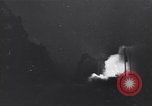
Soviet Katyusha rockets fired in Battle of Berlin; German civilians looting stores
Opening scene shows Katyusha rockets fired by Soviet forces in streets of Berlin at night during World War 2, during Battle of Berlin. They create fires in Berlin buildings leading to fire storm with whole buildings engulfed in flames. Soviet troops are silhouetted against the fire backdrop as they rush through the city streets. Insert of German film showing Adolf Hitler standing on a podium at a torchlight ceremony with Sturmabteilung (Storm Troopers) prior to World War 2. They march carrying torches as Hitler gives Nazi salute from the podium. Views of the torches in formation and glimpse of the Storm troopers marching. Film reverts back to 1945 and German prisoners of war being marched under guard as Soviet troops fire Katusha rockets in the background,during daylight, in Berlin. The Kaiser Wilhelm Memorial Church, on Kurfürstendamm is seen dimly. Soviet troops scamper among ruins of buildings and self propelled gun fires in a street. Desperate German civilians enter a damaged store and loot fabric and clothing as well as small boxes of goods. One man carries a huge pile of clothing and towels on his back.
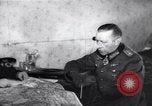
Soviet Field Marshal Georgy Zhukov and other Soviet officers inspect ruins of city after capture of Berlin during World War II.
Film begins showing German General Helmuth Weidling, commander of the Berlin Defense Area, who surrendered his forces to the soviets on May 2, 1945, during World War 2. He is describing to a Soviet officer, interogator, using a pointer and map, the defense tactics of his Berlin defense. He also describes the condition in which he found Adolf Hitler when he last visited him at his Berlin Chancery. He demonstrates the palsy-like shaking of Hitler's hand. German officer being questioned as he sits on a curb. Soviet officers examine charred bodies including a possible Hitler body double or doppelgänger, lying on the ground in courtyard of the German Chancery. The area filled with trash. View of a very tall steel tower. Closeup of the Soviet Red flag flying atop that tower. View of the damaged Quadriga statue atop the Brandenburg Gate. Soviet Field Marshal Georgy Zhukov and other Soviet officer pass under Brandenburg Gate. View of Kaiser Wilhelm monument. Marshal Zhukov and his party walking through central Berlin past various monuments and Government buildings. Several Nazi Eagle symbols are seen displayed on buildings. Crystal chandeliers inside one building. Destroyed interior of building. A cast head of Adolf Hitler in trash outside a building. Other statuary and Swastika symbols in trash. Marshal Zhukov and party stop to examine two damaged German armored cars in courtyard of a building. View of the Victory Column in Tiergarten Park adorned with a Soviet Red flag. Marshal Zhukov looking upward at it and then walking up steps toward the monument base.
CRITICALPAST.COM: About Us | Contact Us | FAQs - How to Order | License Agreement | My Account | My Lightboxes | Shopping Cart | Advanced Search | Featured Collections | Website Terms & Conditions | Privacy Policy ©2026 CriticalPast LLC.
License Agreement |
Terms & Conditions |
Privacy Policy
©2026 CriticalPast LLC.