


 Francais
 Deutsch
 Italiano
Refine Your Search
Tehran Iran 1943 stock footage and images
- Showing 127 to 132 of 3276 results more
more Hide
Hide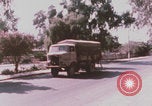
Iraqi soldiers cross Shatt al-Arab river during invasion of Iran
Iraqi soldiers move into Southern Iran during the Iraqi invasion of Iran. Iraqi tanks roll past civilians on bridge over the Shatt al-Arab river. A ship in the Shatt al-Arab river. Sign in English and Arabic says, “Welcome to Iran”. A desert dirt road in Iran. Iraqi military vehicles parked in a garage. Smiling Iraqi soldiers posing together, raising their hands with the “V” sign. (Iran-Iraq War period.)
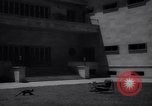
Shah of Iran Reza Pahlavi and Empress Soraya, in a garden with their pet animals in Iran
Shah of Iran Reza Pahlavi and Empress Soraya, in a garden with their pet animals. A pet leopard chained in the garden. The royal couple comes out of the residence accompanied by their pet dogs. The Shah plays with the leopard while the dogs watch. The Royal couple takes beverages. They discuss one of several books on the table. View of Rolls Royce convertible that appears to be special version of Silver Wraith model. Empress enters car. Guard holds driver side door for the Shah, saluting as he does. The Shah drives away. Guards stand outside the building. A flag seen flying. .
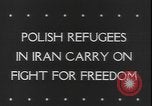
Polish refugees receive Red Cross aid as they reach Iran during World War II.
Polish refugees in Iran during World War II. The refugees walking in an area. People with their personal belongings loaded on carts walk on a street in Poland in 1939. They line up for food. A map locates the route traveled by the refugees. They reach Iran. They receive Red Cross aid. People receive clothes and shoes. They establish a village. People eat food. Children study in schools. Men and women work. They join and serve the U.S. Army.
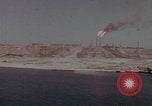
Shah of Iran speaks about oil production, Iranian oil fields and refineries.
Flare stacks at an oil refinery in Iran. Map of the world showing oil supply routes and locations written in French. Mohammad Reza Pahlavi, the last Shah of Iran, speaks about the role of the Imperial Iranian Navy in helping Iran’s independent oil policy and how oil production contributes to the economic and social development of Iran. An English dubbing translates the Shah’s comments. The Shah speaks in French. Smokestacks, pipes, pumps, and other infrastructure at an oil refinery. Gas flares on top of flare stack. An Iranian soldier stands beside an oil tank. Flare stacks are seen behind the soldier from a distance.
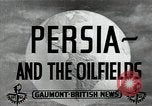
British newsreel detailing crude oil extraction and refinement efforts in Persia (present Iran) since the early 20th century
Newsreel titled, 'Persia and the Oil Fields." Narrator chronicles discovery of oil in Persia, benefits of oil to the local economy, and British involvement via the Great Oil Company (now British Petroleum). View of barren lands in Persia (now Abadan in Iran). Oil drillers at work in a refinery amidst the barren lands. Construction of oil refinery at Abadan. Oil revenue brings benefits to the people, as shown by new bridges, school buildings, teachers and young girl and boy students in classroom, and college students studying technical subjects. Professor instructs in front of a blackboard filled with mathematical formulas. Workers at metal shop machines applying new technical knowledge. Oil pipe lines laid across stretches of undeveloped land near Abadan, Iran. Crude oil bubbling from the ground. View of several British oil transport ships at a dock in the Persian Gulf, including "Umaria London", the "British Guardsman" and the "British Virtue." Narrator eludes to the then current difficulties in relations between Iran and Britain, due to the British oil embargo following nationalization of Iran's oil reserves by Mosaddegh.
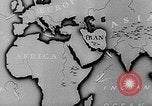
Nationalization of oil refinery at Abadan, Iran.
Major events of the year 1951. Nationalization of Anglo Iranian oil refinery at Abadan, Iran. Workers at the refinery. British action leads people to protest against Britain and other western democracies on streets in Iran. Prime Minister of Iran Mohammad Mosaddegh (or Mosaddeq) takes the matter to the United Nations. Delegates of various countries at the meeting. The United Nations headquarters in New York, United states.
CRITICALPAST.COM: About Us | Contact Us | FAQs - How to Order | License Agreement | My Account | My Lightboxes | Shopping Cart | Advanced Search | Featured Collections | Website Terms & Conditions | Privacy Policy ©2026 CriticalPast LLC.
License Agreement |
Terms & Conditions |
Privacy Policy
©2026 CriticalPast LLC.