


 Francais
 Deutsch
 Italiano

Refine Your Search
Tehran Iran 1943 stock footage and images
- Showing 145 to 150 of 3276 results more
 Hide
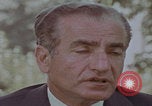
Shah of Iran speaks about modernization of Iranian society
Mohammad Reza Pahlavi, the last Shah of Iran, speaks about modernization and gender equality in Iran. An English dubbing translates the Shah’s comments. The Shah speaks in French. “Ours is a policy of participation embracing all men and women. It is our national effort, our national resurrection, carried out within the framework of very advanced social law.” Mohammad Reza Pahlavi said. The Shah speaks about the Iranian socio-economic system with confidence.

W. Averell Harriman and U.S. Ambassador Henry Grady, tour Anglo-Iranian Oil Company facility in Abadan, Iran
U.S. Ambassador to Iran, Henry Grady, walks with a manager of the Anglo-Iranian Oil Company, at its main facility in Abadan, Iran. The manager is explaining aspects of the plant to Grady. Next, the manager is seen pointing out features of the facility to W.Averell Harriman, President Truman's personal representative, as Ambassador Grady stands behind them. Change of scene, shows the manager and ambassador Grady high on a platform overlooking the facility, as Harriman joins them. They stand with huge pipes behind them as the manager points out items of interest in the expanse of petroleum tanks and other things below them. View from behind the guests and accompanying escorts, looking out at set of 13 tall chimneys rising from building in the facility yards below. More clusters of chimneys are seen in far background.
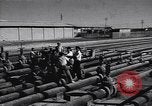
Scenes of Anglo-Iranian Oil Company facility at Abadan, Iran.
Crew operate Anglo-Iranian Oil Company facility at Abadan, Iran. Under the watchful eye of a supervisor, Iranian petroleum workers labor together in teams of several men each, to manipulate valves on a network of large pipes running close to the ground, at the Anglo-Iranian Oil Company facility in Abadan, Iran. To obtain better spacing and turning leverage, the workers employ shaped steel rods inserted into the valve wheels. A single worker closes a valve, inside a building. Another worker looks at a meter amongst a group of such devices, in the building. Two workes close a valve, as a supervisor watches. Several men walk across network of pipes and manipulate control valves outdoors. View of building with "Gas Oil Pump House" written on it in English and Persian.
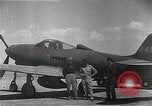
U.S. Lend-lease aircraft being supplied to USSR by way of Iran in World War II
Film about the shipping of American Lend-Lease aircraft to the Soviet Union, via the " Persian Corridor " during World War 2. It focuses on activities at Abadan Airfield, Iran. U.S. Army Air Forces (USAAF) Colonel Charles Porter, Commanding Officer of the Allied Abadan military establishment in Iran, stands with a Soviet Colonel, who supervises Soviet work on the field. With them is USAAF Brigadier General Macmillan., who was visiting the base at this time. They pose in front of a P-39 Bell Aircobra airplane displaying a red Soviet Star insignia. Next, ground crews are seen towing aircraft on the field, including a Douglas A-20 Havoc and a Curtiss P-40 Warhawk. Mechanics work on several P-40 airplanes on the ramp. A North American Aviation T-6 Texan aircraft is being refueled from a truck .Closeup of ground crewman holding refueling hose over the wing of the T-6. USAAF mechanics conduct post-assembly checks on a North American B-25 Mitchell bomber and tow another one (Serial number 41-3225) from a hangar, to the Soviet side of the field, after completing its inspection. Soviet mechanics are seen checking guns in the rear cockpit of an aircraft. Glimpse of several P-40 aircraft and a T-6 aircraft on a ramp. Soviet and American mechanics working together on the wings of aircraft. Closeup of two working together. As a Soviet soldier watches, an American airman uses a paint brush to change the American white star on an airplane, into the Soviet red star. The two shake hands when the painting is done. Soviet ground crew push a P-40 aircraft into position for starting. A soviet pilot, wearing a seat pack parachute, climbs into the cockpit. Closeup of him as he nods to a ground crewman for engine start. He taxis out and takes off. Several T-6 aircraft on the Soviet side of the field are seen, ready to be flown away. Views of other aircraft being readied for ferrying to Russia. Camera pans over the airfield and the many aircraft parked there.

Polish Refugees travel three years and 3 thousand miles to Iran during World War II.
Many Polish refugees are seen in the final phase of their monumental trek of three years and three thousand miles from Poland, during World War 2. Scene shifts to Poland in 1939, where polish refugees crowd roads carrying their belongings in wooden carts and other conveyances. They are seen at a rest stop where they obtain food. Animated map shows path of refugees fleeing East into the Soviet Union, following the German invasion in August, 1939. The path continues Southeast in 1941, as they flee from the German campaign, Operation Barbarossa, into the Soviet Union. Their journey continues along the west coast of the Caspian Sea, through the Caucasus, to Persia (Iran). Views of refugees arriving at the Persian border, where they are seen near many tents, and being provided with articles of clothing from British and American Red Cross Stations. Refugees donning new shoes and other items. Young girls having their hair styled. Refugees sit at long tables where they receive hot meals. A teacher conducts an outdoor class for Polish refugee children. Closeup of children at their desks. Refugee women are seen tilling soil to plant crops, while fathers and grown sons and daughters leave to join the new armies of the Polish Government in Exile. Views of Polish women, in uniforms marching and of uniformed armed Polish soldiers, as well becoming part of the Allied war against the Axis powers. Polish refugees at an outdoor shrine, offering prayers for the safety of their members in the military. New polish refugee arrivals at the Persian border being greeted by others, many of whom are family members.
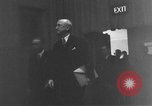
James F. Byrnes urges that Iran be given a chance to speak at UN Security Council meeting regarding Soviet military in Iran
Segment from the United Nations Security Council meeting at Hunter College, New York City, United States, on March 27, 1946. At the time, the Soviet Union, with its troops in Iran, and with interest in the governance and autonomy of Azerbaijan, was pushing to postpone discussion of the appeal by Iran that the action of the Soviet Army in Iran was a threat to international peace and security. American statesman James F. Byrnes, Edward R. Stettinius, Soviet diplomat Andrei Gromyko and representatives of the UN Security Council member countries are seen entering the conference room at Hunter College, New York City. The dignitaries seated at a table. Delegates and spectators present. Gromyko, the Soviet representative to the United Nations, speaks in Russian. Other delegates listen, seated behind. A delegate from China speaks. Several delegates raise their hands with questions. U.S. representative James Byrnes demands that the Iranians be given a chance to be heard. The Soviet delegation stands and exits the talks abruptly. Iranian delegate Hossein Ala', Iran's Ambassador to the United States approaches the table and is seated. The delegates listen as Mr. Hossein Ala addresses the council. Mr. Ala urges the council to take action, saying, "Iran views with grave concern any delay in the consideration by the council of the merits of these disputes. For these reasons, on behalf of my government, I request the council to take up these matters at once and reach, without reference to further negotiations, a solution consistent with the principles of the charter."