


 Francais
 Deutsch
 Italiano
Refine Your Search
Tehran Iran 1943 stock footage and images
- Showing 1591 to 1596 of 3272 results more
more Hide
Hide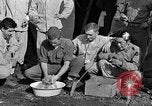
Recuperating Allied soldier at 93rd Evacuation Hospital in Caiazzo, Italy during World War II.
Allied soldiers at 93rd Evacuation Hospital in Caiazzo, Italy during World War II. A ward orderly bathe a puppy in a tub as recuperating Allied soldiers look on. Soldiers with bandages on their wounds. Signs read 'Hospital zone drive slowly, quiet' 'Hospital 93rd EH information registrar'.
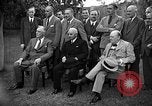
Franklin Roosevelt, Winston Churchill, and President Inonu during the Cairo Conference in Egypt.
Dignitaries at Cairo Conference, Egypt, during World War 2. President Franklin D Roosevelt, Prime Minister Winston Churchill and President Ismet Inonu of Turkey seated on grounds of Mena House. Those standing at the back include Anthony Eden, Harry Hopkins, Turkish foreign minister, Menemencoglu and other Turkish delegates. Churchill and Inonu talk.
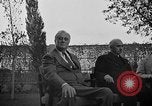
Roosevelt, Churchill and Inonu during the Cairo Conference in Egypt in World War 2.
Dignitaries at Cairo Conference, Egypt. President Franklin D Roosevelt, Prime Minister Winston Churchill and President Ismet Inonu of Turkey seated on grounds of Mena House. President Roosevelt talks to President Inonu. Winston Churchill smokes a cigar. Roosevelt continues to talk to Inonu.
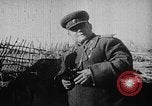
View of Soviet army general Nikolai Vatutin during World War II
Soviet Army General Nikolai Vatutin, during World War 2. He looks towards the sky with a pair of binoculars hanging around his neck.
Relocation of Japanese Americans in United States during World War II.
Shows Milton S Eisenhower speaking about the threat posed by Nisei or Japanese American people in United States during World War II. Japanese residents along the west coast have direct access to American oil fields and harbors. Views of harbors with boats and ships. This heightens the need to migrate the Nisei to interiors of America. Commander General of Western Command at his office plans the migration (internment) of Nisei people. Signs and notice banners with headlines "Civilian Exclusion Order number 6" and "Instructions to all persons of Japanese Ancestry." The signs inform the people of the compulsory mass migration. Nisei people fill up documents and submit it to war relocation authority. People undergo medical examination. They sell their property through 'Evacuee property department'. Japanese load their belongings onto trucks and buses. Deserted shops and homes of Japanese Americans. Rows of temporary houses at Santa Anita race track in Arcadia, California. People of Japanese ancestry eat in a large dining hall and attend church service. Men prepare houses for the Nisei. Japanese Americans boarding railroad trains at train stations, and boarding buses to be moved to relocation centers (internment centers).
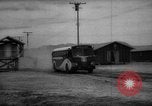
Japanese Americans at relocation center in United States during World War II.
Relocation of Nisei people in United States during World War 2. Japanese Americans arrive at the Manzanar relocation center (internment camp). Family members exit a bus. A young boy looking unsure as he observes the camp. New internees undergo medical examination. They participate in Americanization classes. They train themselves in self government. Block leaders are presented citations at a meeting. Japanese-American children internees are looked after in day care centers as men and women go to work. Young boys and girls seated at a table. Internees at Manzanar working in an experimental laboratory house for extracting rubber from guayule shrubs to increase rubber production during the war. Japanese American internees working in cultivating the guayule shrub. View of a project at the Parker camp where internees were working to irrigate desert land. View of sugar beet fields where internees could work. View of Manzanar war relocation center with mountains behind. War time propaganda narrator promotes the relocation centers as "setting a standard for the rest of the world in the treatment of people who may have loyalties to an enemy nation. We are protecting ourselves without violating the principles of Christian decency."
CRITICALPAST.COM: About Us | Contact Us | FAQs - How to Order | License Agreement | My Account | My Lightboxes | Shopping Cart | Advanced Search | Featured Collections | Website Terms & Conditions | Privacy Policy ©2026 CriticalPast LLC.
License Agreement |
Terms & Conditions |
Privacy Policy
©2026 CriticalPast LLC.