


 Francais
 Deutsch
 Italiano
Refine Your Search
Tehran Iran 1943 stock footage and images
- Showing 235 to 240 of 3276 results more
more Hide
Hide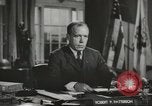
American Undersecretary of War speaks to difficulties facing Allies in confronting Germany and Japan in World War II
Undersecretary of War, Robert Porter Patterson, Sr. speaks about a report from the General staff outlining the needs for combating Germany and Japan in World War 2. He cites Operation Husky, the invasion of Sicily, as an example of what will be needed. He continues to narrate in the background as an animated map appears showing the buildup of supplies and Allied forces in North Africa; Allied air forces flying 60 thousand sorties over Sicily and, the direct amphibious assault using 3,200 vessels. Map also depicts opposing forces of 12 (“unwilling”) Italian Divisions and 3-1/2 German Divisions. View of Allied troops carrying some of their 31 thousand casualties on stretchers from field ambulances. Allied medics attending to the wounded. Some are seen lying on stretchers in a row on the ground near a wall. Interior of a field hospital where surgeons and other medical personnel treat the wounded. Animated map shifts to Europe with Germany at its center, showing , in contrast to Sicily that was only an “outpost,”, the heavily fortified perimeter of Axis controlled areas; the axis industrial might; and the disposition of 300 German Divisions (mostly on the Eastern front) defending the region. Next, the map illustrates Japan’s defended regions in the Pacific Image returns to Undersecretary Patterson i n his office, speaking of the Allied offensives planned for next year (1944), and emphasizing their challenge and difficulty. Scene shifts to General Jonathan Wainwright and his garrison at Corregidor, in the Philippines, surrendering to Japanese forces in 1941. Japanese military camera pans over the Americans being taken prisoner. Other Americans and Filipinos are seen being marched together under guard. Scene shifts to classic views of the Japanese attack on Pearl Harbor, Hawaii, on December 7, 1941. View of Japanese soldiers executing two Chinese civilians in 1937. Dangling bodies of persons hung by Nazis during Operation Barbarossa in Russia, in 1941 A Russian soldier comforts a little girl as he escorts her across a snowy landscape. Time bomb left by German forces retreating from Naples, Italy, in 1943, blows up a Post office building . Views of damage to building and bodies of victims. American Military Police assisting a victim. American soldiers carrying an injured civilian on a litter. Scene shifts to British Foreign Minister, Anthony Eden, Soviet Foreign Minister, Vyacheslav Molotov, and U.S. Secretary of State, Cordell Hull, entering a hall in the Spiridonovka Palace, during the 1943 Moscow Conference in Russia. Close-up of the American, Soviet, and British flags on a table. View of many delegates seated around the table. Close-up of Molotov, Eden, and Hull signing conference document.
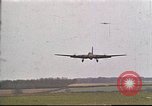
B-17 Flying Fortress bombers of U.S. 8th Army landing in succession on an airfield in England during World War 2.
B-17Fs of the 8th Bomber Command, 1st Bomb Division, 305th Bomb Group, 366th Bomb Squadron, landing at their base, RAF Chelveston, in Northamptonshire, England, during World War II. The first to land displays a dozen yellow bombs, for missions, painted under the pilot's cockpit window, and Squadron code KY, and L, on its fuselage. Its tail number is 42-5053. The second plane to land displays KY and D, on fuselage, and tail number 42-29553. The third, shows the squadron's KY, but other markings are not readable. The fourth to land displays some mission bombs below its cockpit window, the Squadron KY, and J on the fuselage. Its tail number is 41-21624. Bomb Group tail codes and nose art are not seen on any of the aircraft. But, researchers have identified names of three of them: Bloody Tangier Show (42-5053), Arkie II (42-29553),and Madame Betterfly (41-24624), and estimate the film to have been shot between 3/1/1943 and 5/19/1943.
American campaign against Japanese-held islands in the Pacific during World War II
U.S. sea power in the Pacific Theater during World War II. Aerial view of landing craft speeding through the water below. Animated map of Pacific Islands including the Solomons, New Britain, and New Guinea. Shows arrows depicting American amphibious assaults on Russell Islands in February, 1943; on New Guinea, and Rendova in June, on New Georgia in July, on Eastern New Georgia in August, on Choiseul, in October, and Bouganvillle in November, 1943. Aerial view of a Pacific Island airfield. Grumman F4F aircraft with engine running on an aircraft carrier. Bow view of an American Essex class Aircraft Carrier making way in heavy seas. A Douglas Dauntless airplane heading away from a carrier (in background). Map showing locations of American North and South Pacific naval forces and arrows pointing to Tarawa Atoll in the Gilbert Islands, and then to the Marshall Islands (Kwajalein Atoll and Enewetak Atoll). American infantry marching with full field packs, at a port, where they board transport ships. An artillery field piece being loaded on the ship, along with landing vehicles tracked, and army trucks. A convoy of troop ships and supply ships at sea.
German and Allied forces battle in North Africa; Italians surrender to Montgomery in Tripoli.
Allied troops arrive in Tunisia during Operation Torch of World War II. German aircraft and Allied aircraft engaged in dogfights. Explosions and scenes of aircraft crashing to the ground. Soldiers watch the aircraft through binoculars. Battle of Kasserine Pass in February 1943: Allied tank destroyers blast German tanks "at point blank range" according to narrator, who also notes it was the German's first real battle with American troops. German prisoners of war being marched by Allied soldiers. British troops in Tripoli, Libya in January 1943. Elevated view shows Capitoline Wolf statue in Tripoli with British armor parked below. British Army Field Marshal Bernard Law Montgomery receives surrender of Italian officials. British General Montgomery seated in a jeep passing through the city. People applaud.
German V-1 rocket fails to launch during WW2
Title card says “Erprobungsstelle der Luftwaffe Peenemünde- West” (“Test site of the Peenemünde-West air force” in English). “Flakzielgerät 76 V99 Schnittaufnahmen 4.8. 1943 HK” (“Anti-aircraft target device 76 V99 cut recordings 4.8. 1943 HK” in English). A V-1 rocket, also known as a buzz bomb or doodlebug, on a launch ramp in Germany during World War 2. The Argus engine on the V-1 fires up, but the rocket fails to launch from the ramp.
German animation shows V-1 Argus motor function during WWII.
Title card saying “Flakzielgerät 76 Trickaufnahmen Argus 11. 12. 1943 HK” (“Flak target device 76 trick shots Argus 11.12.1943 HK” in English). An Illustration showing the parts of the Argus engine of the V-1 rocket, an early cruise missile developed in Germany during World War 2, with the parts named in German. Animation demonstrates how the pulse-jet action works on the Argus jet engine.