


 Francais
 Deutsch
 Italiano
Refine Your Search
Tontouta New Caledonia 1943 stock footage and images
- Showing 7789 to 7794 of 10520 results more
more Hide
Hide
Montage of scenes involving military equipment and operations emphasizing signal corps communications
'The Signal Corps Fights' depicts the role and contribution of the U.S. Army Signal Corps in combat and war. Montage of military equipment and combat scenes (some staged). Opens with glimpses of: massed formation of U.S. Army soldiers; similar formation of bombs in a munitions factory; row of P-47 fighter planes parked on an airfield; a huge radar antenna; battery of U.S. 120 mm M1 anti-aircraft guns; troops marching toward the camera; Martin B-26 Marauder aircraft dropping bombs, that explode on the ground; formation of German He 111 bombers in flight; U.S. battery of 120mm anti-aircraft guns firing; gun camera views of U.S. fighter strafing German aircraft on the ground, and attacking a German Messerschmitt bf 109 head-on (The tail is blown off and the pilot bails out at the last instant); fire engulfing some soldiers. Next, a soldier is seen at a large signal corps field telephone switchboard, and other communications switchboards are shown with operators. Momentary glimpse of troops, ostensibly engaged in combat. A soldier communicating from under a camouflage netting, and one holding a rifle and talking in a phone as he strings wire from a spool in his backback. A german soldier ostensibly cutting a U.S. communications cable that he discovers in the field. A U.S. soldier crawling along the line to find and repair the damage, followed by a staged "attack" by the German soldier. They engage in a knife fight. Soviet infantry advancing on the Eastern Front. Soviet T-34 tanks advancing. Soviet soldiers engaged in combat. An unusual U.S. tank with two guns, and side protection over track wheels. M3 Stuart light tanks going down hill with infantry in france during World war 2. Hand of signal corps soldier using a key to send morse code message. Soldier in bunker using field telephone. Signal corps soldiers communicating with field switchboards during combat. Momentary glimpse of German Messerschmitt bf 109 and another aircraft speeding past. Bomb exploding. Huge clouds of black smoke billowing, behind camouflaged German military vehicles parked. Twisted frames of German wrecked vehicles and rail cars. Huge number of German soldiers marshaling to retreat from advancing Allies. German officers conferring.
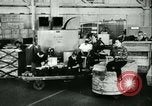
U.S. Army Signal Corps communication material and equipment is produced and distributed in World War II.
The role and contribution of the U.S. Army Signal Corps in combat and war, especially during World War 2. Workers organize and prepare signal communication material and equipment for transportation. Men transfer the items including wooden cartons, cables, signaling units in trolleys. Workers load the material into trucks. Shuttle ships in docks. Signal communication supplies for U.S. and Allied troops in the European Theater loaded onto the ships. The shuttle ships make their way under security in heavy seas. A Nazi U-boat wolf pack in the water during the early stages of World War II. torpedoes launched and U.S. ships are attacked bu the German submarines, smoke due to the explosions. U.S. sailors on board and jumping from burning ships into water.German wolfpack submarine fleet in a harbor. German Kriegsmarine sailors lower German Neger torpedo-carrying craft (sometimes called Human Torpedo) into the water. A U.S. B-25 bomber aircraft in flight locates a German submarine. The radio operator gives the exact location and the submarine is attacked. View from within cockpit as bomb sight is fixed on German submarine target. View of bomb doors open and bombs away from B-25 aircraft. Explosion in water is seen and the submarine is hit. Dramatized scene from inside of submarine as it is rocked by explosion and fills with water.
The U.S. Army Signal Corps Signal Intelligence work during World War II.
The role and contribution of the U.S. Army Signal Corps in combat during World War 2. Soldiers on guard duty in a field. A soldiers talks over a radio receiver at the door of a cabin. An antenna on the cabin roof. Signal Officers intercept enemy transmission by the mean of radio and other electric equipment. Electrical equipment, radios, deciphering equipment, laboratory equipment and parts seen at work in Signal Corps facilities where intercepted enemy communications are analyzed and codes and ciphers are deciphered. Officers skilled in encryption and decryption work to decode enemy codes and messages. They use a microscope to read and write messages in microscopic writing on grains of rice. Signal Intelligence work in North Africa during World War 2. U.S. soldiers on tanks advance over rough terrain. A formation of U.S. B-17 bomber aircraft in flight. Tanks advance with the ground forces. The radio intercept picked up messages from a certain German Division headquarters. A soldier sets radio direction finders on the particular location. Officers receive the information and locate the headquarters on a map. The Allied troops attack the enemy. They hit them with tracers. Artillery and guns are fired. Smoke from fire due to explosions. Soldiers advance in prone positions. They lie low during the night assaults. German soldiers load and fire a mortar. Explosions in a field due to mortar attack. Dead U.S. soldiers and injured U.S. soldiers in foxholes and on the battlefield following mortar attacks. U.S. soldiers help a fellow wounded soldier in a jungle setting.
The Guadalcanal campaign in World War II
Major General Alexander Vandegrift, USMC, who, as Commanding General of the 1st Marine Division, also commanded other U.S. military units involved in the invasion of Guadalcanal in World War 2. He discusses those joint U.S. military operations. The U.S. Destroyer, USS Blue (DD-387) seen bombarding Guadalcanal.A B-17 bomber overhead. U.S. Marines decend rope net into landing craft of the attack transport, USS George Clymer (APA-27), later seen with the USS Harry Lee (APA-10) and numerous landing craft around them. A landing craft from the Harry Lee arriving and Marines jumping out. Many U.S. troops wading ashore from landing craft. Troops carrying supplies ashore. Officers salute as American flag is raised on rugged flag pole. Numerous Japanese prisoners of war marching and in outdoor confinement. Japanese prisoners being processed. Japanese soldier using shoe clamps to quickly climb a tall palm tree. Admiral William Frederick Halsey, Jr.decorating a flyer with the Distinguished Flying Cross. View of the medal.Halsey decorating marines, including Major General Alexander Vandegrift, USMC, seen wearing the Navy Cross. Sign on palm tree reading: "Hospital Station C-1-Med." Wounded inside hospital tent. Troops gathered for religious service. U.S. troops dug in and moving along jungle path. Fallen Japanese soldiers on shore of Guadalcanal.Smoke rising from Japanese bombing of Henderson Field and construction continuing with heavy equipment. A B-17 bomber landing on the field. Names on B-17s at the field, including: "Spook," "Leis-Lady,"and "Boomerang." A Douglas SBD Dauntless aircraft taking off from Henderson field. Film concludes with parade of warships and overflight of warplanes (including a biplane).
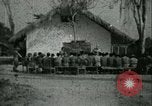
A U.S. OSS officer uses a black board to instruct Burmese students in Burma during World War if.
U.S. OSS (Office of Strategic Services) officers train Burmese recruits in Burma during World War II. An OSS officer instructs Burmese students on ambush and traps. Students seated on benches outside a hut. The instructor uses a black board. He explains the written matter and diagrams on the board. A Burmese instructor translates the information. A student stands up and asks a question. The instructor responds.
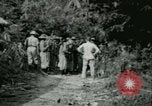
American and Burmese instructors train recruits in mine laying in Burma during World War II.
U.S. OSS (Office of Strategic Services) officers train Burmese recruits in Burma during World War II. American and Burmese instructors with the students on a path in the jungle. The instructor gives instructions and demonstrates mine laying near huts in a clearing. The students watch. The y mark positions on either side of the road and lay mines. The recruits in camouflaged hats. The instructors demonstrate and inspect. The students lay mines in the thick foliage. Dust flies on the jungle path.
CRITICALPAST.COM: About Us | Contact Us | FAQs - How to Order | License Agreement | My Account | My Lightboxes | Shopping Cart | Advanced Search | Featured Collections | Website Terms & Conditions | Privacy Policy ©2026 CriticalPast LLC.
License Agreement |
Terms & Conditions |
Privacy Policy
©2026 CriticalPast LLC.