


 Francais
 Deutsch
 Italiano
Refine Your Search
Tontouta New Caledonia 1943 stock footage and images
- Showing 3967 to 3972 of 10521 results more
more Hide
Hide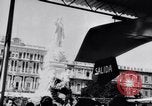
Cubans react to Castro's Communism in Cuba, Florida, New York, and Manuel Antonio leads the Democratic Revolutionary Front.
Cubans react to the realization that Communism has come to Cuba. A crowd gathered for a demonstration. People set fire to things during the demonstration. Soldiers keep a vigil on the streets. A meeting of Anti-Communists. Key West, Florida: Demonstrations by the Christian Anti-Communist Group. Cuban Prime Minister Fidel Castro's effigy hanged from a pillar. Various Anti-Castro groups form the Democratic Revolutionary Front in Miami. It is led by Manuel Antonio de Varona, the former Prime Minister of Cuba. He addresses a meeting of the Front. The U.S. and Cuban flag on either side of the table. The Front officials during a discussion. They blame Castro for taking over Cuba, terror, political murder, and call for his overthrow. A woman types the charges made on Castro. They work towards their goal through the means of radio programs. A radio announcer speaks over a microphone. New York City: Anti-Castro exiles stage a rally near the statue of Cuban nationalist leader Jose Julian Marti Perez in Central Park. They get into a scuffle with Castro's supporters. The police try to control the fighting mob.
U.S. campaigns against Japanese in Marshal Islands, New Britain, and Rabaul, in the Pacific during World War II
U.S. offensives against Japan in the Pacific Theater during World War 2. A United States Carrier Task Force in the Pacific Ocean. Fighter planes and dive bombers on the deck of the Task Force. Sailors push trolleys containing bombs. A map shows Marshall Islands. Douglas Dauntless dive bombers take off to strike against the enemy. U.S. Navy fighter planes engage defending Japanese aircraft and down many of them, as seen in gun camera footage. The first wave of Douglas Dauntless dive bombers returns to its carrier for refueling, rearming, and debriefing. Sailors on the aircraft carrier man anti-aircraft guns to defend against attacking Japanese aircraft. Black flak fills the sky and a number of Japanese aircraft are destroyed by the anti-aircraft fire. A Japanese bomb explodes near the flight deck of a carrier. (Narrator notes that 85 Japanese aircraft were destroyed in this one operation.)An animated map shows New Britain Island. U.S. Major General William Henry Rupertus, Commander of U.S. Marines on a ship. He looks through a pair of binoculars as a U.S. planes (B-24 Liberators) drop bombs on Rabaul. U.S. warships launch an attack at the enemy positions. Fire and explosions. The Marines load into landing craft and move towards the shore. They land behind an intense naval bombardment. Marines head ashore from beached LCI-1 Class Landing Craft Infantry (Large), number 343. M 16 tanks, equipment, and artillery roll ashore from Landing Ships Tank (LSTs). . The tanks lead the way through the jungle terrain and the marines advance behind them. Marines fire mortars as they advance. They flush out Japanese from trenches and bunkers. A damaged Japanese Mitsubishi fighter plane and wreckage of others. Some dead Japanese soldiers. The Marines wade through deep water as they push on to Rabaul. Others advance through deep mud. More views of them slogging through mud.
People cheer as a new aircraft carrier Bon Homme Richard of the U.S. Navy is launched at an Atlantic coast shipyard.
U.S. Navy launches a new aircraft carrier Bon Homme Richard at an Atlantic coast shipyard. The air craft carrier at the shipyard. People at the shipyard to see the launching ceremony. People cheer as the aircraft carrier sails out into the sea.

U.S. President Franklin D. Roosevelt dedicates the new chapel at Georgia Warm Springs Foundation
U.S. President Franklin D. Roosevelt dedicates the chapel at Georgia Warm Springs Foundation in Warm Springs, Georgia. Cars parked on the road side. President Roosevelt arrives at the new chapel and drives up footpath to the door. Closeup of license plate on the President's 1938 Ford convertible (with hand controls) reads 'Georgia FDR 1938'. Following the dedication service, the President is seen standing supported by door of his car, as he shakes hands with Rt. Rev. Henry J. Mikell, D.D., Bishop of Atlanta. Standing nearby are Rev. J.D.C. Wilson, Rector of St. Mark's Episcopal Church in LaGrange, Georgia, and FDR's neighbor and friend, and former owner of Warm Springs, Georgia Mustian Wilkins, who donated the funds for the chapel. Scene shifts to large group of polio victims, in wheel chairs. Closeup of President Roosevelt. Group of polio victims , in their wheel chairs, posing outside a Foundation building, with McCarthy Cottage and the E.T. Curtis Cottage in background.
U.S. Army Air Corps sets new airborne endurance record using midair refueling
The U.S. Army Air Corps Fokker C-2 named the 'Question Mark' is rolled out and takes off.from Van Nuys, California, on New Years Day 1929 with Capt.Ira Eaker at the controls. Shortly thereafter,it is refueled by a C-1 airplane piloted by 1st Lt. Odas Moon and 2nd Lt. Joseph G. Hopkins., View of the The C-1 above and slightly ahead of the Question Mark, maintaining 20 to 30 feet of vertical separation, with both aircraft stabilized in level flight at 80 mph. The refueling hose is reeled out. View of the Question Mark in flight over the coast of California. At the conclusion of the mission, cut short by engine trouble after 150 hours aloft, the crew, Sgt Hooe, Lt. Elwood Quesada, Lt Halverson, Captain Eaker and Major Spatz are seen standing in front of their airplane, the FokkerC-2, Question Mark.
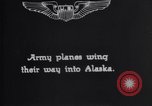
The U.S. Army Air Service flight expedition from Mitchel Field, New York, to Nome, Alaska, and return.
U.S.Army Air Service flying expedition to Alaska and back. DH-4B aircraft of the Black Wolf Squadron preparing to depart Mitchel Field, Long Island, New York, on their record-breaking flight to Nome, Alaska, and return. Change of scene to Alaska. Captain St. Clair Streett and other members of the expedition posing next to the DH-4B flown by 2nd Lieutenant C.H. Crumrine. An itinerary of their flight on the fuselage of the airplane. Two aircrew hold pet dogs.
CRITICALPAST.COM: About Us | Contact Us | FAQs - How to Order | License Agreement | My Account | My Lightboxes | Shopping Cart | Advanced Search | Featured Collections | Website Terms & Conditions | Privacy Policy ©2026 CriticalPast LLC.
License Agreement |
Terms & Conditions |
Privacy Policy
©2026 CriticalPast LLC.