


 Francais
 Deutsch
 Italiano
Refine Your Search
Tontouta New Caledonia 1943 stock footage and images
- Showing 4381 to 4386 of 10521 results more
more Hide
Hide
View of Republic Day in New Delhi, in India
Prime Minister of India Jawaharlal Nehru greets the Duke of Edinburgh, Prince Philip on the Republic Day of India. A Republic Day parade is seen. Duke of Edinburgh visits the Bhakra Dam. Water flowing in River Sutlej.
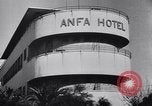
Allied leaders at the Casablanca Conference in Morocco during World War II. Allied forces battle Germans in Algeria and Tunisia
Film begins showing the Anfa Hotel in Casablanca, North Africa. Inside, Allied generals meet to plan further steps in World War 2, against the Axis powers. Charles de Gaulle and French General Henri Giraud are seen walking together at an airport. Closeup of the two. View of Allied General staff members around a table. U.S. principals include Army Chief of Staff, General George Marshall and Air Force Chief, Lieutenant General Henry H. Arnold. Views of General Dwight D. Eisenhower, Supreme Commander of Allied forces, His deputy for land forces, British Field Marshal Harold Alexander, his deputy for sea forces, British Admiral Andrew Browne Cunningham, and his deputy for air operations, British air marshal, Arthur William Tedder (1st Baron Tedder) Outdoors. President Franklin D. Roosevelt and Prime Minister Winston Churchill are seen seated, conversing. Churchill's airplane, named Commando, a very long range Consolidated Liberator II aircraft adapted for passenger transport is seen ready to take him to Tripoli to greet the victorious British 8th Army. Churchill greeting British Field Marshal Bernard Montgomery at Tripoli. Animated map shows battle lines and disposition of Allied forces along the Algiers-Tunisian front. View of German Field Marshal Erwin Rommel inspecting defenses at the Mareth line in Tunisia. Fifteen divisions of German, and 7 divisions of Italian troops entering the front lines. German Panzer IV aus d tanks moving on a dirt road. German infantry marching along a road. Seasoned German troops in camouflaged vehicles. Formation of German Focke Wulf 189 aircraft and view of one dropping bombs. General Rommel pointing to something at the front. Animated map showing the battlefront. (Narrator says German orders were to hold Tunisia at all costs.) View of Rommel, eating a sandwich as he studies document in a defensive position behind the Mareth line. German soldier using periscopic binoculars to view the front. German forces initiating an attack westward driving Allied forces back. Map show German forces advancing beyond the Kasserine pass. Rommel in a staff car, as he learns that the Allied forces have counter-attacked and are driving his forces back to the original battle lines. American infantry marching Eastward to reoccupy Kasserine Pass and beyond, past destroyed German tanks. Rommel's forces make an attack Southward toward the British 8th Army positions. View of new Tiger tank employed by the Germans. A British soldier removes the cover from their new 17 pounder anti-tank gun. View of burning Tiger tanks destroyed by the new British guns. (Narrator says 52 were left burning hulks.)
United States M10 tank destroyers tested over rough terrain (WW2) and promoted by narrator
U.S. Army World War II promotional film presents an overview of the new M10 Tank Destroyer that humorously mimics a new car sales advertisement. A newspaper cutting shows the advertisement of 'Screaming Eagle Hardware Company' that produces the Tank Destroyer. View of United States M-10 tank destroyers in rows in an open field. Crew climbs into Tank Destroyer. The M10 tank destroyer is shown being tested over rough terrain, water, steep drop off, and steep inclines. It is shown operating at 35 miles per hour on flat open terrain. View of crew inside tank destroyer demonstrating operation of its 3 inch gun. Gun of of the tank fired at target on a practice range in the United States. Soldier observes using binoculars. Steam locomotive running on railroad tracks approaching camera position, and then passing with train cars filled with M10 Tank Destroyers. Throughout the clip, narrator describes the features of the tank as if describing a new car, with various humorous lines added.
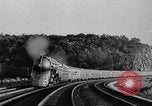
Couriers and United States postal service reaching everywhere across the nation by transportation system.
A streamliner locomotive pulling a train and moving quickly toward camera position. Scene changes to view of the George Washington Masonic National Memorial building (101 Callahan Drive, Alexandria, Virginia) in Alexandria, Virginia. Next scene shows a TWA gate area at Albuquerque New Mexico airport. A TWA Lindbergh Line DC-3 airplane taxis to a stop. A frozen park scene in Minneapolis Minnesota. An aerial view of Miami. A tall white tower in San Francisco (Ferry Building?). Wide pan view of skyline and skyscrapers of New York City. Exterior of U.S. Post Office Building in New York City.
Joe E Brown entertains troops; Red Ruffing and Joseph DiMaggio participate in a baseball game in WW2
A United States aircraft in flight. Comedian Joseph Evans Brown (Joe E Brown) arrives in South Pacific and is seen on stage putting on a show to entertain U.S. Army soldiers and sailors. Joe E Brown organizes a baseball game fundraiser in Hollywood, California, raising money for recreational equipment for the troops during the war. It features active duty military members who were recent former professional baseball players playing the game. Charlie Stevens of the Saint Louis Browns warming up at bat. Froilan "Nanny" Fernandez, formerly of the Boston Braves, warms up at bat. Walt Judnich, former outfielder for the St Louis Browns, warming up at bat. Next Joe DiMaggio, formerly of the New York Yankees, is seen batting. He is followed by Max West, formerly of the Boston Braves, at bat; next seen is former catcher from the New York Giants, Harry Danning. Next seen is Dario Lodigiani, formerly of the Chicago White Sox; and finally Charles Herbert 'Red' Ruffing of the New York Yankees. Joe E Brown and baseball player Joe DiMaggio participate in a baseball game along with servicemen and other dignitaries, during World War 2. Fans seated in the spectator area. Baseball game in progress. Spectators and fans in the stands cheer. Joe E. Brown talks to Joe DiMaggio and Red Ruffing on the sidelines.

Polish Refugees travel three years and 3 thousand miles to Iran during World War II.
Many Polish refugees are seen in the final phase of their monumental trek of three years and three thousand miles from Poland, during World War 2. Scene shifts to Poland in 1939, where polish refugees crowd roads carrying their belongings in wooden carts and other conveyances. They are seen at a rest stop where they obtain food. Animated map shows path of refugees fleeing East into the Soviet Union, following the German invasion in August, 1939. The path continues Southeast in 1941, as they flee from the German campaign, Operation Barbarossa, into the Soviet Union. Their journey continues along the west coast of the Caspian Sea, through the Caucasus, to Persia (Iran). Views of refugees arriving at the Persian border, where they are seen near many tents, and being provided with articles of clothing from British and American Red Cross Stations. Refugees donning new shoes and other items. Young girls having their hair styled. Refugees sit at long tables where they receive hot meals. A teacher conducts an outdoor class for Polish refugee children. Closeup of children at their desks. Refugee women are seen tilling soil to plant crops, while fathers and grown sons and daughters leave to join the new armies of the Polish Government in Exile. Views of Polish women, in uniforms marching and of uniformed armed Polish soldiers, as well becoming part of the Allied war against the Axis powers. Polish refugees at an outdoor shrine, offering prayers for the safety of their members in the military. New polish refugee arrivals at the Persian border being greeted by others, many of whom are family members.
CRITICALPAST.COM: About Us | Contact Us | FAQs - How to Order | License Agreement | My Account | My Lightboxes | Shopping Cart | Advanced Search | Featured Collections | Website Terms & Conditions | Privacy Policy ©2026 CriticalPast LLC.
License Agreement |
Terms & Conditions |
Privacy Policy
©2026 CriticalPast LLC.