


 Francais
 Deutsch
 Italiano
Refine Your Search
US-Gliders- stock footage and images
- Showing 79 to 84 of 21920 results more
more Hide
Hide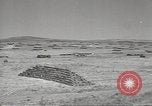
Mechanics work on U.S. Army Air Forces B-25 Mitchell bomber parked inside a wrecked hanger in North Africa.
Mechanics work on USAAF (United States Army Air Forces) planes parked in a hangar in North Africa during World War II. Large gas and oil dump in North Africa. U.S. army trucks pass on highway to Bizerte. Semi-truck and trailer carry wrecked USAAF (United States Army Air Forces) P-38 Lightening fighter aircraft. Interiors of a bomb wrecked hangar. Two mechanics walk to steel work rack at tail of B-25 Mitchell bomber, lift machine gun, and climb up to work platform. They install machine gun on B-25 tail. Large hole in hangar ceiling. Mechanic inside the tail adjusts pivot on the gun of B-25. Mechanic climbs on work rack and works on tail of B-25. Several gliders parked outside bomb wrecked hangar. Crew members clean glider nose.
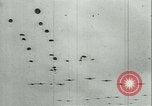
Allied troops advance and secure territory in Arnhem, Netherlands.
Arnhem: Fleet of Allied planes in flight. The 1st Allied Airborne Corps troops descend and land near Arnhem, Netherlands. Ground forces march ahead. Members of the Allied corps from the American 82nd Airborne Division capture and cross the 2km long bridge over the Waal at Nijmegen. Dead German soldiers on the bridge. Landing of allied paratroopers near the town of Grave, targeting the bridges over the Maas. Scenes of the Glider Pilot Regiment landing in Holland near Arnhem in Operation Market Garden, including point of view shots from glider in flight under rope tow, and of many paratoopers filling sky during drop. Soldier in jeep being unloaded. A wrecked glider. Allied soldiers take German prisoners. Wounded soldiers. Dutch Resistance Movement officers reveal German troop movements to Allies. A member with an 'ORANJE' insignia on his uniform sleeve. View of German Garrison commander Major General Fridriech Kussin, dead, his body half fallen from his Citroen automobile as Allied troops march by. A bungalow used by the resistance as their headquarters. British soldiers attempting to defend their position near the Arnhem road bridge over the Lower Rhine (now the John Frost Bridge, named after the British Commander who led the forces that defended their position there for 9 days, and subject of the 1977 movie "A Bridge Too Far"). Wounded soldiers on stretchers, from fighting against the German 9th SS and 10th SS Panzer divisions. Views of supplies being dropped to the British forces and the soldiers retrieving dropped supplies. Allied Target Indicators go off at dusk. British soldier communicating on radio as they await arrival of British XXX Corps (who never arrive). Remaining British troops withdrawing after 9 days of battle. British Soldiers retire and walk on streets. Soldiers in military jeeps. The Nijmegen bridge over the Waal River protected by the Allied soldiers. In total 10,600 Allied airborne soldiers landed at Arnhem; 1500 were killed and all but 2398 were captured (World War II period).
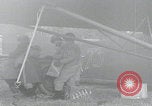
American soldiers unload and transport supplies at RAF Newbury in England (WW2)
U.S. Army troops unload supplies from a United States Army glider at RAF Newbury in Berkshire, England during World War II. The soldiers place boxes of supplies on the back of a cart. A Jeep towing a cart drives past a glider “Nancy the Third”. A Jeep drives, towing a cart away from the glider. The soldiers pick up supplies and unload them from the cart. Military Jeeps and vehicles driving on forested road.
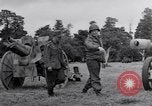
German prisoner (German POW) explains captured artillery to American captor in France during World War 2
German prisoner of war talks about captured artillery pieces to a U.S. Army soldier in France during World War II. In a separate scene, two U.S. Army soldiers enter through the door of a United States glider in a field. Views of the soldiers inside the glider as they examine the cockpit contents, search for information, and remove some papers from the seat back. Additional footage follows of the German POW explaining captured German artillery pieces to the American soldier.
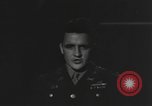
USAAF Major General Paul L. Williams and soldiers of 9th Troop Carrier Command standing near airplanes in Europe
An officer seated at a desk and speaking about the Battle of the Bulge action near Bastogne, Belgium with U.S. troops during World War II. He recognizes the forces of the 9th Troop Carrier Command (operating out of England, United Kingdom and out of France) for reaching them with important supply drops late in the battle. United States Army Air Force ( USAAF ) Major General Paul L Williams inside a glider cockpit (while parked) and officers and crew standing and walking together on airfield areas. Airplanes parked at an air base. Pilots and crew standing nearby. Close up views of faces of many of the U.S. Army personnel of the 9th Troop Carrier Command, including pilots, ground crew, officers. Point of view shot from inside a glider aircraft cockpit as pilots negotiate landing in a field. Smiling officers, soldiers, and crew of the 9th Troop Carrier Command.
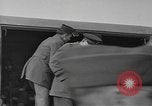
General Eisenhower and Prime Minister Churchill visit the 101st Airborne Division in England during World War II
While visiting the U.S. 101st Airborne Division, at RAF Welford in Berkshire, England, in World War 2, Prime Minister Winston Churchill, and General Eisenhower, inspect the inside of a British Horsa glider. Eisenhower steps down from the cabin as Brigadier General Maxwell Taylor, Commander of the 101st, assists Prime Minister Churchill down the steps. Churchill then peers into the open back of a U.S. CG-4A glider. He stops to look at paratrooper rations displayed on a table, as Brigadier General Anthony C. McAuliffe explains them. Churchill and Eisenhower then review formation of paratroopers, accompanied by Brigadier Maxwell Taylor, and followed by Brigadier General Don F. Pratt. They walk among the troopers, one of whom is a British paratrooper. The Generals salute as they pass the unit colors. Further on they pass a color guard and the Generals salute, as Churchill removes his hat. Churchill is seen at a microphone. Change of scene shows C-47s flying overhead with paratroopers descending and spectators watching them. another view of Churchill and Eisenhower entering Dodge 3/4-ton T214 vehicle, after the paratroop drop, and driving among troops seen in combat positions on the field.
CRITICALPAST.COM: About Us | Contact Us | FAQs - How to Order | License Agreement | My Account | My Lightboxes | Shopping Cart | Advanced Search | Featured Collections | Website Terms & Conditions | Privacy Policy ©2026 CriticalPast LLC.
License Agreement |
Terms & Conditions |
Privacy Policy
©2026 CriticalPast LLC.