


 Francais
 Deutsch
 Italiano
Refine Your Search
US-Gliders- stock footage and images
- Showing 11017 to 11022 of 21913 results more
more Hide
Hide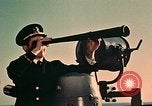
U.S. sailors visit and enjoy in various places of Europe.
A film on the life of sailors aboard United States Navy ships. An officer looks through a telescope. He sees land as the ship approaches Copenhagen, Denmark. He explores a land area. Sailors stand at attention aboard the ship. Officers inspect the sailors. They board a liberty boat to take them to shore. The ship underway at sea. The sailors visit various countries and places in Copenhagen. The sailors talk to Danish women. They eat local delicacies in Europe. United States Navy sailors buy from a street vendor in Copenhagen. View of London, United Kingdom. A sailor asks a British policeman for direction on the street. Greek Army Evzones marching in Athens, Greece. The sailors walk in the streets. Buildings along the sides of the street. The sailors return to the ship. The ship in the Panama Canal. The sailors aboard the ship.

Contractors development inspection and technical compliance inspection of a USAF B-52 Startofortress in the U.S.
A film titled '1960 B-52 Annual Report' on a progress report covering development and production of United States Air Force B-52 Stratofortress aircraft. A B-52 Stratofortress aircraft in flight overhead. Aerial view looking down on top of a B-52 aircraft in flight. The aircraft leaves smoke trails. Interior of Wichita plant. A crowd gathered in a building. Models of aircraft. People look at the models. The crowd observes seat ejection and bomb navigation systems. A man working on instruments. Configuration of H-model. A truck carrying parts of aircraft enters a building. Parts of aircraft. Joining of wings and major sections of the aircraft. Completion of the first H model of the aircraft. Contractors development inspection and technical compliance inspection.
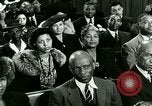
Film illustrating participation of African Americans in U.S. history from Colonial times to after the Civil War
Opening scene shows African American congregation in church, during World War 2, listening to their preacher speak about liberty. Closeup of the Minister speaking. As he refers to the seed of Liberty taking root in Boston, a plaque on the gate of the Granary Burial Ground of 1660 is shown reading: "Within this ground are buried the victims of the Boston Massacre, March 5, 1770." The gate swings open revealing the cemetery. Next, an illustration of British Redcoats shooting into a crowd on that occasion is shown. Closeup of the illustration shows an African American, named Crispus Attucks, falling as the first victim of the gunfire. A monument to him on Boston Common, is then shown. Closeup of the monument. Excerpt from a film about the Revolutionary War shows reenactment of the battle off Concord. The 221-foot granite obelisk at Bunker Hill, Boston, is seen, marking the site of the first major battle of the American Revolutionary War. A musket is seen with a sign attached reading: "Gun belonged to Peter Salem, a colored man who carried it at Lexington, Concord, and Bunker Hill, and with it shot Maj. Pitcairn." (Refers to Major John Pitcairn, a Scottish Marine officer, killed at the battle of Bunker Hill.) Illustration and painting of Peter Salem with his musket in the company of other patriots, is shown, as well as a glimpse of a mass reenactment of the battle of Bunker Hill. Next is seen the famous 1851 oil-on-canvas painting of Washington Crossing the Delaware, by the German American artist Emanuel Gottlieb Leutze. Closeup of one oarsman, identified as African American, Prince Whipple. Film Reenactment of the ragtag American army at Valley Forge in the snow, shows their suffering. Among them is an actor in the role of African American, Salem Poor, who had purchased his freedom from slavery and fought with Washington's army. A bell ringing and the American flag of 13 stars signifying the 1776 Victory. Film reenactments of pioneers including whites and African Americans working together, felling trees and building forts and barns, and the like. Scene shifts to a man of war ship under sail firing a salvo from its cannons. This is followed by illustrations of Commodore Perry in the battle of Lake Erie, during the War of 1812. In a dory with Perry is a black man named Tyler Thompson. War ships exchange gunfire. Narrator cites Perry's famous words of victory: "We have met the enemy and they are ours." Scene shifts to a painting of American general Andrew Jackson and his troops, at the Battle of New Orleans, in 1815. A battle reenactment shows a black American soldier participating. Postwar view of American ship building activity. View of a large sailing vessel. Cannon fire ushers in the Civil War in 1861 as Confederates fire on Fort Sumter. Images of combat are overlaid by the statue of Abraham Lincoln in his memorial at Washington, DC. Next, settlers are seen heading West in a wagon train. Camera focuses on a black couple who are part of the wagon train. White and African American men work side-by-side building a railroad. An early steam locomotive races along the tracks. .
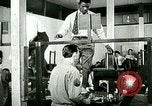
African American recruits in U.S. Army are issued uniforms and begin basic training in World War II
African American recruit sits in a chair with feet on a measuring device. A sergeant gives him a pair of shoes. But before he wears them the Sergeant tells him to stand, in the measuring device, holding two 20 pound weights. He then tells him to put on the shoes and go into the next room, where other African American recruits are lined up. They are instructed to remove all civilian clothes and begin dressing in army clothing. Next, completely dressed in their army uniforms, the recruits carrying duffel bags as they leave the snow-covered camp to board a train. Views of steam locomotives pulling trains in various places in the country. A convoy of army trucks carrying the new soldiers into a military base. The trucks park side-by-side in a line and the soldiers jump out with their gear to begin their basic training. A sergeant instructing the new soldiers on how to make a bed and other responsibilities. The new African American soldiers assembled in formation outside their barracks, on the snow, practicing close order drill, and making mistakes in the process. Next they are seen in a cross country march, carrying rifles. they take a 10-minute break. Soldiers in an infirmary, being visited by army doctors and African American nurses. Newly recruited soldiers being tended in an army dental clinic by African American dentists and hygienists. Soldiers shooting rifles on a firing range. Targets moving up and down on the range. Soldiers participating in sports, including football, baseball, boxing, and ping pong. A woman in the base library reading poetry aloud from a book entitled: "An Anthology of American African American Literature." African American members of the Women's Army Corps (WAC) are seen at another base, engaged in close order drill. Next these WACs are seen driving and riding in jeeps over rough terrain. A soldier shines his shoes, on Saturday night. African American soldiers and women dancing to music from an orchestra. The soldiers performing calisthenics in the open air. Rifles are held in some of the exercises. (World War II; WW II; World War 2; World War Two)
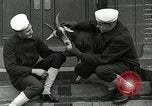
U.S. sailors play with a goat and feed it in the United States.
Sailors play with a goat in the United States. Two sailors seated on the steps of a building. They feed a goat. The goat runs away climbing a ledge. The boys chase it. The goat walks on the ledge. A sailor's hat on the goat's horns. The sailors seated on the steps play with the goat. The goat runs away and begs food from the men.
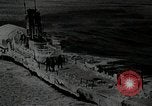
Men work on a machine gun in a cool chamber at U.S. Naval proving grounds in Dahlgren, Virginia.
United States naval proving grounds in Dahlgren, Virginia. A ship with snow on its deck underway at sea. A man works on controls at the naval proving grounds in Dahlgren, Virginia as he tries to maintain temperature and altitude. Men in the cool chamber as they work on a machine gun.
CRITICALPAST.COM: About Us | Contact Us | FAQs - How to Order | License Agreement | My Account | My Lightboxes | Shopping Cart | Advanced Search | Featured Collections | Website Terms & Conditions | Privacy Policy ©2026 CriticalPast LLC.
License Agreement |
Terms & Conditions |
Privacy Policy
©2026 CriticalPast LLC.