


 Francais
 Deutsch
 Italiano
Refine Your Search
US-Gliders- stock footage and images
- Showing 11251 to 11256 of 21913 results more
more Hide
Hide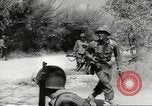
Amphibious operations in Italy, during Operations Husky and Avalanche. General hazards of wartime amphibious assaults including those in the Pacific Theater in World War II.
American soldiers in Italy, during Allied Operation Husky, and Operation Avalanche in World War 2. In landings during invasion of Salerno, Italy, soldiers pause their movements while two use a detector to search for possible buried mines. They detect one and are seen carefully digging it up from the sandy soil. Soldiers unroll steel matting across an area of beach. Close-up of heavy trucks moving across the matting. A bulldozer uses a cable to pull a section of temporary docking out of an LST (Landing ship tank). Troops move across several sections of such docking as they make their way onto the shore. A sherman tank making its way toward the shore . More heavy equipment coming ashore from LSTs, including a US M1 155mm “Long Tom” Gun. The gun being towed on shore, as trucks and jeeps maneuver through shallow water nearby. A long line of jeeps and trucks moving inland. Military vehicles being offloaded from the British Landing Ship Tank (HM LST-200). U.S. troops moving on a beachhead, along with artillery pieces, and vehicles. Soldiers carrying boxes of supplies and ammunition and struggling with large wooden crates of such, in shallow surf, and using a roller conveyor to offload some heavy items from a ship. A landing craft suspended from a cable operated A-Frame on wheels (in the water). At this point the thrust of the film shifts to illustrate the hazards of amphibious operations, in general. Swamped vehicles and a landing craft in the surf. The beach littered with damaged and swamped landing craft and equipment, including, among others, a landing craft from the USS Samuel Chase (APA-26). A huge explosion in the water. Glimpse of a German Junkers Ju 87 (Stuka) dive bomber attacking while being shot down by a U.S. sailor firing an anti-aircraft gun . View from above of sailors firing twin bofors 40mm antiaircraft cannons from an emplacement on a ship. Several German Junkers Ju 87 planes maneuvering as they attack. Quad bofors antiaircraft guns firing from a ship. More attacking Ju-87 dive bombers on the attack. A dramatic explosion and smoke from the Liberty ship SS Robin Rowan after being hit by a German bomb off the coast of Gela, Sicily on July 11, 1943. A landing ship burning from German bombing, off Gela, Sicily, with its deck full of halftrack and personnel carrier vehicles. The film continues the theme of losses encountered in wartime amphibious assaults, by shifting to the Pacific theater of operation, where a Landing Ship Tank (LST) is seen ablaze, off Guadalcanal, after being hit by Japanese shelling. View from beach with barbed wire, ashore, of the burning LST. Sherman tanks lost in a conflagration aboard an LST. Sailors carry a casualty on a litter, and place it next to other fallen crew members, on deck.
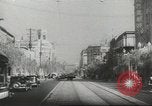
Japan in final mobilization on the home front during World War II
Street scene in Japan, as Allied Forces make progress toward Japan in World War 2. Cartoons posted to remind Japanese citizens to avoid talking about military matters. Government leader speaking to citizens about the "oratorical conquest of the foe." Camera pans across his outdoor audience. Next, tickets sold in a State Lottery to help pay for the war, are dumped into a tumbler, turned with hand cranks by two men. View of spectators waiting for the outcome as winning tickets are drawn. A man and a women saying farewell to their respective sailor sons, as they prepares to depart for duty. A troop train leaving a station as loved ones wave goodbye to departing servicemen. Next, large crowd of well-wishers wave from shore as the Japanese battleship Aki steams away. Closeup of crew members aboard the ship. Closeup of women pointing and waving from the shore. Views from a boat full of civilians, of the Aki making way in the harbor behind another three-funnel warship. Change of scene shows Emperor Hirohito with officers on horseback, reviewing and saluting Japanese army troops. Views of many Japanese soldiers marching in formations. Change of scene to U.S. Iowa class battleship viewed from overhead, and then to several U.S. battleships heading past the Golden Gate Bridge in California, on their way into the Pacific ocean. Aerial view of the battleships underway in single line formation. The U.S. Destroyer USS Porter (DD-356) passing several other U.S. warships. A Douglas Dauntless dive bombers brought up on the deck of a U.S. Yorktown class aircraft carrier. Navy armorers working on the deck of the carrier, moving bombs and machine gun ammunition. Tail view of the carrier from an aircraft taking off. Aerial view of a U.S. armada of warships and aircraft underway over the ocean. Aerial view of Mount Fuji in Japan.
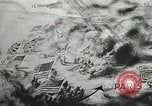
Allied Forces advance and French Army takes Paris in World War II.
Animated map shows American forces advancing toward Paris. Views of German troops disorganized and making their way individually among burning and destroyed military tanks and vehicles. A U.S. Army colonel confers with U.S. Armored unit officers, using hood of jeep as a table. U.S. Sherman tanks and tank destroyers moving along dirt roads toward Paris, at high speed and passing beyond the Orleans region. They move rapidly through groups of cheering French citizens in a French town. American armored units moving to bypass Paris. U.S. Army Air Force airplanes dropping maps to the armored units by parachute, because they were moving too fast to be supplied by ground. French forces, armed with American tanks, vehicles, and arms, are ordered to advance and take Paris. As they proceed, U.S. Army Air Forces support them from the air. Formations of P-51 fighter and B-26 bombers are seen. The French forces advance at rate of 25km per day. They are joyously welcomed as they pass through French towns on their way. Scenes of Paris. Local residents in line at a shop. German occupiers are seen beginning to leave Paris. A line of horse-drawn wagons is seen in the street. On August 14, 1944, Paris Police go on strike. They are seen drawn up in formation. August 15, 1944, the Gestapo left Paris. French citizens and police open fire on German Army vehicle. Parisians begin to hang the tricolor from their windows. French resistance fighters seen running in streets of Paris and firing weapons as they work to find remaining German forces. A doctor and several nurses run for cover. Parisians begin to fill the streets during liberation of Paris as elements of the French Army enter Paris. General Charles de Gaulle walking along a street in Paris.
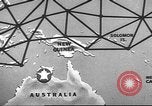
United States 5th Air Force bombers and fighters destroy Japanese targets on New Guinea in World War II.
U.S. Army Air Forces operations in New Guinea Island during World War 2. Animated map highlights New Guinea and shows limit of Japanese defenses. U.S. troops board U.S. Army Air Forces C-47 Skytrain transport plane. Formation of C-47s in sky. C-47 lands. Troops getting off the C-47 and running for cover. Australian troops getting equipment moving armament. Wounded soldier being placed aboard C-47. U.S. Army Air Forces C-56 Loadstar buzzing airfield. American troops making a runway. U.S. Army Air Forces P-38 Lightening fighter aircraft takes off. Shutter of a B-25 Mitchell bomber aircraft. Bombs exploding on Japanese targets. B-25s bomb Japanese ships. B-25s strafing Japanese planes on ground. Parafrog bombs being dropped by B-25s. Shells exploding. U.S. Army Air Forces B-24 Liberator bombers in flight. View at Wewak Island. B-17 Flying Fortress bombers and P-38s in flight.
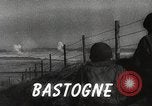
Scenes of the siege of Bastogne and subsequent advance of Allies into Haguenau and Germany, in WWII
Scenes from the Battle of the Bulge, and siege of Bastogne during World War Two. Large numbers of United States Army Air Force C-47B Skytrain transport planes drop parachute supplies for troops at Bastogne, Belgium. Ruins of the town of Bastogne. A street littered with dead bodies and rubble. U.S. troops advancing into the town of Haguenau on the border with Germany, and further into Germany, itself. American MPs (Military Police) search civilians and check identity cards and check U.S. soldiers in military vehicles to guard against Germans in American uniforms. U.S. M4 Sherman tanks move ahead on the front. Artillery being fired. Troops engage in street fighting. Group of Alsatian women rejoice as they are being released from a prison, where they had been held by Germans. U.S. troops advance through a wooded area. U.S. Secretary of State, James F. Byrnes speaks about the sacrifices of U.S. troops who are fighting and dying for their country and appeals to Americans, safe at home, to work for the war effort.
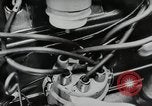
United States Signal Corps under a military supervisor and expert team make a training film to aid war effort, United States.
Film based on advantages and procedures of using U.S. army training films to teach United States Army soldiers in World War 2. Demonstration of parts of an automobile distributor device shown closeup. Microscopic view of syphilis bacteria. A man uses pneumatic hammer on wood. Animation of pneumatic hammer drill demonstrating the use of the drill. Men of U.S. Army Signal Corps make a training film under supervision of a military expert. Cameraman and motion picture film camera seen in use in the field. Typist types a script for the same training film. Director and cameramen record. Editor assembles and edits the films, and is seen reviewing frames of the film and building film reels.
CRITICALPAST.COM: About Us | Contact Us | FAQs - How to Order | License Agreement | My Account | My Lightboxes | Shopping Cart | Advanced Search | Featured Collections | Website Terms & Conditions | Privacy Policy ©2026 CriticalPast LLC.
License Agreement |
Terms & Conditions |
Privacy Policy
©2026 CriticalPast LLC.