


 Francais
 Deutsch
 Italiano
Refine Your Search
US-Gliders- stock footage and images
- Showing 11419 to 11424 of 21913 results more
more Hide
Hide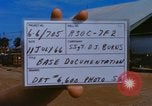
Prime Beef teams assemble Quonset hut frame at Bien Hoa Air Base in Vietnam.
Air Base construction project by Prime Beef teams and U.S. contractors at Bien Hoa Air Base in Vietnam. Prime Base Engineer Emergency Force (Prime BEEF) team assemble Quonset hut frame (to be used as storage for portable electric equipment). Men use drilling machines at frame and screw the frame. U.S. contractor looks the construction work.
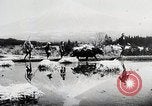
Agricultural scenes in Japan which is self-sufficient in food production prior to World War II.
Views of Japanese farmers at work in rice paddies and other agricultural fields in Japan before onset of World War 2. A line of women, in straw hats, labor in a rice field as a man pumps water into the paddy using a foot operated wheel. Rice being harvested and processed in the field. Farmers working in other fields containing grains such as wheat, barley, and oats and in vegetable patches. Japanese soldiers using grain straw to patch roofs. Other Japanese workers using such material for screens, parasols, and hats. Women harvesting fruit, in which Japan is 95% self-sufficient. Workers harvesting tea leaves. Workers at a seashore gathering salt evaporated from seawater. They carry some in wheelbarrows and some in containers using shoulder yoke.
Allied troops capture Myitkyina, Burma, and Japanese 15th and 33rd Divisions counterattack British Forces at Imphal in India (WW2)
At opening, film shows U.S. Army Air Forces Bell P-39 Bell Air Cobra aircraft dropping bombs on on Japanese held northern airfield of Myitkyina, which was later captured by the 3rd Battalion Merrill's on July 26, 1944. Aerial view from U.S. aircraft bombing the Japanese occupied city of Myitkyina, on the west bank of the Ayeyarwady River, in Burma. Heavy smoke rising from bombs striking targets at the river's edge. (Narrator states, "the siege lasted 78 days.") Next, a regiment of Merrill's Marauders marches unopposed into the city. Animated map shows Japanese forces (15th and 33rd Division troops) attacking British-held town of Imphal, Burma. Ensuing scenes show well entrenched British forces in battle, with British soldiers firing heavy artillery, mortars, and Vickers machine guns. Glimpse of shells striking in hills. Momentary glimpse of Allied aircraft above the hills. (Narrator states the British "chewed up a couple of Jap divisions"," and the Allied rear lines of communication remained secure.) Animated map shows Chinese forces attacking Japanese forces west of the Salween River. View from a high position above the river bank. Rubber rafts line the shore and troops are assembling on the land. Next, troops are seen wading neck deep crossing the river with supplies floating along with them. Some paddle a jeep across the river on a makeshift raft. A truck at the edge of the river. Soldiers pulling together on a long rope line. Others crossing with hands on a line to support them as they wade in the water. Trucks bogging down in deep mud are helped by tow lines to others, ahead. Troops in a village where the road is inundated by rain waters flowing across it as a jeep goes past. Vehicles of all kinds sidelined by flooding waters. Jeeps speeding through water in some places and moving very slowly in the center of a muddy road where troops make their way on either side. Chinese soldiers scaling the stone wall of a fortress using ladders they made for the purpose. Troops firing a small artillery field piece and then charging towards battle-damaged buildings. Several are seen using flame throwers, that set building afire. More views of Chinese soldiers firing artillery and heavy machine guns. (World War II period)
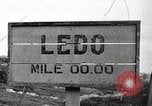
Construction and completion of the Ledo Road from India to China during World War II
Film opens showing road sign reading: "LEDO Mile 00.00." Scene shifts to rail lines at terminus of the Assam-Bengal railroad in the Indian Province of Assam. Surveyors are seen working in jungles. Engineers use machetes and construction machinery, like caterpillar tractors, to cut through the dense growth. Others saw and chop down trees and use explosives to clear the land. Explosives are seen detonating and tractors clearing the debris. Earth moving equipment and jack hammers being used to form a roadbed. View of two engineers setting and detonating a charge in a rock. A steam shovel loads earth into a dump truck. Road scrapers work in parallel to smooth the dirt roadbed. View of road after monsoon rains reduced one roadbed to a sea of mud and another inundated by water. To avoid these problems, rebuilding efforts begin by construction of causeways and bridges. Teams of workers lay planks for this. Closeup of worker tightening a clamp on a pontoon bridge under construction. Work gangs rolling and placing heavy logs as part of a bridge. Workers use a crane to lift segment onto a steel bridge under construction. Men bulding wooden and steel truss bridges. Aerial views from an airplane flying over various sections of the finished Ledo Road. A truck covered by a painted canvas reading: First Convoy over the Ledo Road, Pick's Pike Lifeline from India to China." Brigadier General Lewis A. Pick, Chief Engineer for the project, is seen, next, shaking hands with Lieutenant General Daniel Isom Sultan, Commander India-Burma theater, as he prepares to lead the convoy. View of the convoy starting out, led by the decorated truck. (Narrator states the road was now called, "The Stillwell Road." Views of the trucks proceeding and crossing causeways and bridges. Aerial view of the road twisting and turning across the high mountains. The convoy arriving in Kunming China greeted by Chinese troops and flags. Later, the convoy drives through the city streets of Kunming, with General Pick standing in a jeep, leading the way, and crowds of Chinese people cheering from the sidelines. In final scene, General Sultan states that the next project is a pipeline along the road.
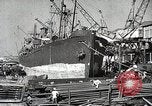
Construction of India-Burma-China Pipeline during World War II
Opening scene shows a large transport ship at a dock in Calcutta, India, during World War 2. It is surrounded by cranes unloading it. In the foreground, numerous sections of pipe are piled up on the dock. Closeup of group of pipe sections being lifted by crane from the ship's hold. Some individual pipes are seen moved by groups of Indian workers carrying them over their heads. Other Indian workers roll pipe sections onto barges that are seen clustered together near a steel bridge. A convoy of trucks is seen carrying the pipe sections along the Ledo road. Some bundles of pipe sections are carried on jeeps. View of an Army Air Forces C-47 transport plane taking off. Sections of pipe being offloaded from a C-47 plane. Numerous pipe sections in organized stacks near the airfield. Sections of pipe being fastened together. Engineers re-condition the road bed using construction equipment. Long connected pipe lines being pulled through water. Caterpillar tractors working on a muddy section of the road. Workers installing pipe near graves of workers who died from disease and other causes. Workers sending a bundle of pipe segments across a river by means of a Zip line. A worker's camp of tents in the background. Workers dressed in rain gear and boots carrying a pipe section through water during the Monsoon. Workers using machetes to chop their way through jungles. An open utility train moving Chinese troops along a single-track rail line, passes pipeline workers standing aside. Engineers and other pipeline workers distributing pipe sections along the rail line from railroad flatcars. Trucks driving the road, in Burma. Various views of the pipeline in including one showing lines of pipe forming a suspension bridge across a river. Other scenes show the pipeline crossing ravines, submerged under rivers, climbing vertical cliffs. Aerial views of the pipeline from low flying aircraft. A vehicle marshaling yard filled with army vehicles. M3A3 Stuart light tank moving past a yard filled with them. Army trucks moving out of their parking yard. Aerial view of large airfield with many parked Air Transport Command C-47 airplanes. B-29 bombers being refueled at an airfield. One is seen taking off. Lieutenant General Daniel Isom Sultan, Commander India-Burma theater, comments that the pipeline is a lifeline to our beleaguered ally and that the Chinese are in on this. Views of Chinese soldiers engaged against Japanese forces. They fire artillery pieces and heavy machine guns. British soldiers carrying Bren guns and struggling to move artillery pieces in the mud. They are seen firing artillery from under camouflage canopies and firing Vickers machine guns. Aerial view of the British controlled port in Calcutta, India, where war materiel is seen being unloaded. Tanks being transported on an Indian railroad. War supplies moving on a barge line and on roads. View of a British airfield in India. North Burma Chinese troops with their weapons and army vehicles. U.S. troops advancing on roads in the jungles. Chinese Marshal Chiang Kai-shek with U.S. President Franklin D. Roosevelt and British Prime Minister Winston Churchill, at the Cairo Conference of November 22–26, 1943. General Sultan concludes the film by reassuring American soldiers that they are in the China-Burma-India theater in the common allied effort to fight against Japan.
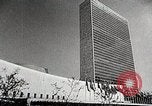
Celebration of the Liberation of Paris, and Americans returning to college, farms, and work after World War 2
Exterior views of United Nations headquarters building in New York City. World map showing NATO member countries shaded dark. Series of shots of American voting in elections, with views of American citizens entering voting booths and placing ballots in voting boxes. Distant view of U.S. Capitol building in Washington DC with an American flag flying in the foreground. Following Presidential election of 1952, Dwight D Eisenhower takes oath of office as President in January 1953, surrounded by other dignitaries at Eisenhower's inauguration. Scenes from end of World War 2 with U.S. Army forces in Paris and happy celebrating French people welcoming the U.S. military and other Allied forces. Close up view of faces of U.S. Army troops marching beside Arc de Triomphe in Paris. Parisians cheer and smile. A French woman kisses an American soldier. Aerial view of Statue of Liberty in New York as a troop ship is arriving in New York Harbor with soldiers returning from World War 2. Soldiers disembark the troop carrier ship. Cunard sign on gang plank. Young American men enrolled in American colleges. A college square area. Inside, a professor instructs college students in class. American students work in a University science laboratory with beakers, vials, burners, and microscope. Young veterans of the war who have returned to be farmers are seen on their farms working. American farmer works in field with a tractor. Views of various church buildings and church spires in American towns and cities. American men,women and children in church and clergy at altar circa 1950.
CRITICALPAST.COM: About Us | Contact Us | FAQs - How to Order | License Agreement | My Account | My Lightboxes | Shopping Cart | Advanced Search | Featured Collections | Website Terms & Conditions | Privacy Policy ©2026 CriticalPast LLC.
License Agreement |
Terms & Conditions |
Privacy Policy
©2026 CriticalPast LLC.