


 Francais
 Deutsch
 Italiano
Refine Your Search
US-Gliders- stock footage and images
- Showing 11527 to 11532 of 21913 results more
more Hide
Hide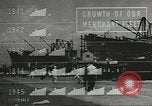
Coast Guard officers of the Marine Inspection Division overseeing ship construction and marine safety equipment in World War II
A diagram depicts growth of merchant fleet with time. Coast Guard officers of the Marine Inspection Division review plans and construction of ships to assure that they adhere to established safety standards. Views of several ships in various stages of construction during World War 2. A new ship being launched and going down the ways. Coast Guard officers reviewing initial plans for a ship. View inside a laboratory at the U.S. Bureau of Standards. A civilian measures a test specimen using a micrometer as U.S. Coast Guard Lieutenant from the Marine Inspection Division observes. Coast Guard officers examine defective parts from ships. Coast Guard officer inspecting a large steel part during manufacture. A vibrator machine testing the performance of ship parts under simulated sea conditions. Life boat davits being tested during manufacture. Coast Guardsmen testing materials for use in life jackets and testing the finished life jackets. A Coast Guardsman giving life jackets a final inspection. He rejects one.
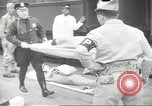
Japanese Nationals and Issei arrive by train and buses at Jersey City, New Jersey for repatriation to Japan in World War II
Opening scene shows police officer removing a sick person, on a litter from a Pennsylvania Railroad train at a station and placing them gently on a railway cart. A uniformed U.S. Army Military policeman helps them. Next, Japanese Nationals and Issei families with many small children are seen leaving a train and walking along a railway platform. A Red Cross woman in white stands behind an ambulance, where a newborn infant lies on a litter. Policeman carry two women on litters and place them in the ambulance. The newborn baby is being cradled in the arms of the Red Cross woman. A Japanese family climbs aboard a bus. Railway workers transport travelers' baggage on a large cart. Police stand near by as a U.S. Army Military policeman boards a bus filled with Japanese to be repatriated to Japan. Two MPs watch as Japanese to be repatriated climb aboard another bus. A group of Japanese men enter a bus, followed by Armed U.S. Army soldiers who also board. An official guides a train to a stopping point on a train station. A large group of men to be repatriated to Japan step from the train under guard by many armed U.S. soldiers.
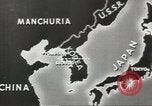
United Nations troops land at Pusan to aid South Korea in Korean War.
Map of Korea showing 38th parallel boundary. View of 38th parallel with the numbers "38" seen on the ground. The United Nations Commission meeting in Seoul. U.S. troops leaving the Korean peninsula. Aerial view of the harbor in Seoul. Fire and smoke in the mountains as North Koreans attack. South Korean soldiers marching into battle. Korean soldiers in trenches firing from hill top. The first Korean War refugees. The UN gathering at Lake Success, NY. General MacArthur receives the UN battle flag. Aerial view of the port at Pusan. U.S. troops landing in Pusan. A parade of troops led by U.S., U.N. , and Republic of Korea flags disembark at Pusan from a landing ship, number 222. U.S. troops firing weapons at North Koreans, including mortar, machine guns, and howitzers.
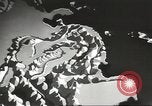
Allied planning for the final invasion of Japan in World War II
Scene opens with a map illustrating one possible Allied path for invasion of Japan. It proceeds from India and Burma to China and thence to Japan. A U.S. B-24 bomber is seen landing at a Far East Air field. Next, the Supreme Allied Commander of South-East Command (SEAC) Admiral Lord Mountbatten, is seen posing with Chinese General Li Zongren (AKA Li Tsung-jen) and other high ranking Chinese officers, and then walking with them. Next are views of U.S. General Joseph Stillwell working with staff as they consult maps. Then, Chinese laborers are seen engaged in construction of a bridge over a riverbed, that is to be part of the "Ledo Road,"traversing Burma and providing a highway from India to Chunking, China. Trucks moving over the already completed segments of the road, carry men and war materiel. One truck passes a local native drawing water from a well using a long counterbalanced pole. At the frontier of the roadbuilding, Chinese soldiers chop their way through dense jungles and battle Japanese forces firing at them. A fallen soldier. Allied soldiers shouting as run into a village engaging Japanese forces. Structures in the village burning and spreading in the area. Scene shifts abruptly to an animated map illustrating what are believed to be the Japanese plan for its last desparate defense. It shows them falling back to highly defensible boundaries encompassing sources of supplies needed to sustain their defense. Aerial views of Manchurian landscape. Japanese officials are seen at their administrative offices in Manchuria. Large numbers of Manchurian workers are seen headed to work near a factory. Others are engaged in open pit mining, where explosives are used to expose and ready ores for extraction. Views inside a Manchurian steel plant supporting the Japanese war effort. Japanese military forces are shown moving by horseback in the area, ostensibly to push further into China and add more protection against potential Allied offensives. Likewise, Japanese warships are shown at sea maneuvering to defensive locations. This is all summed up in a map showing the expected disposition and status of military defensives for Japan's final defense (Fortress Japan). Street traffic on a city street in Japan. A large group of Japanese women in traditional dress, carry banners and quietly bow. View of the Japanese Diet Building (Parliament) and political and Military leaders inside, including Prime Minister Tojo, Hideki.
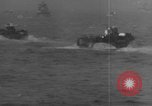
Allied Forces in amphibious assaults, at Normandy, France, on D-Day during World War II
British forces in amphibious assault boats,at Normandy on D-Day, during World War 2. They fire at houses on the beach. American forces encountering German-placed obstacles and fire from pillboxes at Omaha Beach during their D-Day landings. They seek shelter under the Chalk Cliffs. Medics treating American wounded. In the British sector. Special Army engineers leave a landing craft first, followed by medics and troops. Securing the beachhead, the British troops move inland. A second wave of U.S. troops landing at Utah Beach, where German resistance was lighter. Landing craft from the USS Joseph T. Dickman (APA-13) carrying troops to Utah Beach. U.S. troops wading a long way to a Normandy beach. U.S. LCI(L)-537, discharging troop reinforcements. A landing craft (Higgins Boat) from the USS Thurston (AP-77) landing troops at Omaha Beach. Sherman tank equipped with deep wading gear and a bulldozer blade comes ashore at Utah Beach. U.S. Army Air Forces B-26 aircraft, in D-Day paint stripes, attacking ground targets.
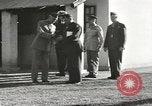
Major General Albert C. Wedemeyer being presented the Distinguished Service Medal during World War II.
The Distinguished Service Medal being presented to U.S. Army Major General Albert C. Wedemeyer, South East Command Asia during World War II. A general formation of U.S. officers as U.S. Army General Joseph Stilwell pins up the medal on Major General Wdemeyer. General Stilwell talks to staff officers. An officer reads a citation. The group of U.S. offices at attention as General Stilwell pins a medal on General Lord Louis Mountbatten and shakes hands with Wedemeyer. Major General Wedemeyer with the Distinguished Service Medal.
CRITICALPAST.COM: About Us | Contact Us | FAQs - How to Order | License Agreement | My Account | My Lightboxes | Shopping Cart | Advanced Search | Featured Collections | Website Terms & Conditions | Privacy Policy ©2026 CriticalPast LLC.
License Agreement |
Terms & Conditions |
Privacy Policy
©2026 CriticalPast LLC.