


 Francais
 Deutsch
 Italiano
Refine Your Search
US-Gliders- stock footage and images
- Showing 11671 to 11676 of 21917 results more
more Hide
Hide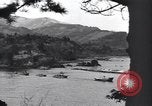
The United States helps supply food and industrial expansion in Japan.
Industrial expansion of Japan with the help of America, after the end of World War 2. Food supply through sea in Japan. Oarsmen row wooden fishing boats. Mountains in the background. Japanese fishermen cast their nets. America helps Japan in industrial expansion. Japanese silk mill and textile industry. Japanese shipyard and ship building activity. Japanese production of automobiles and railroad train cars. Exterior view of Dai-Ichi Seimei Building (1 Chome-13-1 Yurakucho, Chiyoda City, Tokyo 100-0006, Japan) which served as Supreme Commander Allied Powers (SCAP) headquarters (also called GHQ Building) in Tokyo Japan. American flags and United Nations flags seen flying at the building. Ships of U.S. Army preparing to transport U.S. troops from Japan for combat in Korea as Korean War starts. U.S. Army troops marshaled at Army Port of Sasebo, Japan, with their belongings.
Japanese National Police learn and practice self defense activities, judo, target shooting in Japan.
Army cameraman films missile ready for launch. Missile is launched. U.S. M65 Atomic Cannon ("Atomic Annie") fires and nuclear explosion results. Army helicopters discharge troops. U.S. Infantry fire rifles as they climb hill. Animation of world globe rotating. Sergeant Stuart Queen speaks about Japan's self defense traditions, including Judo and Jujitsu. Japanese Prime Minister Shigeru Yoshida signs the US-Japan Mutual Security Assistance Pact in 1952. Japanese National Police do stretching exercise and practice judo. They are trained by Japanese experts. Japanese National Police receive training in firearms with help from American instructors.and then proceed to a firing range where they fire at targets. Defense Force Officers cluster around a target and point at hits in the bullseye. Japanese self defense force march in parade. Japanese Commander salutes and flag of Japan waved. Japanese perform calensthetics in a large group.
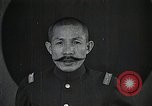
Japanese troops fight in Manchuria and people make contributions for the soldiers in Japan.
Film opens showing narrator, Japanese General Baron Sadao Araki, speaking. He is silhouetted in front of the red ball on a huge Japanese flag. Next, are scenes from Japanese mobilization and invasion of Manchuria. several Japanese troops are seen firing a 37mm gun, from a shallow trench, as a gun crew member spots from behind them using a pair of binoculars. A group of Japanese soldiers observing from a hill. Japanese troops advancing across barren terrain. Closeup of some descending a hill. A military steam locomotive displaying the Japanese flag, on a railroad track in the snow. Glimpse of soldiers atop the train. Japanese troops crossing a rice paddy on trail of brush and grass and slogging down a hill of mud. Troops moving in motor convoys of trucks. A Type 92 Osaka Armored Car driving fast past the camera. A troop train moving slowly out of a station, as crowds waving Japanese flags see the soldiers off. Army nurses in uniform with red cross armbands, march out the gate of a large building. Teachers and students pray for their troops, at a Shinto shrine. A woman using a megaphone rallies support for the war effort. Civilians supporting war effort line up to deliver packages for delivery to the troops. School children in a classroom write letters to the troops. A supply center where all kinds of useful items are being packaged in "comfort bags" for delivery to the troops. A large pile of comfort bags.
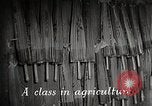
Children work in rice patties and learn the correct methods of tilling soil in agriculture class, Japan.
Japanese films show school activities to explain the school system and its deficiencies. The films emphasize the school's role to develop nationalism in Japan. A class in agriculture: Children learn correct methods of tilling soil. Teacher imparts the knowledge practically. Children seated in boat learn shipping. They cross the wooden bridge with farm tools and work in rice patties. Cameraman takes motion pictures. Children learn to take motion pictures. Children dig the soil and cut the crops by using farm tools. They make hay stack of rice straws and use it for making sandals. They use both hands and toes for this operation. Girls put hay stacks at one place.
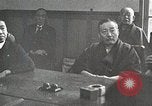
China builds Burma Road to carry war materiel and supplies and creates flood of Yellow River to thwart Westward expansion of Japanese occupied territory
Japanese officials meeting in strategy session. Japanese infantry on mission to cut Chinese supply lines during 2nd Sino-Japanese war. Black smoke rises as they move along a river bank. Chinese prisoner-workers are forced to rebuild railroads destroyed by the Chinese people during their great Westward trek. Japanese soldier closely guards workers. A Japanese army armored train underway on the rebuilt railroad, as Japanese soldiers cheer. Animated map shows China's supply lines by sea, to Tsingtao, Hangchow, and Amoy, cut off by Japanese naval blockade. Japanese Navy launch with officers and crew moving near commercial ships as they take over Chinese river ports. War materiel and other supplies destined for China, including trucks, sit idle, unable to be transported to their destinations. Large oil tanks and drums of gasoline are shown, as well as gun barrels and a flightline filled with parked Curtiss P-36 Hawk aircraft. The Imperial Japanese Navy destroyer Asakaze (DD-3) and another, next to it, in a Chinese river port. A Japanese freighter with anchored weighed, secured by long lines to a wharf. Small boats flying Japanese Naval ensigns are next to it. View of map showing china, Burma, Indo-China, and Chungking, with Japanese blockading fleet stationed in the South China Sea. It traces path of narrow gauge rail line from Indo-china to Kumming,China, where it connected to an overland road to Chungking. Next it traced the old Camel Caravan route, across China, from Russia. Narrator notes these were to small to be useful and too close to Japanese-occupied territory. Next, the map traces a railroad that from the port of Rangoon to Lashio, Burma. It is separated from the road to Chungking, by mountains and gorges. Views of the actual mountainous terrain. Animal pack trains moving through the area. Construction engineers in a large drafting room designing a road to transit the area. View of modern road-building caterpillar tractor equipment of the type needed to accomplish this. View of Chinese laborers using manpower instead. They push large rollers and employ pickaxes and other hand-held tools to carve away and dig road beds. Masses of Chinese laborers at work, carving a road along the edge of a mountain. Two-men teams using manual tampers to pound down the roadbed. Children are employed along with adults. A woman with a baby on her back, pounding large rocks into gravel, surrounded by other children doing the same. View from above of the "Burma Road," the product of their labors, winding its way through the mountains and gorges. Many scenes of trucks moving along portions of the Burma Road. P-40 airplanes flying past white cumulus clouds, overhead. Animated map shows continued expansion of Japanese occupied areas to encompass two thirds of the rail lines in China with goal of controlling the remainder, starting at Chengchow, in Summer, 1938. View of Chengchow region, on banks of the Yellow River. Map illustrates flow pattern of the Yellow River. View from past of the Yellow River's Spring floods toward the Sea, with Chinese people throwing rocks onto dikes that keep the river flowing in a more Northerly direction than its former course. Illustration shows how with Japanese encrouching on Chengchow, the Chinese decided to destroy those dikes and allow the river to flood over its former more Southerly course. Japanese soldiers being inundated by the flooding river. Japanese infantry and tanks regrouping on their occupied side of the new (old) path of the Yellow River. Local Chinese residents of Chengchow, wade with belongings as they leave their flooded homes.
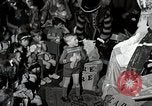
A film about CARE U.S.A.
Film begins showing small children, receiving gifts. Babies in and around around a play pen. One sitting in a high chair with apron around his neck. View of flooded town in Holland. A stack of Care packages containing food and blankets. A man writes on a bundles of supplies: "Holland Relief." A DC 6 aircraft takes off to deliver supplies. Damaged buildings from an earth quake in Greece. Injured person being carried on a litter past a pile of Care stockpiles. Greek officers and sailors examine many boxes of Care supplies. People being evacuated from flood swept areas of Japan. Children lining up to receive drinks in Korea when the Korean War broke out. A child being fitted with shoes. Women and children in a shelter. Women and children suffering poverty in India. Care executives in a planning meeting at the U.S. headquarters (151 Ellis Street NE Atlanta, GA 30303). They obtain reports about crops and types of soil to design plows for use in various areas of the world. Pictures of farmers using plows in different countries. Care executives inspect sample of plows with technical assistance from Department of Agriculture experts. Closeup of the so-called CARE plow. Next, Care workers assemble collections of tools that might be sent abroad. Closeup of a box full of carpenter tools. Camera focuses on a simple high quality carpenter's plane. Outdoor tools for farm work are mounted on a display board. With advice from The United Nations Educational, Scientific and Cultural Organization (UNESCO), Men sort technical books for shipment to libraries abroad. Closeup of books being placed in CARE-labeled box. With advice from the World Health Organization (WHO) and the American Medical Association, Care planners design medical supply and equipment packages for shipment abroad. Closeup of a cart containing oxygen bottles and various medical instruments. A meeting of persons from agencies that make up CARE. Harold Minor, Treasurer of CARE, expresses support for new initiatives. CARE President, Murray Lincoln stands and receives from Paul French, a paper in which he writes the name: "Self Help." Mr. Lincoln writes it in chalk atop a list of items comprising the "package." Two planners review an advertisement for the program. A man and his wife and baby discuss making a contribution to CARE to fund a kit for midwives in India.
CRITICALPAST.COM: About Us | Contact Us | FAQs - How to Order | License Agreement | My Account | My Lightboxes | Shopping Cart | Advanced Search | Featured Collections | Website Terms & Conditions | Privacy Policy ©2026 CriticalPast LLC.
License Agreement |
Terms & Conditions |
Privacy Policy
©2026 CriticalPast LLC.