


 Francais
 Deutsch
 Italiano
Refine Your Search
US-Gliders- stock footage and images
- Showing 11791 to 11796 of 21917 results more
more Hide
Hide
Montage of World War I scenes. Postwar French military preparedness. Tensions between Germany and France early in World War II.
German cavalry on horseback entering Belgium and Berman infantry marching in France, at the start of World War 1 (1914). The famed Taxicab army is seen carrying French soldiers in Paris. General Ferdinand Foch reviewing elements of the French 9th Army. French and British troops firing a British BL 8-inch howitzer. French troops rushing across no-man's land of trenches and barbed wire, as shells burst. German soldiers taken prisoners in trench. General Foch shaking hands with U.S. General Pershing, aboard a U.S. warship. Sketch of signing of the armistice, November 1, 1918 on a railway carriage at Compiegne. Monument to Marshal Foch. Monument to Minister of War, Andre Maginot. concrete being poured. French construction of the Maginot Line. Animated illustrated cross-section of the line.View of troops moving on rail cars in the Maginot line. Glimpse of Maginot line guns on surface. At outbreak of World War 2, French troops deploy to the Maginot line. French troops inside bunkers and tunnels of Maginot Line. Marshal Petain reviewing the troops as they deploy. Muzzle of a Maginot line gun. Hitler with Military Chiefs planning. View of French Foreign Minsister, Aristide Briand,during signing of the 1928 Kellogg-Briand antiwar pact in Paris.Frank R. Kellogg, U.S. Secretary of State at the table to Briand's left. His signature on the document. A field full of French Morane 406 airplanes. French airman poses with Potez 58 airplane. French AMC 34 tanks. Crowd milling about at Renault Building and unrest elswhere in Paris, France. Newspapers chronicle failure of the League of Nations. Movie cartoon about weakening of France by Nazi inspired social strife and sabotage. French Army troops in mess hall eat at long tables and pour wine with meal. Idle French troops across the Rhine River targeted by German propaganda and psychological warfare including banners; messages by balloons;German bands playing French tunes; large loudspeakers broadcasting in French.
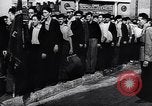
Soviets mobilize for war on the home front during the German invasion of Russia in World War II
A huge number of local men, volunteering to join the Red Army, are seen parading (in civilian clothes) through a Soviet town, in 1941, during time of the World War 2 German invasion of the Soviet Union, known as Operation Barbarossa. Men lined up at an outdoor recruiting station where Army officers and a clerk are seated at a table. View of a man signing his name and date of birth a sheet of paper. Next, he shakes hands with all the recruiters. Next, recruits are seen walking in loose formation. They are still in civilian clothes, but carry sacks with their first government- issued belongings. Change of scene shows workers in a factory and miners working in a coal mine. they use a machine driven conveyor to move chunks of coal from the mine. Scientists at work. The man at extreme right is Soviet Nobel Laureate Physicist, Pyotr Leonidovich Kapitsa (Peter Kapitza). He heads the Department of Oxygen Industry. attached to the USSR Council of Ministers. Oxygen bubbles in a scientific glass device. Several views of fiery molten steel flowing in a steel mill. Older retired man back at work in a machine shop, operating a milling machine, to help the war effort. A man using calipers as he instructs a woman in a machine shop. Closeups of a young women working on various machines in the shop. One at a lathe, stops to inspect a piece of turned steel she is making. A man hot forging a part on a drop forge. A woman monitoring machinery controlling the forge. Women from rural areas in the Ukraine, attend a class to learn about tractors. Instructor using a large illustration to explain parts of a tractor. One of the women manipulates a tractor part. Another adjusts a carburetor. One closes the side hood of a tractor. One woman gets behind the wheel of a tractor, for the first time.Her instructor manipulates its gears as they drive it forward. A line of school children walks in a village with their teachers. Next, the girls are seen cultivating crops on a truck farm, and the boys are seen working in a wheat field. Three boys are assigned "Sentry Duty" and climb wooden towers to maintain lookout for invading German paratroops or other forces. An older man performing similar duties on a rooftop in a village. Another man on the lookout atop a wooden tower. An old man with a rifle on the lookout. Another man holding a rifle in a wheat field.
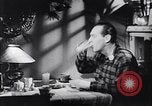
Importance of well balanced diet for American citizens at home and at work during World War II
Importance of well balanced diet during World War 2. American man seated at a table eats food. A housewife serves more food to him. Narrator talks about importance of nutrition, having three square meals each day, eggs and other protein foods, and vitamin B rich foods such as cereal of whole wheat, or enriched white bread. A worker on the job is shown taking a lunch break. Close up view of his open thermos with a hot drink and his sandwich and fruit and a chocolate bar. A couple dining together at a table for dinner are seen. Narrator suggest chicken, fish, liver, or sweetbreads as a main course, served with green leafy salad and also cooked vegetables like peas or carrots. A man carves meat. Men walk near a war materiel production factory gate, with a sign, "Let's step it up." Women at a factory production plant prepare large numbers of sandwiches for workers, with the help of automated machinery. Narrator says average workers need twice as many vegetables and fruits as they now consume. A group of men in an industrial kitchen work to prepare carrots, spinach, cauliflower, and other vegetables like squash, parsnips, and lima beans. African American cooks prepare food. Factory workers line up and take prepared food trays at a factory kitchen. Workers sit outside and enjoy food during a lunch break. Young men and women in a cafeteria line select foods to eat. War workers exit at the end of a work day. View of the U.S. Capitol dome. On screen public service message text says "U.S. Needs US strong. Eat nutritional food."
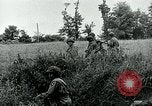
United states troops enter Saint Marcouf in France.
United States soldiers capture German prisoners in small French village. View of U.S. soldiers with prisoners. U.S. troops enter Saint Marcouf passing road sign. Wrecked village is shown. U.S. soldiers greeted by French civilians. Soldiers come together and pose. Soldier holds a captured Nazi flag. (World War II period).

An exercise to train combat troops in arctic warfare.
Alaskan Command paratroopers with units from other Strategic Army and U.S. Air Force units join Princess Patricias Canadian Infantry. United States Air Force plane goes aloft in Alaska. View of pilot in cockpit. Alaskan Command paratroopers in the plane. Paratroopers jumping from the planes and sky filled with parachutes. United States Army tanks moving on snowfield. View of U.S. Army helicopter. U.S. Army aircraft takes off. View of aircrafts in sky.
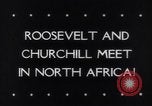
President Franklin D. Roosevelt inspecting United States Army troops.
Aerial views of Casablanca. U.S. Army soldier climbs an electric pole. Guards on rooftop of President's Villa. President Roosevelt and other U.S. Army officers riding in a jeep to review U.S. troops. Troops lined up in formation. President inspecting troops as tanks parade. Troops can be seen marching. (World War II period).
CRITICALPAST.COM: About Us | Contact Us | FAQs - How to Order | License Agreement | My Account | My Lightboxes | Shopping Cart | Advanced Search | Featured Collections | Website Terms & Conditions | Privacy Policy ©2026 CriticalPast LLC.
License Agreement |
Terms & Conditions |
Privacy Policy
©2026 CriticalPast LLC.