


 Francais
 Deutsch
 Italiano
Refine Your Search
US-Gliders- stock footage and images
- Showing 12055 to 12060 of 21917 results more
more Hide
Hide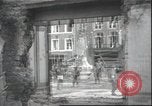
United States soldiers patrol on streets in La Haye Du Puits, France (WW2)
United States 79th Infantry troops occupying La Haye Du Puits, France, during World War II. A World War I memorial used as a motor pool. An elderly man and woman show the victory sign with their fingers. U.S. Soldiers on army jeep with machine gun in back and two German prisoners seated on hood of the Jeep. At a square in the town, U.S. Army Engineer surveyor is seen with a transit on a tripod. The old couple seen earlier walk on road with baggage. Army vehicles drive past them.
United States B-50 Superfortress with Bell X-2 takes off from the runway at Edwards Air Force Base in California.
United States experimental aircraft at Edwards Air Force Base in California, United States. U.S. Air Force B-50 Superfortress parked on runway as sunrises in the background. Test pilot Lieutenant Colonel Frank Everest's wife kisses him before he leaves his home. He gets into his blue coupe (1933 model). Frank Everest dons pressurized space suit. Ground crew members help pilot to wear his helmet. Pilot and co-pilot seated in the cockpit of B-50 Superfortress. Officer speaks over a mouth piece from the control room. B-50 Superfortress taxis and takes off from the runway with U.S. Air Force Bell X -2 under its wing. U.S. Air Force F-86 Sabre flies along B-50 Superfortress. Bell X -2 releases from the mother aircraft and begins a solo flight. Ground crew members look through binoculars.
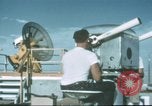
United States Bell X-2 in flight piloted by Lieutenant Colonel Frank Everest at Edwards Air Force Base, California.
United States experimental aircraft at Edwards Air Force Base in California, United States. Two ground crew members operate theodolite tracking camera with a radar in the background. Telemetry equipment in operation. Men look through binoculars. Lieutenant Colonel Frank Everest seated in the cockpit with his hands on the controls. U.S. Air Force Bell X-2 release from U.S. Air Force B-50 Superfortress and begins a solo flight. Radar tracks the flight course. U.S. Air Force F-86 Sabre and T-33 aircraft fly along Bell X-2. Bell X-2 aircraft lands on Rogers Dry Lake Bed. Ambulance, fire brigade and other vehicles next to the aircraft. Pilot removes his helmet and comes out of the aircraft.
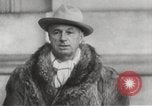
How turbo superchargers facilitate high altitude airplane flight. World War II warplanes equipped with superchargers
General Billy Mitchell wearing fur coat and western style hat. Animated illustration of U.S. Army Martin bomber operating at 15 thousand feet during the famous demonstrations of air power against battleships, in 1921. This was possible because the aircraft engines were supercharged, an outgrowth of Dr. Sanford Moss's developments at General Electric Company.World War 2 scenes of U.S. Army Air Forces aircraft that use supercharged engines: P-51s; P-47s; P-38s; B-24s; B-17s and B-29s. View of atomic bomb explosion.
Armistice Day celebrations in Washington DC
Crowds turn out in the Nation's Capital, Washington, DC, to celebrate the armistice bringing an end to World War I. People waving American flags and expressing joy, fill Lafayette Park across the street from the White House. View from a car moving along street, showing cheering crowds everywhere. Scene shifts to White House, as President Woodrow Wilson, walks from the doorway to his waiting Pierce Arrow limousine, bearing license plate number 80 002. A Secret Service agent steps onto the running board, momentarily, and then the car proceeds. The next scene shows the President's car departing from the grounds of the Capitol, with a Secret Service agent riding the running board and two others running alongside in the roadway. The crowd at the U.S. Capitol begins to disperse. U.S. soldiers form a snaking line and march, holding on to each other's shoulders, led by a flamboyant African American celebrant, acting as drum major, who struts at the head of the line, proceeding in front of a trolley car, on Pennsylvania avenue. A soldier attempts to push the flamboyant man off of the parade route, but he perseveres in leading the parade. Another trolley car passes close to them as it moves in the opposite direction. Next, President Wilson is seen at the West Wing gate of the White house, conversing with Attorney General,Thomas Watt Gregory. A U.S. Army brass band marches past, followed by marching units of sailors, and Salvation Army women. A float with flags and representatives of Allied countries, is seen next in the parade. (World War I; World War 1; WWI; WW1)
Japanese delegation meets with members of General MacArthur's staff to plan formal Japanese Surrender ending World War II
Japanese officials arrive to coordinate arrangements for a formal Japanese surrender, at a Conference in Manila, Philippine Islands. Headed by Lt. Gen. Torashiro Kawabe, Vice-Chief of the Army General Staff, the sixteen-member Japanese delegation descends steps from U.S. Army Air Forces C-54 transport Aircraft, tail number 44-9045, at Nichols Field, near Manila. General Kawabe salutes American Colonel Mashbir, coordinator of the Allied translator and interrogator Section. Major General Charles Willoughby, Director of Intelligence, leads them to waiting cars. Meeting in the City Hall in Manila, the Japanese officers surrender their personal swords and present documents delegating them powers Plenipotentiary by the Japanese Government. They file into a conference room, where they and American counterparts take their places across a long, black table. U.S. Army Lieutenant General Richard Kerens Sutherland, General MacArthur's Chief of Staff, presides over the discussions, accompanied by Major General S. J. Chamberlin, General MacArthur's Operations Officer. They are supported by Allied translators and interpreters. The conference is concluded successfully and sets the stage for the final formal surrender of Japan. (Note: Plans for this critical conference were developed by Colonel David Larr, Chief of Planning on General Chamberlin's staff.) The clip concludes with views of many U.S. warships and of cargoes being loaded in readiness for the occupation of Japan.
CRITICALPAST.COM: About Us | Contact Us | FAQs - How to Order | License Agreement | My Account | My Lightboxes | Shopping Cart | Advanced Search | Featured Collections | Website Terms & Conditions | Privacy Policy ©2026 CriticalPast LLC.
License Agreement |
Terms & Conditions |
Privacy Policy
©2026 CriticalPast LLC.