


 Francais
 Deutsch
 Italiano
Refine Your Search
US-Gliders- stock footage and images
- Showing 1207 to 1212 of 21920 results more
more Hide
Hide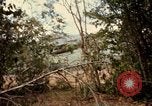
U.S. Army soldiers in UH-1B choppers and an O-1B in flight at the MACV Recondo School in Nha Trang, Vietnam.
U.S. Army personnel train at the MACV (Military Assistance Command Vietnam) Recondo School in Nha Trang, Vietnam. A U.S. Army UH-1B Iroquois (Huey) helicopter on fly-by. U.S. soldiers prepare to enter the chopper. A soldier with an orange piece of cloth in his hands. A U.S. Army Cessna O-1E Bird Dog aircraft high above. A UH-1B flying very low over water and the jungle terrain. Soldiers climbing out of the chopper and move away. They run into the jungle. (Vietnam War period).

U.S. President Roosevelt and Prime Minister Churchill of Britain meet on the USS Quincy CA-71 in Alexandria harbor
U.S. officials on the U.S. Cruiser Quincy (CA-71) at Alexandria harbor during World War 2. U.S. Marines on the deck. Ships at the harbor. Smoke rises in the background. President Roosevelt and Officials on the ship's deck. British Prime Minister Winston Churchill boards the ship and U.S. Marines salute him.The Destroyer, USS Nelson (DD-623) is seen slowly moving through Alexandria harbor.
Edward Stettinius Ambassador Winant and Harry Hopkins greet U.S. President Roosevelt on USS Quincy in the Mediterranean Sea.
U.S. President Franklin D. Roosevelt with dignitaries on USS Quincy CA-71 in the Mediterranean Sea. A launch pulls up to USS Quincy CA-71. U.S. marine soldiers on the deck. U.S. Secretary of State Edward R. Stettinius, Jr. ; U.S. Ambassador to the UK John G. Winant, Roosevelt's adviser Harry Hopkins and an unidentified admiral climb the ship's ladders and greet President Roosevelt. The President is seated on the deck with Ambassador John G. Winant, Edward R. Stettinius, Jr, and Harry Hopkins. Americans, from delegation in Alexandria, in background behind President Roosevelt. (World War II period).

People gathered on the port to greet the returning U.S. 15th Infantry troops in Tacoma, Washington.
U.S. 15th Infantry troops return from China to Tacoma, Washington. People on port. A ship carrying U.S. troops approaches the port. Unidentified planes in flight. U.S. troops stand on the deck of the ship. A soldiers looks through a porthole. Civilians, officers, officials at the port. U.S. troops get into trucks.

U.S. Army Air Corps sends its XB-15 bomber with medical supples to assist victims of earthquake in chile.
Views of extreme destruction from an earthquake in Chile, on January 24, 1939, that killed 25 thousand and injured 40 thousand persons. Homeless people stand out side wreckage. Relief supplies that the U.S. Army Air Corps flew from Panama are seen. Since all Red Cross medical planes were already being used, U.S. President, Franklin D. Roosevelt ordered additional medical supplies to be transported on the U.S. Army Air Corps XB-15 bomber, a single prototype, operated by the 2nd Bombardment Group at Langley Field, Virginia. Views of pilot, Major Caleb V. Haynes, supervising the loading of supplies. With Major Haynes,at the controls, the XB-15 is seen taking off on its earthquake relief mission in February 1939. Later, it is seen landing back at Langley Field, Virginia, after completing its mission. (Note: For this exceptional flight, Major Haynes and his crew were awarded the MacKay Trophy, in 1939.)
U.S. Forces capture Japanese held Munda in the Solomon Islands.
U.S. Forces capture Japanese held Munda in the Solomon Islands. U.S. landing force in boats striking at Munda. Enemy planes try to stop the U.S. Marine troops. Marine advance towards coast. Marines get away from the boats. Tanks moving on to island from landing barge. Marines fire rifles amidst enemy fire. U.S. Marines dig to bury dead soldiers. Bombing by planes. Mortars and machine guns fired. Scenes of wrecked tanks. (World War II period).
CRITICALPAST.COM: About Us | Contact Us | FAQs - How to Order | License Agreement | My Account | My Lightboxes | Shopping Cart | Advanced Search | Featured Collections | Website Terms & Conditions | Privacy Policy ©2026 CriticalPast LLC.
License Agreement |
Terms & Conditions |
Privacy Policy
©2026 CriticalPast LLC.