


 Francais
 Deutsch
 Italiano
Refine Your Search
US-Gliders- stock footage and images
- Showing 12325 to 12330 of 21917 results more
more Hide
Hide
American soldiers unload barrack bags from a ship and load them onto a bus in Lebanon.
Unites States forces in Lebanon during the Lebanese crisis. U.S. Army General Paul D. Adams and an officer walk along a dock. U.S. troops carry barrack bags and other equipment as they walk on the pier. A ship in the background. Soldiers walk past a car. Soldiers load barrack bags onto a bus. Brigadier General David W. Gray watches troops on pier.
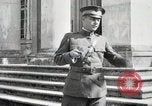
General Roy Hoffman and aides at Division headquarters, Maffrecourt, France.
U.S. Army Major General Roy Hoffman, Commander, U.S. 93rd Infantry Division, with staff officers at Division headquarters in Maffrecourt, France during World War 1. They discuss a document, and pose. for a photograph.
Team under Sergeant Bourden advances against enemy attack.
Part of the U.S. Army training film describes the role of Light Weapon Infantrymen. Team under Sergeant advances against enemy attack. The team advances using fire and movement method until it crosses the enemy's protected wire area. United States soldiers pass through the wire. Soldiers fire from bunker. The Squad leader assisted by his team leader consolidates position and organizes the squad. Prisoners evacuated. The Squad leader reports to his platoon leader on accomplishing the mission. Planning, leadership and teamwork accomplish the fire and movement method.
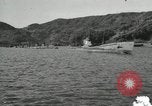
Operation "Road's End" and preparations for destruction of the Japanese submarine fleet moored in Sasebo Bay, Japan
Views from U.S. boat moving among Japanese submarines in Sasebo Bay, Japan, during Operation Road's End, involving the scuttling of the Japanese submarine fleet. Seen are submarines: I-47; I-162; I-156l;n-203;I-158;I-103;107;I-58. An American launch pulls up to I-58 (the sub that sank the USs Indianapolis on July 31, 1945, in the Philippine Sea).Vice-Admiral Robert M. Griffin, Commander of U.S. Naval Forces, Japan, climbs aboard the sub, followed by other members of his party. Admiral Griffin walks the deck of the submarine, followed by a Rear Admiral, who points out some features of the boat to Admiral Griffith. View of the group standing on the deck of the I-58.
Japanese submarine crew navigates while underway in Indian Ocean, during World War II
View from conning tower of surfaced Japanese Kaidai submarine underway in Indian ocean, during World War 2. Navigator takes celestial readings with sextant. Below decks in cabin, officers plot position on large scale marine chart, using set of compasses. One officer uses slide rule for calculations. Various water depths are depicted on the marine chart. The Captain and other officers sit at a table and discuss their position and navigation. Control room of the sub, with Japanese writing displayed in chalk on vertical post. View of boat's instrument panel. Interior of boat's engine room, with moving parts of engine. View from conning tower as submarine makes way on surface through rough seas.
Hand sending method of International Morse code.
Hand sending method of International Morse code. A United States Army operator operates the hand key to write a coded message. Senior officer Young talks about rhythmic and uniform use of Dits and Dahs while the other officer operates the hand key. Operator demonstrates letters using only Dits and only Dahs on screen. Officer explains phonetic alphabet for the word Hotel. Dits sound of Hotel equates to the sound of a horse galloping.
CRITICALPAST.COM: About Us | Contact Us | FAQs - How to Order | License Agreement | My Account | My Lightboxes | Shopping Cart | Advanced Search | Featured Collections | Website Terms & Conditions | Privacy Policy ©2026 CriticalPast LLC.
License Agreement |
Terms & Conditions |
Privacy Policy
©2026 CriticalPast LLC.