


 Francais
 Deutsch
 Italiano
Refine Your Search
US-Gliders- stock footage and images
- Showing 12721 to 12726 of 21917 results more
more Hide
Hide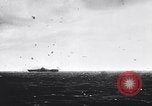
United States warships in the Pacific attacked by Kamikaze planes of Japanese Air Force, Pacific Theater of World War II.
The Pacific Theater of World War II. A United States Navy ship cruising towards Iwo Jima attacked by Kamikaze planes of Imperial Japan. Kamikaze planes dive bombing toward US Navy ships. Huge ship anti aircraft guns on warships fire at the Japanese planes. Explosions on the ships and in the ocean. View as kamikaze aircraft is hit by anti-aircraft fire but continues on its path and strikes the USS Saratoga (CV-3), causing large explosion and smoke billowing upward. US Navy sailors fight fires and try to extinguish fire.
United States' first National Arboretum in Washington DC with many varieties of plants, trees, shrubs and flowers
United States' first National Arboretum in Washington DC. The Arboretum has 60,000 varieties of various valuable plants, trees, shrubs and flowers some of which also have their origin in countries like China, Japan and Korea. Director of the Arboretum Henry Cardiff says these plants may have variety of uses as food, medicine and in other useful things. Botanical Scientist in the laboratory of Arboretum. Men and women visitors in the Arboretum observe various plants.
Relief and rebuilding works by the occupation forces of United States in Germany and Japan after World War II.
U.S. War Department information film "Overseas Mission" describes relief and rebuilding works in Germany and Japan by United States Army, after World War II. Battle between the Allied forces and the Nazi armies, soldiers and artillery fire during battle in German cities and towns. General Eisenhower signs accepting surrender of Germany. General MacArthur signs accepting surrender of Japan to mark the end of World War II. Soldiers carry casualties on litters. Treaty of Versailles after World War I. Newspaper lines read Nazi rearmament of Germany. Allied tanks and troops march in Germany. Marching Allied forces in Japan. Destroyed buildings and factories in cities of Japan and Germany. Nuremberg trials and arrests of Nazi generals. Allied forces dismantle German factories and industrial plants capable of making war materiel. A U.S. Army officer pushes handle to detonate explosives destroying a German factory. Nazi flags, German ammunitions and German factories are destroyed. Nazi troops and civilians saluting Hitler. Allied army engineers make roads and bridges, medics checking patients to prevent epidemics. Borders guarded, Nazi Germans tried. Prisoners of Nazi and Japanese released, dispensary checkup their health. Japanese prisoners released, board a bus. Declaration of Independence on July 4, 1776. Re-establishment of press, churches, courts and schools. Japanese children at school. Election in the occupied countries to run democratic government. Map showing opposite positions of occupied countries. Rations for occupation forces and civilians transported in trucks. Officers hiring labor to carry out relief works.
General Motors guidelines for maintaining private cars during World War II, when none were manufactured in the U.S.A.
General Motors film entitled: "It's up to US," explains how to maintain private cars during World War 2, when all manufacturers switched to production of war materiel. Bugler, in U.S. Army uniform, blows reveille. Montage of American scenes, including homes and gardens; mountains; forests and lumberjacks felling a tree; an oil well gusher spewing crude oil; open pit mining operations; Niagara falls; flock of sheep grazing; workers picking cotton and it being delivered to a processing plant by horse-drawn wagon; a large timber log being cut into boards in a lumber mill; steel being manufactured for the war effort; a woman housewife or homemaker saving foods in a refrigerator in a vintage 1940s kitchen; a man cutting his lawn; a woman vacuuming her carpet; a woman taking clothes from a washing machine; a farmer plowing with a tractor; automobiles on American road and in parking lot of a defense plant. A driver with worn and dented 1938 Chevrolet Coupe car parked in front of a home is assisted by another who drives up behind him in a 1941 Oldsmobile and gives him a push. Sign at a Chevrolet service garage reading: "Official O.P.A. Tire Inspection Station." A 1942 Chevrolet 2-door fastback car drives into the garage. Mechanic greets driver and begins routine service, including: adding distilled water to battery; draining oil from car up on hydraulic lift. Scene shifts to a mechanic lubricates fittings on a 1937 Chevy on a lift at a gas station. Scene reverts to the earlier garage where mechanic drains cooling system, and refills it. The mechanic removes the carburetor and services it on a bench. He checks distributor rotor and makes compression checks. He cleans and re-gaps spark plugs, and checks tires and brakes. Cars driving on a town street. Mechanic aligning wheels on 1941 Chevrolet. Animated illustrations of tire wear from alignment problems. Servicing air in tire of 1942 2-door Chevy. More animated illustrations of tire problems. Illustrated explanation of rotation for bias tires.
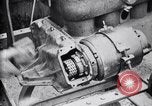
A man demonstrates various parts and assembling of a standard dodge motor at Camp Holabird in Maryland, United States
A man demonstrates assembling of a standard dodge motor at Camp Holabird in Maryland, United States. A dodge motor kept on a test bench. Man opens its case by removing the screws using various tools. He uses tools to open side cover. Spark plug and priming corks of the motor.
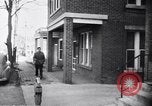
A man enters Selective Service System office and a woman there guides him steps to get enrolled and various classifications.
The Selective Service System in United States, its functioning and effects. A man enters into Selective Service System selection office. A woman at reception talks to him and types letter on typewriter. She guides him about registration of U.S. and non U.S. citizens under this scheme. She shows further steps to get registered and shows various classifications under the list depending upon a person's requirement and compatibility. The man walks out of the office. Local board members of Selective Service. National Selective Service System appeal board.
CRITICALPAST.COM: About Us | Contact Us | FAQs - How to Order | License Agreement | My Account | My Lightboxes | Shopping Cart | Advanced Search | Featured Collections | Website Terms & Conditions | Privacy Policy ©2026 CriticalPast LLC.
License Agreement |
Terms & Conditions |
Privacy Policy
©2026 CriticalPast LLC.