


 Francais
 Deutsch
 Italiano
Refine Your Search
US-Gliders- stock footage and images
- Showing 12817 to 12822 of 21917 results more
more Hide
Hide
Interview with liberated internee Stanley Kingsbury of the Los Banos camp outside Manila
World War 2 interview in Manila with a released male internee, Stanley Kingsbury, of the Los Baños camp following its liberation from the Japanese by U.S. and Filipino forces the month before (13 days before the interview). A microphone is set on a tripod stand for the interview. An interviewer is present. He introduces Stanley Kingsbury. Mr. Kingsbury (possibly Mr Kingsley?) describes twice daily roll-call operations in the camp and that it was announced there would be no role-call that day, and that the internees knew something was different. He talks about hearing a drone sound later in the day and trying to interpret what it meant (on his 1144th day in camp). He recounts seeing planes flying very low, and a white sheet dropping out of a plane and realizing suddenly that there are many paratroopers jumping out. He says they lay down on the barracks floor during the firefight that ensued between the Allied forces and the Japanese. U.S. GI's came in and told the internees to evacuate and that they could only take a few things and had to leave immediately. They rolled down to the shores of Laguna de Bay nearby where they came under fire from a Japanese machine gun nest that was subsequently taken out. He relates all the internees crossing the lake to safety under well armed escort. He expresses how delighted he is to be free again. (World War II period).
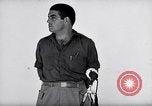
Three sisters, liberated prisoners of the Japanese Los Banos intermenent camp, sing during a post-liberation interview
Three women prisoners released from Japanese-operated Los Baños internment camp being interviewed two weeks after the February 23, 1945 liberation by U.S. and Filipino forces in World War 2. The three Fernando sisters sing while a microphone is kept on a tripod in front of them. Their song about the "Three Little Sisters" tells the story of their internment and their expectant waiting for liberation by the U.S. armed forces which was finally realized.
Attack on Japanese freighters and planes
U.S. gun camera footage. Strafing of Japanese freighter tied up close to the beach during World War II. Tracer ammunition used. Strafing of Japanese plane. Plane explodes and catches fire. Strafing of some rice paddies. Small houses seen.
Strafing on Japanese freighter and smoke due to fire
Strafing of Japanese shore installations during World War II. Attack on a Japanese freighter . The projectile of the tracers visible. Tracer ammunition used to attack a plane. A Japanese freighter on fire and smoke rising up. U.S. gun camera footage.
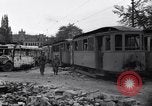
Views of bomb damaged landmarks in Munich at end of World War 2
Two United States Army soldiers passing by bomb damaged buses and streetcars on a Munich street. Exterior view of front facade of heavily damaged National Theatre Munich (Munich Opera House) at Max-Joseph-Platz. Statue of King Maximilian I seen in center of the plaza, with the Munich Residenz, Königsbau in the background. German soldiers walking bicycles pass by, under armed guard of U.S. Army soldiers. Railroad Central Station and the Starnberger train station destroyed by bombing. Exterior of the destroyed Bayerische Verkehrsministerium (Bavarian Ministry of Transport) at Arnulfstraße 9 with its destroyed dome and rubble and debris everywhere. U.S. Army trucks, some loaded with American soldiers, driving through the city streets. More views of the destroyed railway station and railroad marshaling yards. Front facade of the heavily damaged Munich Hauptbahnhof (main train station), "Der Eisenbahnhof" in München.
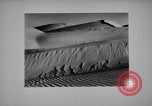
Photographer Edward Weston shows his methods for taking pictures.
A view of sand dunes in California. The photographer Edward Weston sets the view camera in a suitable position on a tripod stand. The shutter of the lens is removed and he uses a focusing cloth over his head. A woman student accompanying the photographer learns how to use a camera.
CRITICALPAST.COM: About Us | Contact Us | FAQs - How to Order | License Agreement | My Account | My Lightboxes | Shopping Cart | Advanced Search | Featured Collections | Website Terms & Conditions | Privacy Policy ©2026 CriticalPast LLC.
License Agreement |
Terms & Conditions |
Privacy Policy
©2026 CriticalPast LLC.