


 Francais
 Deutsch
 Italiano
Refine Your Search
US-Gliders- stock footage and images
- Showing 13483 to 13488 of 21917 results more
more Hide
Hide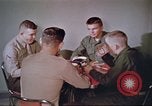
The proficiency of a biological warfare agent like pathogen to transfer through an artificial route in the United States.
A training film on medical defense against biological warfare in the United States. The proficiency of a biological warfare agent like pathogen to transfer through a artificial route shows U.S. soldiers having food and water. Technicians carry out biological warfare test. Accidental incidents occur due to use of a blender and a centrifuge. A technician works with a powder containing yellow fever virus. Animation depicts transmission cycle of the yellow fever. Animation depicts a harbor area. The soldiers eating in a mess.
Overview of small scale and large scale methods of disseminating biological warfare agents in the United States.
A training film dramatizes the methods of disseminating biological warfare agents in the United States. Small scale method of disseminating biological warfare agent to sabotage key personnel and key installations shows a skilled plumber contaminating the water supply of a military reservation with a pathogen. Various other methods can be used to contaminate food and ice cream. U.S. military personnel eating at tables. Unprocessed or uncooked food can also be contaminated. Infective material being put into a ventilation system by a man. A missile heads for a target depicting large scale airborne method of disseminating biological warfare agent. Men carrying a submarine designed for biological warfare at a beach. Rockets equipped with biological warheads being fired from a ship. Usage of aircraft shows an aircraft dropping a bomblet to achieve greater affect. The aircraft equipped with tanks flies low over a field. Animation depicts the selection of microorganism.
Chemical Warfare Service laboratories at Edgewood Arsenal, Columbia University and the Massachusetts Institute of Technology.
A film based on chemical warfare tests in the United States. Shows usage of poison gas on the Allies by the Germans in France during World War I. Casualties of chemical warfare being evacuated. The U.S. Capitol Building and the Washington Monument in Washington DC. Brief aerial view of White House. Establishment of U.S. Army Chemical Warfare Service on July 1st , 1920 shows a sign which reads 'Office of the CHIEF Chemical Warfare Service'. Chief of the Chemical Warfare Service Major General William N. Porter at his desk. Various processes carried out by the Chemical Warfare Service. The Edgewood Arsenal Laboratories in Baltimore. Samples of gas are analyzed by technicians. Chemical warfare laboratories at Columbia University and the Massachusetts Institute of Technology.
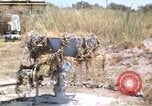
United States soldiers lower the Italian flag from a tower in Sicily, Italy after its invasion during World War II.
U.S. soldiers in Sicily, Italy after its invasion during World War II. The soldiers lower the Italian flag from the top of a tower. U.S. soldiers work on a large equipment. An ocean in the background. The soldiers inspect a camouflaged enemy equipment.
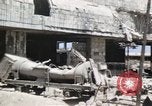
Messina harbor in Sicily, Italy shows various bombed out buildings during World War II.
War damage around Messina harbor, Sicily, Italy, after bombings done by USAAF (United States Army Air Forces) 86th Fighter Bomber Group airplanes during World War II. Damaged and abandoned Italian equipment near a damaged bridge. U.S. soldiers in a jeep drive past the damaged bridge. A drawing of Italian dictator Benito Mussolini. Interiors of a bombed out building. Damaged harbor facilities. A U.S. soldier stands near a sign which reads NSV (Nationalsozialistische Volkswohlfahrt) with a Swastika sign below it. The harbor area shows several bombed out buildings.
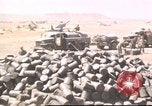
American airmen fuel fueling trucks on a captured airfield in Sicily, Italy during World War II.
Activities of USAAF (United States Army Air Forces) 86th Fighter Bomber Group in Sicily, Italy during World War II. Empty fuel barrels piled up. U.S. Army fuel trucks are fueled in the background. U.S. airmen open fuel barrels and fuel jerricans. Fuel barrels fall from a truck. Bombs unloaded from an airplane. Airmen smoke cigarettes and have grapes.
CRITICALPAST.COM: About Us | Contact Us | FAQs - How to Order | License Agreement | My Account | My Lightboxes | Shopping Cart | Advanced Search | Featured Collections | Website Terms & Conditions | Privacy Policy ©2026 CriticalPast LLC.
License Agreement |
Terms & Conditions |
Privacy Policy
©2026 CriticalPast LLC.