


 Francais
 Deutsch
 Italiano
Refine Your Search
US-Gliders- stock footage and images
- Showing 13531 to 13536 of 21917 results more
more Hide
Hide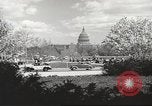
Pre World War 2 scenes of Filipino colleges, schools, and military academy in the Philippines.
From a film created during World War 2, but before liberation of the Philippines. View of civilians in the Philippines before World War II. Distant wide view of the U.S. Capitol Building in Washington DC in early spring. Closer view of the U.S. Capitol and its dome in spring with flowers on tree branches in foreground. Scene changes to Manila, Philippines, and the grounds and exterior of buildings of The University of the Philippines. Vehicles on a street in the front of a building. Exterior view of University of Santo Tomas main building. Filipino students, both women and men, performing science experiments in a laboratory at the university. Next scene shows students in a laboratory of Silliman University in Dumaguete City, Philippines. Students in a class stand in turn, reading aloud from books. Views of younger Filipino children in high schools and grade schools in the Philippines, learning and studying in classrooms, including reading and writing of English. Students at the University of the Philippines in group callisthenic exercise classes on a field. Students in farming classes. Wide view of training of Filipino military cadets. General Douglas MacArthur at his desk in the Philippines before the war, while he was commander of the military defense of the Philippines. He talks on the telephone, attends a flag raising ceremony, and meets with Eisenhower (then part of his staff) and another officer. Filipino government officials meeting, including Elpidio Quirino and Manuel Roxas Japanese diplomatic delegation meeting with Filipino politician before the war. Filipino cadet soldiers at Military Academy at Luzon seen drill marching in dress uniforms. Regular Filipino Army soldiers gathered in a group at attention holding rifles, and then marking in columns in a parade, with horses and military trucks.
Japanese air operations from Clark Field, after its capture by forces of Japan in World War II
Aerial view from Japanese aircraft of smoke rising from bombs dropped on Philippines, after its occupation by Japanese forces in World War 2. Several Japanese Aichi D3A (Type 99 Navy dive bombers, later called "Val") filmed from Japanese-occupied Clark Field, as they fly overhead in formation. Two of them pitch up and execute a loop, together, as Japanese military personnel on the ground watch them. Momentary view of pilot in cockpit of airplane. Those on the ground cheer and applaud the maneuver. A wrecked U.S. Army B-17 bomber is seen with all four engines removed. Camera shows cockpit interior and "Model B-17D, Air Corps, Serial No. A.C.40-3069" stenciled on the fuselage. (It is believed parts from this aircraft were used by the Japanese to repair B-17 40-3095, which was later flown to Japan as a war prize.) View of a destroyed American B-10 bomber. Interior of wrecked hangar in which Japanese maintenance is being performed on a Mitsubishi Ki.30 and a Mitsubishi Ki-21 twin engine bomber ("Type 97 Heavy Bomber" later called "Sally.") Japanese mechanics work on a bomber outdoors on the ramp. Ground crew meet a Mitsubishi Ki.30 "Ann" single-engine attack plane as it taxis in after landing. They load bombs on it. Momentary glimpse of mechanic climbing into a "Sally bomber." "Sally" bombers lined up on the tarmac.
Japanese troops advance through a jungle and fire artillery during Japanese occupation of Philippines (WW2)
The invasion of the Philippines by Imperial Japanese Army (IJA) troops during World War II. Japanese bombers in flight. Japanese troops climb mountains and slash through a jungle with machetes. A Japanese soldier uses a pair of binoculars. View of a mountain. Soldiers seated on a field and talk over a field phone. They view a map. An officer calling soldiers out. Japanese gun crew runs towards the artillery. A Japanese officer wearing glasses gives out orders to fire. Gun crew firing artillery at enemy positions. Trees in the background. They use range finders and fire heavy artillery.
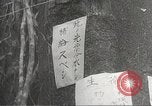
Japanese soldiers look at their mails and an airplane makes a message pick up with a skyhook in the Philippines (WW2)
The Japanese occupation of the Philippines during World War II. Mails are pasted on a tree. Japanese soldiers look at postal mail in a jungle setting. Japanese soldiers carry supplies using a long bamboo pole. Soldiers filling drums with water from a river. Hose fills the drum with water. A truck carrying water containers drives past along a way. Japanese soldiers use rolling pins and boil a pot. Water flows from hose. Japanese cooking from vats. A Japanese airplane in flight. The airplane makes a message pick up with a skyhook.
Officials of different countries arrive for the NATO Conference in Brussels, Belgium.
The life and career of U.S. Army General Dwight D. Eisenhower up to the time of his appointment as the Supreme Commander of the NATO. The Foreign Ministers and Defense Secretaries of many countries seated at a desk in Brussels, Belgium. They arrive for the Brussels North Atlantic Treaty Organization (NATO) Conference. Officials from different countries including French Statesman Robert Schuman and British Secretary of State for Foreign Affairs Ernest Bevin arrive at the conference. U.S. Secretary of State Dean Acheson addresses the officials and talks about the election of General Eisenhower as the Supreme Commander of NATO. He also states about the formation of new defense production board.
General William C. Westmoreland discusses with men of 101st Airborne Division in Vietnam.
Activities of U.S. 101st Airborne Division in Vietnam during the Vietnam War. Commanding General of the U.S. Forces in Vietnam, General William C Westmoreland, arrives in Vietnam. He pins the Combat Infantry Badge on Lieutenant Walter A. Hess of 2nd Battalion, 327th Infantry 101st Division. The General troops the line of the assembled honor guards. He stops to chat with some of the men.
CRITICALPAST.COM: About Us | Contact Us | FAQs - How to Order | License Agreement | My Account | My Lightboxes | Shopping Cart | Advanced Search | Featured Collections | Website Terms & Conditions | Privacy Policy ©2026 CriticalPast LLC.
License Agreement |
Terms & Conditions |
Privacy Policy
©2026 CriticalPast LLC.