


 Francais
 Deutsch
 Italiano
Refine Your Search
US-Gliders- stock footage and images
- Showing 13939 to 13944 of 21917 results more
more Hide
Hide
An amphibious landing and bombers on a mission and troops battle on a Pacific Island.
Dramatization shows how one defective walkie-talkie can impair battle plans, United States. U.S. transporters including cruisers, destroyers and crew carrying ships underway in South Pacific on a mission to attack on Japanese installation and Island no. 6. A personnel plays whistle from the bridge of cruiser. Interior of manned radio operations room:Task Force officers sitting around table and discuss over battle plans. A personnel talks on radio device. American bombers in formation flight. Pilot and copilot in cockpit. American aircraft drop bombs on Japanese installation. Explosion and large column of smoke rise. Task Force officers look at map of Japanese island no. 6 in the radio room. Animated map shows Japanese Island no. 6 showing an amphibious landing and bombers on a mission. U.S. soldiers on landing crafts with walkie-talkies. Artillery fire on the Pacific island. Troops disembark from the landing craft and heads towards beach area. Soldiers move into action and fire artillery. (World War II period).
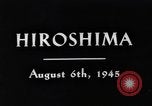
Effects of the atomic bombing of Hiroshima, Japan, in World War II, and early international efforts to control atomic weapons
Film showing city of Hiroshima, Japan, before and after the August 6, 1945 dropping of the atomic bomb over the city in World War 2. Sequence opens on what the narrator says is August 5, 1945, the day before the event (but the footage is likely from before that date). Camera pans over the city of Hiroshima before the atomic bomb destroyed the city. Japanese air raid lookouts are seen on watch for allied bombers. View of atomic bomb detonation as seen from aircraft high overhead (this is actually a view of the Nagasaki blast, not the Hiroshima blast despite narrator's comments). Next, the complete destruction of the city of Hiroshima is seen from camera at low altitude showing the four and one half square miles of the city flattened and burned. A Japanese hospital still functioning, with red cross flag on it. Hospital workers retrieving wounded victims of the bombing. Ambulatory victims clustered in doorways and halls. Shadow image of a large industrial valve wheel burned onto wall behind it. Similar image of a ladder burned onto a wall. The decorative pattern on a woman's dress burned onto skin of her back. Japanese physicians treating victims of thermal and radiation burns. Views of various victims, including some children, and their respective injuries. Scene shifts forward one year, to August 6, 1946. Children are lined up outside a school building, and then seen inside their classroom. Disfiguration and wounds on children resulting from injuries are still evident on the children at their desks. Sequence shifts again, this time to an early United Nations meeting with delegates grappling with the issue of controlling nuclear power and atomic weapons. Closeup view of American delegates, including James F. Byrnes (Secretary of State)and James B. Conant, President of Harvard University in the assembly. Closeups of representatives from South Asian nations. Closeup of USSR delegation, headed by Foreign Minister, Vyacheslav Molotov. Signs identifying delegates from Colombia, Egypt, Iraq, Bolivia, China. Final sequence shows several U.S. atomic scientists in their respective laboratories, including Enrico Fermi and Vannevar Bush. United States representative to the UN, Warren Austin, speaking about the so-called Baruch Plan, for international control of atomic weapons. (Principal author, Bernard Baruch, is standing behind speaker's left shoulder.) USSR delegation, headed by permanent representative, Andrei Gromyko, who is seen presenting the Soviet plan. View of explosion and mushroom cloud during U.S. Operation Crossroads atomic bomb test in the Pacific.

Troops, artillery, tanks, guns and army trucks arrive and make preparations before maneuvering in Plattsburgh, New York.
War preparation of the U.S. Army in Plattsburgh, New York. U.S. troops walk beside train with their bags. Color guard with flags. An officer speaks. A group of officers poses. Thousands of artillery, tanks, cavalry troops and army trucks arrive. Two army personnel clean artillery. Horses drink water. Personnel peel off vegetables and cook food. Personnel serve themselves and eat.
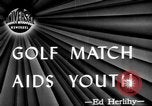
Gene Sarazen wins a celebrity Golf Tourney in Washington DC
National celebrities participate in a Golf Tourney in Washington DC. Notable personalities include U.S. Army General Dwight D Eisenhower, U.S. Navy Admiral Chester William Nimitz, boxers Jack Dempsey and Gene Tunney. Gene Sarazen and Bobby Jones at table and finish coffee. Golf players including Gene Sarazen, Bobby Jones take their turns on the golf course. Spectators watch the tournament. Gene Sarazen wins the tournament and poses with the trophy.
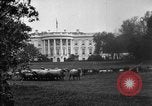
President Wilson in his office at White House in Washington DC, and signs proclamation of war against Germany in World War I
U.S. President Woodrow Wilson at White House in Washington DC during World War 1. Exterior views of the White house with sheep grazing on White House lawn in the foreground. U.S. President Woodrow Wilson works in his office. He stands and watches sheep graze on the White House lawn. Wilson talks on phone. Wilson, seated at table in his office, looks at documents. President Wilson sitting in chair. On April 6, 1917, Wilson signs documents proclaiming a state of war exists between the United States and Germany (Presidential Proclamation 1364) during World War 1. Several officials standing behind him during signing.
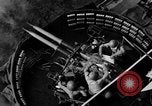
A task force crew puts out fire on a 5" turret and carry empty ammunition crates while underway off the shore of Saipan.
A U.S. Navy Task Force underway in the Pacific Ocean off the shore of Saipan, Mariana Islands during the Battle of Saipan of World War II. The task force crew fires artillery. Smoke rising in the background. Battleships and destroyers underway. Men put out fire on a 5" turret using a hose. A landing craft underway. Men carry empty ammunition crates.
CRITICALPAST.COM: About Us | Contact Us | FAQs - How to Order | License Agreement | My Account | My Lightboxes | Shopping Cart | Advanced Search | Featured Collections | Website Terms & Conditions | Privacy Policy ©2026 CriticalPast LLC.
License Agreement |
Terms & Conditions |
Privacy Policy
©2026 CriticalPast LLC.