


 Francais
 Deutsch
 Italiano
Refine Your Search
US-Gliders- stock footage and images
- Showing 14167 to 14172 of 21917 results more
more Hide
Hide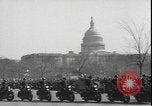
A motorcade passing on a street during the inaugural parade of President Roosevelt in Washington DC, United States.
U.S. President Franklin Delano Roosevelt's inaugural parade in Washington DC, United States. People gather on either sides of a street. The U.S. Capitol in the foreground. A motorcade passing on the street. Soldiers aboard military vehicles. The Presidential car in the motorcade. Horse-drawn units pass. Soldiers march. Other armored vehicles and tanks passing. (World War II period).
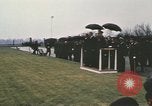
General Wheeler speaks into a microphone followed by President Johnson in the United States.
U.S. Secretary of Defense Robert Strange McNamara leaves the office in the United States. President Lyndon Baines Johnson, Secretary McNamara and Deputy Secretary of Defense Paul Henry Nitze on a review stand. U.S. Army General Earle Gilmore Wheeler speaks into a microphone. President Johnson speaks after General Wheeler. The President speaking into the microphone. Secretary McNamara stands behind the President. The President ends the speech. People applaud.
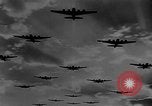
Lt. Gen. Carl Spaatz and Maj. Gen. F. L. Anderson plan 'Operation Frantic' at a USAAF headquarters in the European Theater.
A film on U.S. shuttle bombing operations over Germany from bases in Great Britain, Italy and Russia during World War II. Animated diagram shows the advantages of using Soviet airfields during the operation. United States Army Air Force Lieutenant General Carl Andrew Spaatz seated at a desk in his office. Deputy Commanding General for Operations Major General F. L. Anderson discusses the plans with other officers in his office. They plan 'Operation Frantic' at a USAAF headquarters. Ships at a British port are loaded with supplies including food, gasoline, bombs, ammunitions, trucks, jeeps and other equipment. A man watching through binoculars from the deck of a ship. A convoy passes through the Arctic Ocean. Supplies are unloaded in Russia. These are transported by train to a headquarters in Russia.
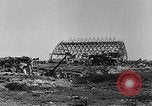
Rubbled buildings and wrecked equipment at the end of Flintlock Operation on Kwajalein Atoll in the Marshall Islands.
A training film on operations of U.S. forces on Kwajalein Atoll in the Marshall Islands during World War II. Flintlock Operation ends with U.S. victory. Rubbled buildings and wrecked equipment on islands. Dried up trees in the area. Wrecked guns and other equipment. Damaged bunkers and magazines. A diagram depicts details of a blockhouse. The damaged blockhouses.
Principal factors and benefits of plan of execution of Flintlock Operations on Kwajalein Atoll in the Marshall Islands.
A training film on operations of U.S. forces on Kwajalein Atoll in the Marshall Islands during World War II. Wrecked guns and shells on the island. Burlesque and Camouflage Islands shown on a map. There are two principal factors of the plan of execution of Carillon Island. The seizure of weakly defended islands and the use of three islands for emplacement of artillery to support principal landings. This is depicted with the help of animation. Heavy gun fire and aerial bombardment on all the principle islands. Coordination between land, naval and aerial forces helped in the accomplishment of objectives. A map of Carillon Atoll. A map of the Marshall Islands. Major benefits of Flintlock Operations and how it was effective in achieving victory are explained.
A training film in the United States shows rescue and medical evacuation operations undertaken by UH-1 Iroquois helicopters.
A training film in the United States on tactical operations of U.S. Air Force UH-1 Iroquois helicopters. A helicopter parked in an area. Civilians stand nearby. Men near the helicopter with crates of medical supplies. Equipment being towed by an helicopter while in flight. Aerial views of floods and smoke rising from forest fires. Helicopters are used for providing relief. Medical evacuation by a helicopter. An aircraft in flight overhead. Rescue missions being undertaken by a helicopter at night. A rescue sling dropped from the helicopter. Rescue of a man from the sea. He is taken aboard with the help of the sling.
CRITICALPAST.COM: About Us | Contact Us | FAQs - How to Order | License Agreement | My Account | My Lightboxes | Shopping Cart | Advanced Search | Featured Collections | Website Terms & Conditions | Privacy Policy ©2026 CriticalPast LLC.
License Agreement |
Terms & Conditions |
Privacy Policy
©2026 CriticalPast LLC.