


 Francais
 Deutsch
 Italiano
Refine Your Search
US-Gliders- stock footage and images
- Showing 14437 to 14442 of 21917 results more
more Hide
Hide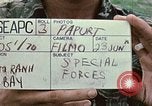
An ARVN Special Forces instructor teaches hand to hand combat maneuvers to trainees in Cam Ranh Bay, Vietnam.
U.S. Army 5th Special Forces Group (Airborne) 1st Special Forces base in Cam Ranh Bay, Vietnam. An ARVN Special Forces instructor demonstrates hand to hand combat positions and maneuvers in a field. Trainees follow instructions and practice. Trainees practice maneuvers lying on their backs on the ground. The instructor guides and supervises. The instructor corrects positions and movements of the trainees. Demonstrations by the instructor. Barracks in the background. Trainees follow instructions and practice ground maneuvers. (Vietnam War period).
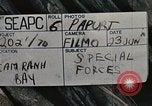
ARVN Special Forces instructors take a Combat Reconnaissance Patrol class in the woods, Vietnam.
ARVN (Army of the Republic of Vietnam) Special Forces Training Center in Cam Ranh Bay, Vietnam. An ARVN Special Forces instructor holds a class on Combat Reconnaissance Patrol. Trainees seated on bleachers under a shed. Two instructors address the trainees. Military trucks in the background. One instructor shows them a book. The instructors instruct and guide the standing trainees. An instructor uses a black board for the session. The instructor in a helmet stands behind a lectern and takes the class. Written matter on the black board. Trainees seated under the shed listen to the instructor. (Vietnam War period).
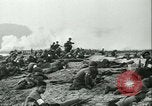
Amphibious landings of the Allied troops in Normandy on D Day during World War II.
The role and contribution of the U.S. Army Signal Corps in combat and war. Allied troops including Signal Corps soldiers advance inland after the Normandy landings on D Day during World War II. Soldeirs rest after establishing the Normandy beachhead. A bridge across the channel. Trucks pass over it. Ships anchored off shore. Soldiers keep a watch. A harbor destroyed due to a winter storm. Landing chips and crafts anchored along the shoreline. A barrage in flight overhead. Supplies and reinforcements on the beachhead. Damage caused due to the storm. Allied soldiers around crafts and equipment on the shore.
The Battle of Netherlands and the invasion of Belgium by the Germans during World War II.
The first phase of German assault on France and the Low Countries during World War II. An animated map depicts the German campaign to capture Liege (Luttich) and Fort Eben-Emael in Belgium. German troops invade Holland. Soldiers in trucks. Germans cross the Meuse (Maas) in boats. A collapsed bridge over the river. Armed German soldiers on bicycles cycle through a village. Soldiers drag a boat on the road. The Germans capture Fort Eben-Emael using flamethrowers. Soldiers fire guns during street fights. A soldier wades through shallow water while others cross a field amidst explosions. Bomb explosions and bomb damaged buildings. Soldiers take cover in a field. German troops cross the Albert Canal in Belgium. Troops in boats make their way across. They advance with tanks. Soldiers dig fox holes and eat. Soldiers man tanks and fire artillery. German aircraft bomb Allied positions. Massive explosion at Werk 4 fortification bunker of Fort Eben-Emael. Bomb damaged buildings and ruins. Black smoke arises due to explosions. German soldiers march Belgian and Dutch prisoners of war on a street.
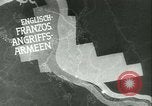
English and French Armies move towards the Ruhr Area to meet the German advance during World War II.
The first phase of German assault on France and the Low Countries during World War II. The main part of the Battle of France campaign beginning 10 May 1940. Massive columns of German soldiers lined up in Berlin. Hundreds of young soldiers in uniform. Close-ups of some German soldier faces. An animated map depicts the movement of the English and French Armies across the French city of Lille towards the Ruhr Area in Germany. Allied vehicles move to meet the German advance. British Expeditionary Force troops, French, Belgian, Dutch, and colonial troops move to the front in railroad train cars, trucks, and on foot. Allied soldiers on motorbikes on a street. Soldiers stand guard at a check post. Tanks, military trucks and motorbikes cross the check post. The convoy moves along. Troops in a train. Tanks on the streets. Soldiers on tanks. Hundreds of Allied French and British soldiers march ahead in France. Soldiers man artillery and guns. Soldiers use detonators to set off explosions.
Scenes related to military readiness of Britain and France to face Nazi Germany at the onset of World War II
A montage of scenes related to British and French military readiness to face the threat of Nazi Germany at the onset of World War 2. An animated map depicts the disposition and status of belligerents on either side of the Maginot Line. Panoramic views of the Maginot Line. French troops double-time march out of the 'Caserne-Maginot' (Maginot Barracks) to take up their duty stations inside the Maginot Line forts. The soldiers are carried to their respective positions by subway cars underground. They are seen at work underground, tending one of the engines supplying electric power to the forts; stacking artillery shells; using pneumatic message devices and other communications; and preparing food. Some sing and dance Russian-stye. A slate in French reads: 'We Shall Win Because We Are The Strongest'. An animated map depicts France's and Britain's Colonial empires and their collective participation in defense of the Allies. British, French and Colonial troops parade in displays of military readiness. Some are seen parading before the Arc de Triomphe (Arch of Triumph) on the Champs Elysees in Paris, France.
CRITICALPAST.COM: About Us | Contact Us | FAQs - How to Order | License Agreement | My Account | My Lightboxes | Shopping Cart | Advanced Search | Featured Collections | Website Terms & Conditions | Privacy Policy ©2026 CriticalPast LLC.
License Agreement |
Terms & Conditions |
Privacy Policy
©2026 CriticalPast LLC.