


 Francais
 Deutsch
 Italiano
Refine Your Search
US-Gliders- stock footage and images
- Showing 1459 to 1464 of 21920 results more
more Hide
Hide
U.S. soldiers load Project Indigenous Rations into a truck and Montagnard soldiers carry boxes of rations in Pleiku, Vietnam.
U.S. Mobile Strike Forces in Pleiku, Vietnam during the Vietnam War. U.S. soldiers with the aid of a forklift load PIR (Project Indigenous Rations) into a truck. A U.S. Army UH-1D Iroquois helicopter lands on a field. Montagnard soldiers carry off boxes of rations. U.S. soldier looks at a map in a jungle. A Montagnard soldier heats up a canteen cup with rations over an open fire.
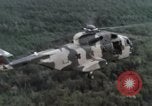
U.S. Air Force HH-3E Jolly Green Giant helicopters in flight over a Vietnamese jungle during the Vietnam War.
U.S. Air Force helicopters in flight over a Vietnamese jungle during the Vietnam War. U.S. Air Force HH-3E Jolly Green Giant helicopters carrying U.S. 20th Helicopter Squadron personnel, Special Forces personnel and Montagnard troops in flight. U.S. Air Force HH-3E Jolly Green Giant helicopters in flight over the jungle.
U.S. team leads against Spain during a Team handball game at the 1972 Summer Olympics in Munich, Germany.
The United States and Spain compete in Team Handball, during the Summer Olympics of 1972 held in Munich, Germany. Scenes of the game underway, with the U.S. team (White) in possession of the ball and attempting to score. A scoreboard displays the score, ESP vs. USA, tied at 0-0. Then, the U.S. team scores, and the scoreboard shows 0-1. The Spanish team (Red) takes the offensive and presses the U.S. defenders, who foul a Spanish striker and lose the penalty throw, making the score even at 1-1 (scoreboard not seen). In their next possession, the U.S. team again scores and the fleeting image of scoreboard shows: 1-2.
U.S. Army cadets go through various tests during training for air crew in the United States during World War II.
Training for U.S. Army Air Force air crew in the United States during World War II. Narration by Ronald Reagan. An enactment of a Complex Coordination Test shows cadets seated and using a device with handle, foot controls and lights. A panel on the device flashes lights as cadets use the device. Two-Hand Coordination Test shows cadets turning the crank on a device. View of gauges. Rotary Pursuit Test shows cadets using a rotary pursuit device and an officer taking measurements from gauges. The cadets relaxing on beds in a barrack. A cadet at a counselor's desk.
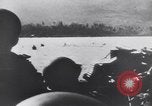
U.S. Signal corps communications in war and in peace time in the United States.
A training film on the wartime and peacetime activities of the U.S. Signal Corps. U.S. Signal Corps recruits disembark on a beach from landing barges during World War 2. The soldiers set up communications equipment and operate a EE-8 field telephone, and morse code keyer to transmit range observations. U.S. Navy sailor sends signal lamp blinker signals from a U.S. Navy ship offshore. The signal corps soldiers lay telephone wires by aircraft and truck. The telegraph and telephone poles are erected. The Chief Signal Officer seated at his desk. Exterior view of the Pentagon, and then interior views inside the Pentagon at the Pentagon signal center. Soldiers working in the signal center of the Pentagon in Arlington, Virginia. Tape machines dispense paper tapes with encoded communications. Sign "Traffic Control Army Command and Administration System" written on a board in the center. The transmission system of the message.
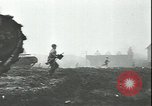
The U.S. Army Signal Corps in War and Peace. Descriptions and demonstrations of VT (proximity-fused) munitions
Opening scene shows troops of the U.S. Army 101st Airborne Division engaged at Bastogne, Belgium, during the Battle of the Bulge, in 1944, during World War II. They advance through fires and set up defenses in buildings, firing rifles from apartment windows. Outside, riflemen fire from behind a concrete barrier. Closeup of one firing his M1 Garand rifle. Glimpses of infantry firing mortars and walls falling to mortar fire. Gun crews firing heavy field artillery pieces, some under camouflage nets and others in the open. Intervening slate reads: "VT." and introduces postwar discussion of Signal Corps-developed proximity fuse, using animated cartoon. Shows how it proximity shells increase their explosive envelope compared to regular time fused munitions. U.S. Army gunner fire a number of proximity shells that burst above ground targets in the distance. A cartoon shows the proximity fused munition being used by a fighter aircraft. A Republic P-47 fighter plane is seen firing VT munitions from guns in its wings. Aerial bombs falling. A line of VT bombs exploding above ground.
CRITICALPAST.COM: About Us | Contact Us | FAQs - How to Order | License Agreement | My Account | My Lightboxes | Shopping Cart | Advanced Search | Featured Collections | Website Terms & Conditions | Privacy Policy ©2026 CriticalPast LLC.
License Agreement |
Terms & Conditions |
Privacy Policy
©2026 CriticalPast LLC.