


 Francais
 Deutsch
 Italiano
Refine Your Search
US-Gliders- stock footage and images
- Showing 14941 to 14946 of 21917 results more
more Hide
Hide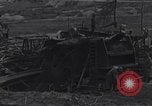
British troops inspect damaged Germany heavy artillery captured on the Western Front in World War I
British soldiers inspect a German 38 cm SK L/45 Langer Max heavy siege gun, in fixed installation, captured in World War 1, on the Western Front. The barrel is partly buried, and there is considerable damage elsewhere. An officer uses a tape to measure the barrel diameter, and holds it up to his chest.
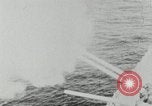
United States soldiers fighting at the Battle for Okinawa, Japan (WW2)
United States forces at the Battle for Okinawa in World War II. American ships fire artillery at Japanese positions in Okinawa Island. American ships and boats in ocean near Okinawa. American soldier moves forward with a rifle as he attacks Japanese positions. American soldiers fire at Japanese positions. Soldier uses a telephone for communication. American tanks and artillery fire. Soldiers hoist the American flag on Okinawa Island. View of a cemetery of United States soldiers. An American soldier visits fellow soldier's grave.
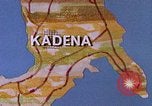
Tourist attractions and activities on Okinawa Island
Tourist attractions on Okinawa Island. Map of Okinawa showing Kadena and Nago City on it. View of Northern part of Okinawa. Jungles and beaches on the Island. Various monuments in Okinawa. Japanese fishermen on boats. American couple visits castle ruins. An American woman plays with her children on the beach. Japanese crowd watch bullfight between two bulls, where the bulls fight each other and the men in the ring serve only as handlers, not toreadores or matadors. Todoroki falls in Okinawa. Soldier in camera shop holding a 35mm still camera and pointing it toward the filming camera. Neon signs of Okinawa nightclubs such as 'Club Night Queen’, ‘New Star' and 'Club 7'. A white man talking with a local woman in front of a club. Narrator notes "the price is high if you don't use reasonable care" (alluding to caution about sexually transmitted diseases).
Airplanes display in an Air Show at Tokyo International Airport
North American F-86 Sabre transonic jet fighter aircraft on display at the Tokyo Haneda International Airport. Pan-American World Airlines Boeing B377 Stratocruiser aircraft. Written on its nose 'Clipper Bald Eagle'. Flag extended out of the cockpit window of the airplane. Airman leaning against truck. One of the engines of the Boeing Stratocruiser is removed. Japanese man waves from cockpit. Japanese girl Keiko Katsuki on ground returns wave. The Japanese flag at the top of a pole. Streamers used to guide wires, approximately eight, lined with flags of various nations. H-13 landing. Japanese trainer type plane takes off and circles airfield. Stunt flying. Two liaison type aircraft as they fly over the area.
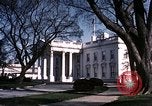
Views of Rooms in the White House Washington, DC, United States
View of exterior North Portico and entrance of White House. Interior view of the North entrance White House lobby with Presidential Seal on top of the door. Close up view of four dates inscribed on the marble floor: "1817" Repair after war damage, "1792" Construction date, "1902" First remodeling, and "1952" Latest remodeling. Views of the Blue room, the Green room, and the Red room in the White House, and various furniture and decorations in the White House in the late 1950s. View of State dining room. Gold candle stands placed on the dining table. Solid Silver chandelier hanging over the table. China crockery used by American Presidents and their families are preserved in the China room. Portrait of Mrs. Calvin Coolidge. View of the Oval office room. View of the East room. Portrait of President George Washington and Mrs Martha Washington. Grand piano placed inside the room. Plaque in White House state dining room with words of a prayer by John Adams. Exterior view as police escort motorcycle with sidecar drives on North Portico entrance driveway, followed by a Lincoln Continental limousine of the President's fleet.
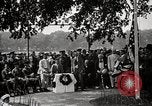
Dedication of the temporary Zero milestone marker at start of the 1919 Transcontinental Motor Convoy
Location is the Ellipse, south of the White House, in Washington, DC. The occasion is the dedication of a temporary Zero milestone in ceremonies at the start of the U.S. Army Motor Transport Corps'so-called "Truck Train," a convoy of military vehicles that is to travel the "Lincoln Highway" across the United States, to San Francisco, California. The ceremony begins with a flag raising, where all stand and uniformed Army officers salute. Congressman Julius Kahn, of California, salutes with his hat over his heart. The temporary marker is covered with white cloth and two wreaths, which officials remove and Secretary of War Newton D. Baker, begins his speech accepting the temporary marker. (A permanent marker needed an act of Congress for approval. So a temporary one was approved to allow the launch of the Army cross-country convoy.) The Washington Monument is visible in the background, as Mr. Baker delivers his remarks.
CRITICALPAST.COM: About Us | Contact Us | FAQs - How to Order | License Agreement | My Account | My Lightboxes | Shopping Cart | Advanced Search | Featured Collections | Website Terms & Conditions | Privacy Policy ©2026 CriticalPast LLC.
License Agreement |
Terms & Conditions |
Privacy Policy
©2026 CriticalPast LLC.